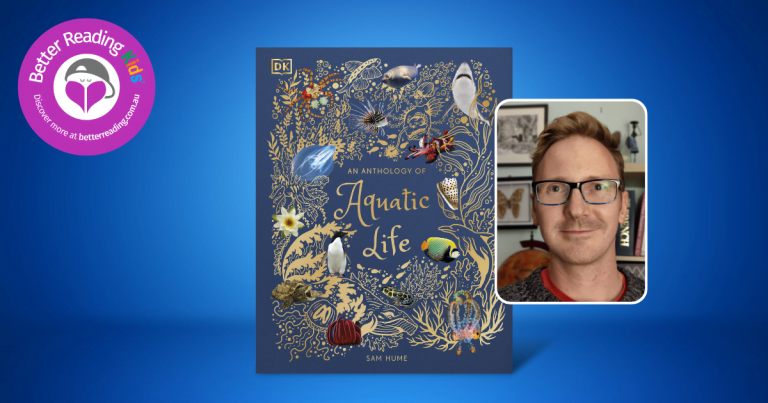
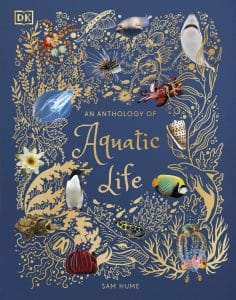
Discover some of the incredible creatures from the aquatic world from Sam Hume’s Anthology of Aquatic Life.
1. The Dumbo octopus
The Dumbo octopus has flappy, earlike fins that help it “fly” through the water. This little creature is about the size of a guinea pig and is the deepest living octopus. Flapping around by your ears might not be the fastest way to get around, but that doesn’t matter for this octopus, since there aren’t many predators to worry about this deep down in the ocean.
In fact, the life of the Dumbo octopus is so carefree that it has lost the power to squirt ink, like other octopuses. There is a downside to living in a part of the ocean without many predators, however, and that is that there just isn’t much food to go around. So when this little octopus does come across a tasty shrimp, it makes sure to gobble it down whole so that nothing goes to waste.
2. Flying squid
Flying squid are the coolest animals on the planet. There are many kinds of flying squid all over the world, ranging in colour from electric blue to crimson red. Flying squid have a tough life – they only live for a year, and they can get eaten by just about everything, including dolphins, tuna, and even other, larger flying squid! However, they’ve come up with a perfect way to escape. The squid jet-propel themselves backwards out of the water, squirting water like a water pistol. Once airborne, they flatten out their tail fin and spread their arms out like a fan to make a wing. While in the air, flying squid have to watch out for birds, and they use their tentacles to break and splash into the water to avoid them.
3. Mimic octopus
Is it a jellyfish? Is it a flatfish? Is it a lionfish? No, it’s the mimic octopus – a master of disguise. This octopus, which is usually black and white, hunts during the day, out in the open seas of Indonesia where plenty of other predators could spot it. To keep from being eaten, it can transform itself – turning its skin into different colours, shifting its arms around, and moving like, or mimicking, another animal.
This octopus is so smart, it can even choose to mimic an animal that a would-be predator would most want to avoid. For example, when dangerous, biting damselfish are nearby, the octopus will tuck six of its eight arms down a hole, then stretch out the other two arms in opposite directions to make one long line. It then changes the colour of these arms and waves them to look just like a banded sea krait – a venomous sea snake and killer of damselfish.
4. Fishing cat
The fishing cat is native to southern Asia. There, long monsoons create flooded water worlds. This expert hunter has a layer of fur closest to the skin so densely packed that water can’t get through to it – a little like waterproof thermal underwear. The cat’s feet are built like paddles to glide through the water – partly webbed with thin skin between the toes. Its claws are permanently out, like fishing hooks beneath the water’s surface.
Fishing cats usually hunt with their front legs, scooping fish into their mouths at the surface, but they can also dive after prey. There are even reports of them stalking waterbirds by swimming underwater and grabbing the unsuspecting birds from below.
5. Pink river dolphin
Also called boto, the pink river dolphin is actually born grey – its pink colour is thought to be from picking up scrapes and scars as it brushes over riverbeds and squeezes past obstacles. Males tend to be pinker because they fight more, and so pick up even more scarring.
River dolphins have a much more flexible spine than oceanic dolphins, and they are able to bend their heads at right angles. This helps them twist and turn their way through the Amazon River and its tributaries, where many make their home. For all this trouble, there is a lot of food to be had. With flat back teeth for crushing and pointed front teeth for catching and holding prey, pink river dolphins eat more types of food than any other dolphin. They feed mainly on fish, including piranhas, and are even known to gobble up terrapins and crabs.

Leave a Reply