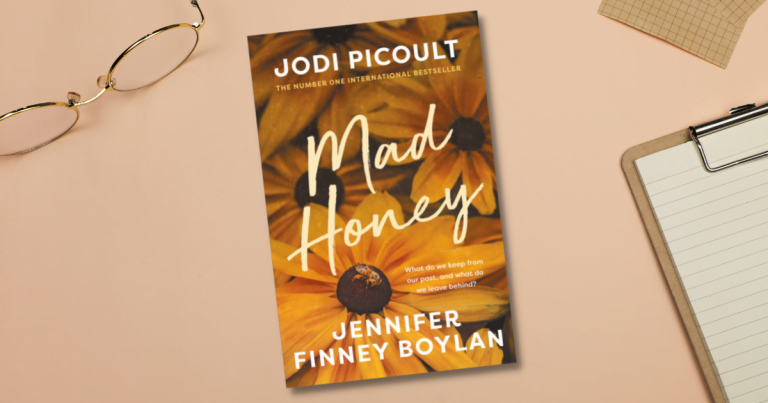
From the moment I knew I was having a baby, I wanted it to be a girl. I wandered the aisles of department stores, touching doll-size dresses and tiny sequined shoes. I pictured us with matching nail polish—me, who’d never had a manicure in my life.
I imagined the day her fairy hair was long enough to capture in pigtails, her nose pressed to the glass of a school bus window; I saw her first crush, prom dress, heartbreak. Each vision was a bead on a rosary of future memories; I prayed daily. As it turned out, I was not a zealot . . . only a martyr. When I gave birth, and the doctor announced the baby’s sex, I did not believe it at first. I had done such a stellar job of convincing myself of what I wanted that I completely forgot what I needed. But when I held Asher, slippery as a minnow, I was relieved. Better to have a boy, who would never be someone’s victim.
Most people in Adams, New Hampshire, know me by name, and those who don’t, know to steer clear of my home. It’s often that way for beekeepers—like firefighters, we willingly put ourselves in situations that are the stuff of others’ nightmares. Honeybees are far less vindictive than their yellow jacket cousins, but people can’t often tell the difference, so anything that stings and buzzes comes to be seen as a potential hazard.
A few hundred yards past the antique Cape, my colonies form a semicircular rainbow of hives, and most of the spring and summer the bees zip between them and the acres of blossoms they pollinate, humming a warning. I grew up on a small farm that had been in my father’s family for generations: an apple orchard that, in the fall, sold cider and donuts made by my mother and, in the summer, had pick-your-own strawberry fields. We were land-rich and cash-poor. My father was an apiarist by hobby, as was his father before him, and so on, all the way back to the first McAfee who was an original settler of Adams.
It is just far enough away from the White Mountain National Forest to have affordable real estate. The town has one traffic light, one bar, one diner, a post office, a town green that used to be a communal sheep grazing area, and Slade Brook—a creek whose name was misprinted in a 1789 geological survey map, but which stuck.
Slate Brook, as it should have been written, was named for the eponymous rock mined from its banks, which was shipped far and wide to
become tombstones.
Slade was the surname of the local undertaker and village drunk, who had a tendency to wander off when he was on a bender, and who ironically killed himself by drowning in six inches of water in the creek. When I first brought Braden to meet my parents, I told him that story. He had been driving at the time; his grin flashed like lightning.
But who, he’d asked, buried the undertaker?













Leave a Reply