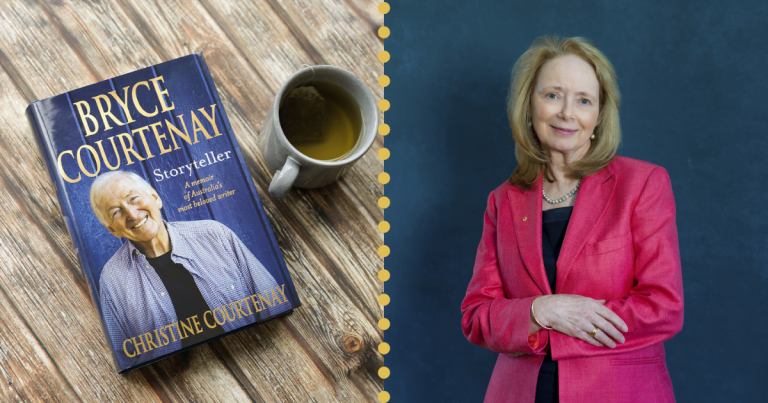
What are you hoping the reader will take away from reading your book?
I agree with what Bryce who used to say, “the reader is always right”, and he referred to his readers as “the fourth protagonist”. I am hoping people will feel it’s an absorbing and compelling read which delivers an authentic insight into the life story of one of Australia’s best loved and successful writers. In many respects it reads like the tales in Bryce’s novels complete with “a bucketful of tears and a bellyful of laughs”. (The advice his grandfather said were the key ingredients of any good story). I am also hoping it will inspire readers to hold tight to their own dreams; just as Bryce did having decided at an early age to one day become a writer, and a world famous one at that!
What was the most challenging part of writing this book?
Starting it in the first place, as during lockdown I had begun to write my own memoir of having founded a pioneering Himalayan trekking company in 1975. Bryce had also insisted he never wanted to write his autobiography preferring instead to weave aspects of his life into his novels (just as Dickens had done). I wondered if I should respect his wishes and for years had set aside the idea altogether. In the end I was encouraged to commit to writing it and over the ensuing months my confidence grew. I began to appreciate that it was the best possible way for me to honour my darling late husband’s life and literary legacy in the tenth year of his passing.
What inspired the idea behind this book?
More as a writing exercise than anything else I wrote an essay called, “Our First Chapter’ about meeting Bryce for the first time in 1993. A girlfriend read this chapter and said, ‘I love what you have written, and you should keep on going”. I was fully aware that there were many years of Bryce’s life which we didn’t share in together. Then, in June 2020 I found a box of letters in a battered cardboard box in my garage which I came close to throwing out. They were written by Bryce (mostly to his mother Paddy) from early childhood, and they were akin to having a diary and were deeply moving to read. It was obvious they were a cache of pure gold to write the story of Bryce’s extraordinary life and in his voice. Bryce knew that one day a biography would be written, and I began to accept that I was in a unique position to share authentic insights and stories which no other biographer could offer. Bryce had a unique connection with his readers and many of the nearly 60,000 followers on the Bryce Courtenay Facebook page had also begged to write this book. I can’t tell you how excited they are to finally have the chance to read it!
What’s some great advice you’ve received that has helped you as a writer?
I learnt a lot from sitting in on Bryce’s many writing courses (including one he ran on a ship bound for Antarctica), and I produced a film about his final writing course in 2012 called The Last Class. I recall Bryce pleading with his students to remember that “character is plot”, “don’t get stuck in the marshes”, and “dialogue is key.” Bryce reminded them that you must be disciplined and be ready to apply truckloads of ‘bum glue’. He would say to them, “It’s pick and shovel stuff . . . the muse doesn’t suddenly emerge from heaven and sit on your shoulders . . . this is a shovel and this is a pick, and this is hard ground . . . You have to dig the ditches, the verbal ditches.”
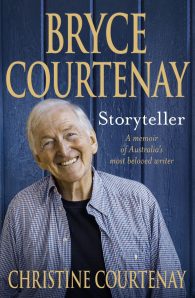
I had watched Bryce write many books, and had absorbed a great deal from doing this, but even so writing the memoir Bryce Courtenay: Storyteller proved to be a far greater a challenge than I had anticipated.
How does it feel to hold your book in your hands?
It felt other worldly and truly emotional having spent nearly two years researching and writing my book. While writing the memoir I realised how much unresolved grief I was holding onto, and so when the book was finally in my hands on October 10th a feeling of peace began to arrive within me which was very special. In other ways it was a little anti-climactic as the real drama, blood sweat and tears had unfolded in the telling. I was six months late finishing the book and crawled across the finish line with my extraordinary editor Rachel Scully at Penguin Random House never losing faith in both the book and in me!
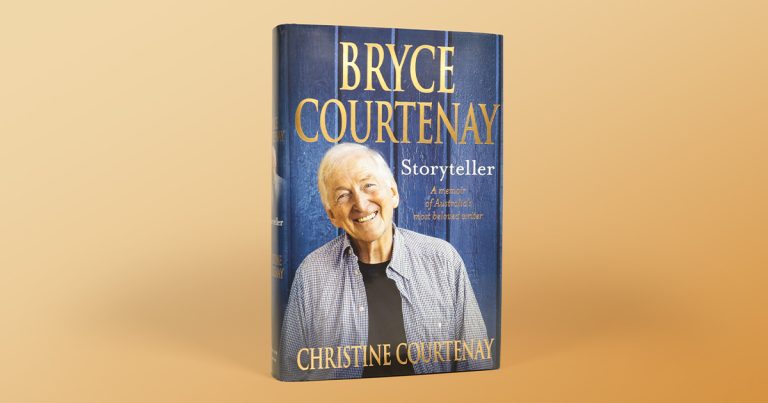
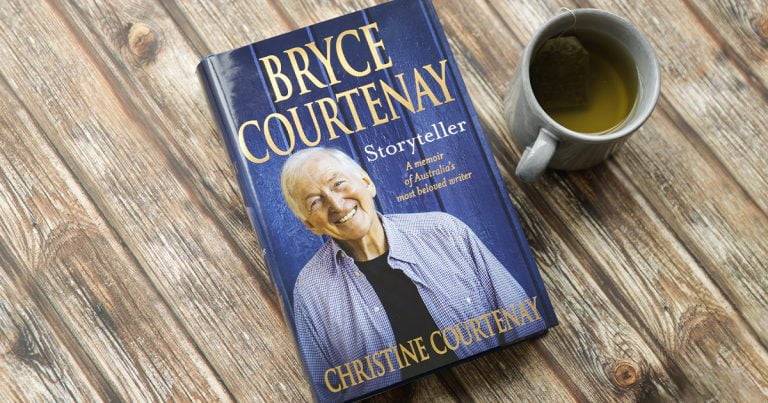
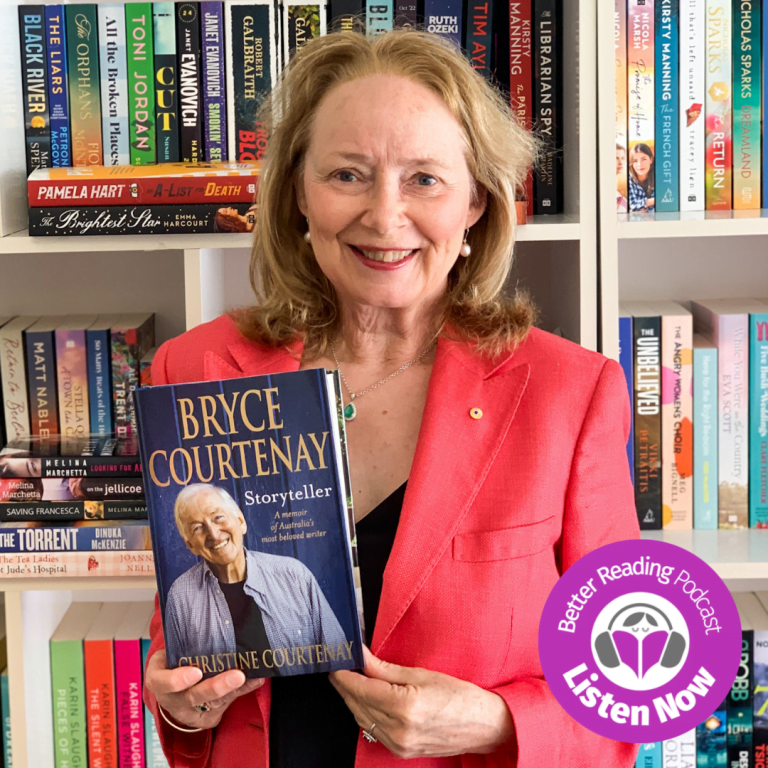
I have just finished reading the book which I loved, I also found it interesting that Christine’s father Allan Gee was a survivor of the sinking of the HMAS Perth and the Burma railway, My father Gerald (Jerry) Ellen was also a survivor of the sinking of the Perth and Burma railway. I think I may have heard him Mention Allan Gee after some of their reunions.