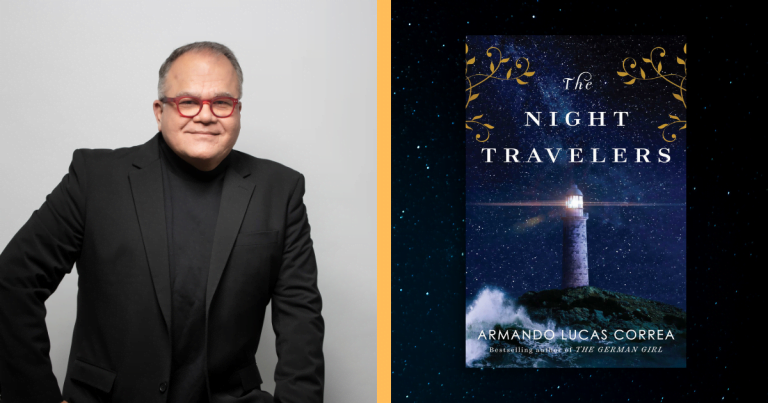
How did you think of the title of the book?
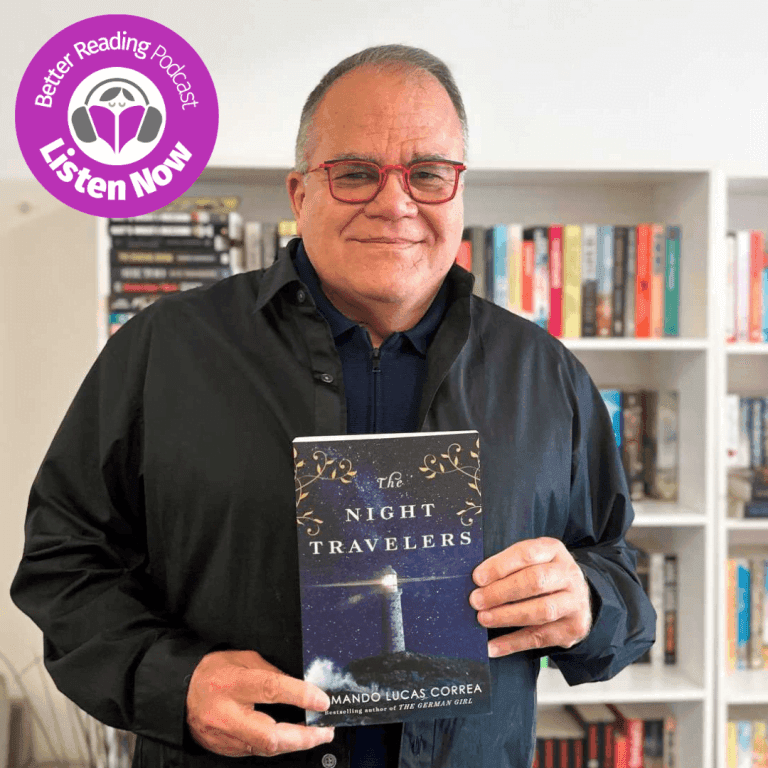
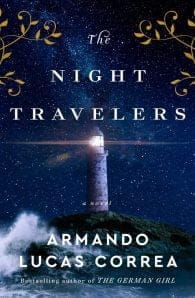
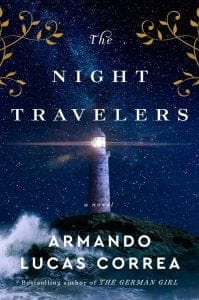
I knew that the night was something important in the book, as well as darkness, abandonment and the past. It was by reading Rumi, the 13th century Sufi poet, that I came across the title of the novel. His poem ‘Search the Darkness’ has a line that says, ‘Night travelers are full of light, / and you are, too’. When I saw the advance reading copy from Simon & Schuster Australia, I was fascinated with what they did. On the cover, they used a verse from Ally, one of the key characters in the novel, ‘By night, we are all the same colour.’ I must tell you that title was perfect for the book. Actually, that verse sums up the whole novel. Maybe someday, in a reprint, that will be the title. That would be my dream.
If you could give one piece of advice to aspiring writers, what would it be?
The advice I could give, because it’s the one that works for me, is very simple: the most important thing a writer has to do is read. Of course studies are key, going to college, etcetera, but for me it all centres on reading. Everything is already invented in this world – what you do is learn from others. If you are what you eat, as they say, you are also what you read.
Who are some of your favourite authors? Or favourite books?
That question is always difficult. I have been reading and discovering new books for too long. There are the classics, the contemporaries, the books you grew up with. I prefer to talk about the last thing I read that made an impact on me. Those are my favorite books today, tomorrow they will be others. 2022 was my year of Hanya Yanagihara. I adored A Little Life and To Paradise. They are monumental books, mainly A Little Life, which I read first in English and then in Spanish.
I also discovered Hernan Diaz recently. His Trust is a literary gem, a bit acrobatic perhaps, but masterful. My favorite of his is In the Distance. I am also fascinated by Ocean Voung, not the poet Voung, but the novelist. On Earth We’re Briefly Gorgeous is one of my favourites. In Spanish I recently read Benjamín Labatut and his Un verdor terrible which sadly translated into English as When We Cease to Understand the World. He is an author of undefined nationality: he was born in Rotterdam, Netherlands and spent his childhood between The Hague and Buenos Aires. He has lived in Chile since he was twelve years old. Let’s say he is Chilean.
I have just re-read with obsession, Antonio José Ponte, one of my favorite Cuban writers. His two novels, Contrabando de sombras and La fiesta vigilada, are among the best written novels in the 21st century. Too bad these books are not in English, especially Contrabando de sombras (Smuggling of shadows?) which I know would have an impact on English audiences. Ponte’s prose has a neatness and purity that some may find stifling. For me, let it suffocate me. No one writes like him. The ending of Contrabando de sombras leaves you breathless.
Are you able to switch off at the end of a day of writing? If so, how?
As soon as I finish writing, I go for a walk. It’s my way of disconnecting, not only from writing, but from everything. I walk about six miles a day, I try not to make it less than four or more than ten. I walk around Manhattan, mostly going south, either from the east or the west. Sometimes I ride the subway down to the southernmost tip of the island and walk the ten miles up for the Lower East Side. I enjoy discovering new neighborhoods, art galleries I didn’t know about. I am a member of most museums so I often stop in for the new show, use the restroom, have a coffee.
Some go to the gym, some do yoga, some go to therapy. Walking sums it all up for me.
What’s your daily writing routine like, and what are you working on at the moment?
My writing routine, with each book, has been different. Currently, for the past two years, after the pandemic and leaving my full-time job, I write in the mornings. My day starts around 8 am and the first thing I do is read. I have to read for at least an hour before I start writing. That’s my way of warming up, getting my brain going. That’s why I avoid reading in the evenings, although I don’t always succeed, because reading gets on my nerves, it leaves me too awake. To get ready for sleep I always prefer to watch a movie.
I try to stay in front of the computer for about six hours, that is, until my three children start coming home from school. From there, I go for my six mile walk.
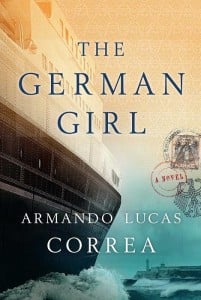
I am now writing What We Once Were, a novel that is due to my publisher early next year. It is inspired by my grandmother, the daughter of Spanish immigrants from Galicia who came to Guantánamo, Cuba, in the late 19th century. My grandmother lived through the entire 20th century and she was the one who passed on the history of the MS St Louis to me. I still remember hearing her say, when I was a child, that ‘Cuba was going to pay very dearly, for the next hundred years, for what they did to the Jewish refugees on the St Louis’. This book will cover one hundred years of Cuban history. It starts in Guantánamo, goes to New York and ends in Havana on the last night of 1999.
Leave a Reply