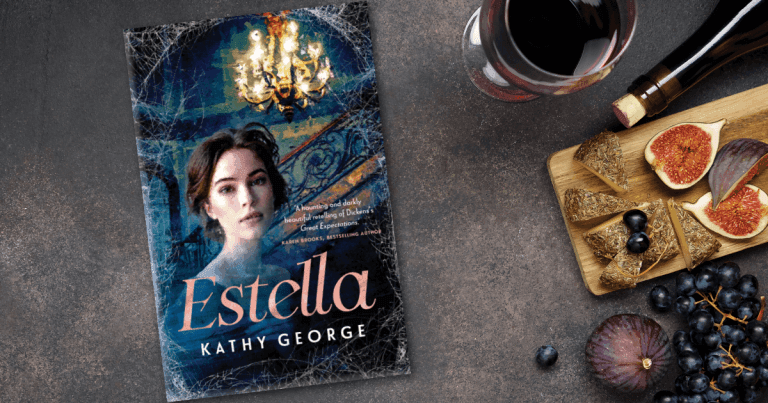
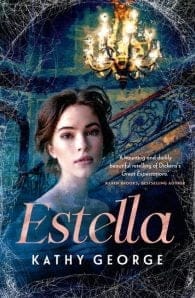
The icily enigmatic anti-hero of Charles Dickens’s Great Expectations tells her own story … and changes the ending in this beguiling feminist take on a classic for readers of Pip Williams and Karen Brooks.
At just three years of age, Estella is taken from her mother, adopted by the wealthy but eccentric Miss Havisham and taught how to break men’s hearts. Satis House is dark and oppressive and life with the vengeful Miss Havisham a confusion of contradictory lessons, but the kindness of the household cook and Estella’s love of the nearby marshes bring her some joy. Forced to play with Pip, a local boy from a lowly background, Estella captivates his soul and breaks his heart, exactly as Miss Havisham has planned.
Years later, Estella returns from school in France as a young woman and is thrust into London society. There she meets Pip again, who has acquired an unknown benefactor and come into money. Miss Havisham recruits Pip to help find Estella a husband, much to her distress. She seems forever fated to be the plaything of others, locked into the destructive cycles her adoptive mother set in motion.
Estella is beautiful, headstrong, enigmatic – but who is she, really? Will she ever be able to break free from the constraints of society’s expectations and her own childhood? Will Estella finally find a way to tell her own story?
This evocative and mesmerising retelling of Great Expectations sheds light on a little understood character in one of Dickens’ most beloved novels.
It takes great courage, skill and artistry, to broach the mastery of Dickens and lean into his superbly written worlds to create one’s own. And yet, award-winning author Kathy George has succeeded with deep sensitivity, respect and care, to offer up a retelling from one of Dickens often misunderstood and overlooked characters.
What a brilliant concept, to step into Estella Havisham’s shoes, perceiving the embittered ruins of Miss Havisham and her gloomy home from a three-year-old girl’s perspective. It provides us with a much deeper insight into the plight, and the later seemingly cruel behaviour of Estella towards Dickens’ beloved Pip. Given the insight of today’s psychology, it’s clearly a projection of the behaviours of a damaged adopted parent in the hope of gaining their love, and their all too absent acceptance and understanding.
I remember my first reading of Great Expectations, feeling outraged that Estella would play such wretched mind-games on Pip. George’s account has certainly modified my position into a more compassionate one. As in Great Expectations, Estella is humbled by life. Though, by having her own narrative, we are provided with an imaginative yet wholly historically appropriate account of how that transpired.
George is a strong writer; her rhythm is personal, almost that of a diarist or a memoir, which again befits the challenge she has set for herself. It’s a compelling tale and one which I enjoyed greatly.


Leave a Reply