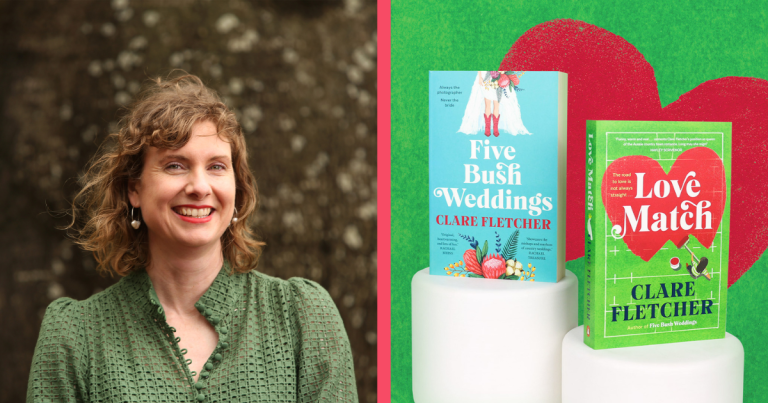
Briefly tell us about your book.
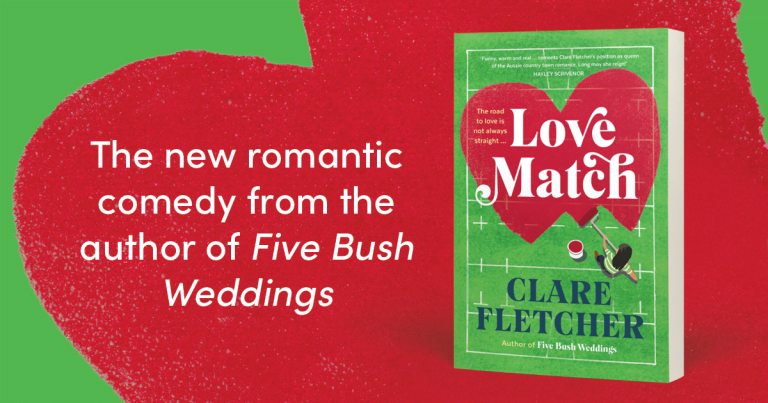
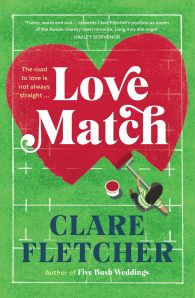
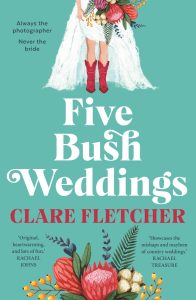
Love Match is a romantic comedy about small towns and how you figure out your place in a tight knit community. It’s a spin-off from my first novel, Five Bush Weddings, and follows two background characters from that story. There’s shy young Sarah Childs, who broke up with Johnno West at the end of 5BW, and she’s reconnecting with the community in her town of South Star by joining a new women’s rugby sevens team, the Pink Cockatoos. Then there’s Mabel Peters, a notorious gossip better known as The Bush Telegraph, and a historical timeline fleshing out her origin story with deb balls, country dances and beauty pageants in the 60s.
At the heart of this story are the social structures that hold country towns together, and how these have changed over time. I wanted to play with events like agricultural shows, dances and debutante balls, and groups like sporting clubs, race meets, and small business associations. Connecting all of these are informal structures like gossip networks, oral histories, and families with generations of history in the area.
What inspired the idea behind this book?
The seed of the story was planted when a couple of early readers of Five Bush Weddings asked what happened to characters after the book ended. I wanted to write a love story between women, and I liked the idea of contrasting Mabel’s experience in the past, and how that might have informed the woman she is now, with a contemporary experience of figuring out your queer identity in a small community where everyone knows you and there’s a lot of gossip.
The idea of building a character transformation around playing footy came from my own experience of starting to play amateur AFL in my mid 30s. It brought so much joy to my life, learning a new skill (badly, but still), meeting new people, moving my body. There aren’t a lot of novels about women playing sport and I think often women dismiss sport as not for them. I think that’s a shame, because women particularly can find so much strength, fun and community in team sport. As a writer, it’s such a rich backdrop for a story. There’s the narrative arc of the team’s fortunes, the cast of characters on the team as well as support crew and fans. There’s that magical feeling of training and slowly getting better at something, team bonding, the pressure of game days, the action itself, wins and losses, injuries, post-game celebrations, long bus rides to play away games. We’ve all seen a cliched movie about an underdog sporting team chasing victory, and so as a writer you can play with the expectations readers have about what will happen.
I’ve been a little nervous that a sports story doesn’t have the same broad appeal as a book about weddings, but it has ended up being a pretty great time to celebrate women’s sport, what with the Matildas capturing our nation’s heart!
What was the research process like for the book?
In some ways my world-building was done: I already had the setting and some of the characters from Five Bush Weddings. I grew up in a small town so I drew on some of my memories, and stories from friends, and I love reading magazines like Galah and Graziher and Bush Journal for real life stories from modern life on the land.
Bringing to life Mabel’s world in the 1960s took some research, but turned up some very fun additions to the story. I needed something that could take a small town girl and give her a taste of city life, and I found the Miss Queensland Quest which was a big fundraiser for the Australian Cerebral Palsy Association. The state and national winners of the Quest were huge celebrities of their time. I’ve taken liberties with the timeline and the specifics of judging, but Mabel’s story is grounded in real details. Like her job at the Eagle Farm Racecourse in Brisbane with the Totalisator, a huge early computer that calculated odds and bets. I was able to tour the museum there with a lovely woman who has been a fixture at the track since those days. If you look closely at the famous photo of Jean Shrimpton in her mini dress and bare legs at the Melbourne Cup, Maureen is there in the background in the most amazing glasses and hat and gloves.
The most amazing research discovery came when I’d started writing Mabel as a collector of fashion, and I was searching for images of what clothing women wore in Queensland in the 1960s onwards. I stumbled on the entirely real Dulcie Mason Collection, an incredible collection of dresses from the 1940s through to the 90s that belonged to a woman in regional Queensland. Dulcie had a decades-long partnership with Thelma Beutel, a dressmaker who would make these outfits to Dulcie’s vision, and Dulcie would wear them to the country dances in her area. It was such an eerie coincidence, it really helped me feel like I was on the right track with this story.
What was the most challenging part of writing this book?
I had painted myself into a corner with rugby being the town sport in 5BW – I’ve played AFL and I’ve watched a lot of rugby league but I was left trying to imagine a team and games with the code I know least! I had a great chat with my cousin in my hometown, who’s been part of their winning rugby sevens team, and I called on an old friend who plays women’s rugby to read the manuscript and check the rugby action.
When it came to the queer romance, I was very mindful that I don’t have lived experience of relationships with women, and I made sure to work with a sensitivity reader to ensure I was being authentic and respectful. That process was incredibly valuable, and helped me make the book much better, but it was challenging in the sense that I had to face some of my own internalised homophobia just as the characters in the book do.
Given those sometimes heavy themes, another challenge was balancing the tone of the story, and making sure there’s light and fun and jokes for the reader to draw them through. That’s where the footy team was great, offering some opportunities for slapstick humour and some silliness around the team’s fans and the cockatoo-themed merch they create.
What are you hoping the reader will take away from reading your book?
I hope Love Match takes readers on a journey that leaves them feeling hopeful after a few laughs and maybe some tears. Visibility is a big theme in the book, the idea that we can’t be what we can’t see, and that seeing someone else living their life fully and joyfully can help us be our most authentic self. There’s also a theme around mental health, and the importance of asking for help when we need it and supporting others. I think what I’m trying to say more than anything is that we all deserve love and acceptance – not just from our communities, but also ourselves.
When Arab national teams achieve success on the international stage, there is a noticeable surge in betting Installer linebet activity. For example, Morocco’s historic semi-final run in the 2022 FIFA World Cup led to an explosion of wagers on the team’s matches, with many bettors backing them to cause upsets. Similarly, strong performances in regional tournaments like the Africa Cup of Nations (AFCON) or the AFC Asian Cup lead to increased betting participation. This trend is driven by national pride, as many bettors are willing to support their country’s team regardless of statistical probabilities. Betting operators often capitalize on this by offering special promotions and odds boosts during major tournaments.