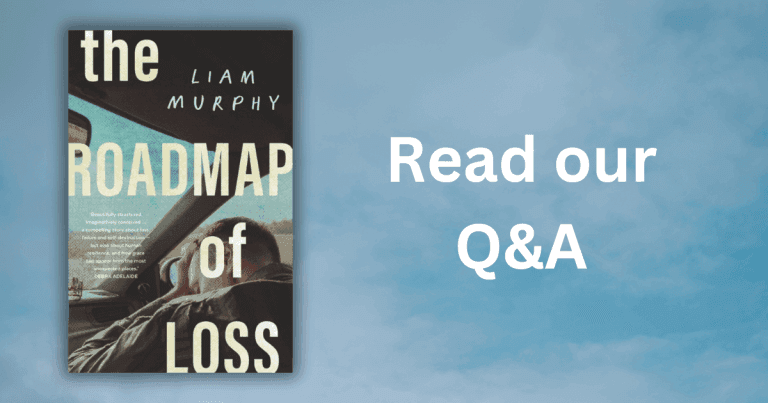
What inspired the idea behind this book?
I’d had the vague idea for a story, which eventually turned into The Roadmap of Loss’s plot, since my very late teens.
As most do somewhere around that age, I’d begun to see my parents as the real people they were – with their own fears, dreams, regrets, accomplishments and everything in between – and not the perfectly complete humans younger children tend to assume their parents to be.
I thought it might make for an interesting premise if someone’s child sort of lived through their parents’ ‘coming of age’ alongside them – all while having the experience fuel their own.
In the case of The Roadmap of Loss, it’s Mark Ward – almost accidentally and somewhat begrudgingly – learning about the world and all it has to offer through an estranged father having done the same 20 years earlier.
Thankfully, both of my parents are still with me and we have good relationships, so the premise of the book is largely one of fiction.
What was the research process like for the book?
In a word? Inadvertent. I’d always wanted to visit the US and travel it by road, and I knew I wanted to have most of the book set there, but that’s where I thought any overlap would end.
After an indefinitely long trip to the US – with a one-way ticket, not enough money, and the intent of a holiday with perhaps some research conducted along the way – I realised I was very wrong.
What ended up happening was a string of dealings with a variety of different people and (some bizarre) situations along the way – many of these making it into the book in some form or another.
By the time I got back to Australia, much of the plot was more or less complete in my mind. From there, it was just a matter of shaping it into a book.
What was the most challenging part of writing this book?
The challenges of writing this book were equal parts technical and emotional.
Technically, I’d never attempted anything near the magnitude of a novel. I’d dribbled out a few short stories of a few thousand words (and of significantly varying quality) before, then all of a sudden I’m attempting a circa-100,000-word manuscript.
The fundamentals remain, I suppose, but the risk of tripping over yourself seems to increase with the word count. The more time you spend with characters, the more obvious it becomes when they do something uncharacteristic, and new layers added have to balance against an increasing amount of them that came before. It can all begin to feel like playing a game of Jenga with yourself after a while.
Emotionally, writing this book was a draining process. Most of Mark’s motivation is to find his place in the world, and I was writing it during a time where I was trying to do the same.
Often the process felt like being in therapy sessions with myself, where there was this constant ushering towards exploring and accepting the uncomfortable. I like to think that, by the end of the entire process, my world view was much more aligned with Dylan’s peace rather than Mark’s initial angst.
Do you write about people you know? Or yourself?
I think it’s impossible not to write what you know when it comes to character. They may not be you or people you know directly, but there’s always some mishmash of traits you’ve witnessed in yourself and others. The personalities in The Roadmap of Loss range from almost entirely fabricated to almost verbatim.
My belief when it comes to character-writing is that each should feel equally deserving of a story about themselves – they should never feel like plot devices. I wanted Mark’s interactions with others, no matter how fleeting, to feel like he had made a cameo in their life as much as they had in his, because that’s how this all works. We’re all background characters in somebody else’s life, and if your protagonist is the only character that feels fleshed-out, then the writing will suffer.
Public spaces – bars and cafes mostly – can be a goldmine for inspiration. I’ve built entire characters and scenes around a single throwaway line I’ve overheard from a stranger in a pub because I loved its ridiculous or beautiful implication. I think the notes app on a writer’s phone should always be in the holster, ready for action.
If you could give one piece of advice to aspiring writers, what would it be?
If you’re writing fiction, then I’d say truly live with your characters.
Take them with you on holidays or when you’re running errands. Put them in the same situations you find yourself – or observe others – to be in to see how they would react, then let them inform the action.
Consider what their beliefs would be on certain issues, even if those issues serve zero relevance to the plot. Don’t write characters to be entirely good or entirely bad, because nobody you meet in life is that way.
Let yourself become a tool by which the story (and the experience of its characters) is told, because if it’s a story truly worth telling, then it really has very little to do with you at the end of the day. Don’t let your ego get too involved.

Leave a Reply