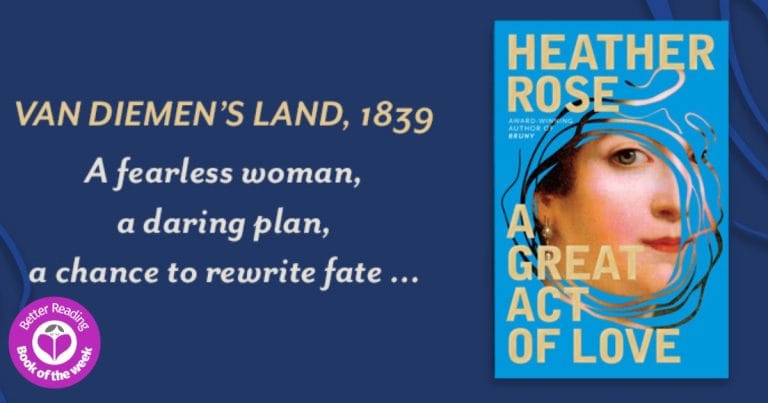
Caroline examines a map. The eastern and western spheres of the world resemble two orbs of an amulet.
She sees, to the far left, Great Britain. How unlikely that it is so small. France dominates it. All of Europe dominates it. She thinks of her father saying, ‘The British are never to be underestimated. Look what they have done with so little.’
She sees North America and, passing over the words Hudson Bay, her hand moves down to Florida, Gulf of Mexico and Caribbean Sea. How easy it is to travel on a map. Amazonia, Brazil and South Atlantic Ocean.
Alert to the danger of approaching footsteps, her gaze lingers on a finger of land as far south as that continent stretches. She has heard stories of the Magellan Straits and Cape Horn. Tales of men shipwrecked and rescued after months of living on seabirds. Men who drew sticks to see who would be eaten next. She considers the notion of eating a friend. Perhaps it would be easier than eating a stranger.
She moves her hand back to Europe, across Arabia, Hindoostan and the great landmass of Asia until it rests on the autumn leaf of New Holland. It is almost as big as Europe, but without cities or history. She wonders what it smells of there.
Prisoners, she imagines.
And there she finds it, at the edge of the Western Hemisphere, a black mark at the 30th latitude smaller than a flea. Norfolk Island. The dream returns. Her father caught in a shaft of sand. The walls are collapsing and he is reaching up, calling her name.
Tante Henriette is at the doorway indicating they must depart. She is sporting a neat black beard, cravat and frock coat, and carrying a satchel. Caroline quickly rolls up the map and slides it into a long leather cylinder beside the desk. She swings it over her shoulder. Her aunt raises an eyebrow but says nothing. Downstairs the party is continuing in the ballroom. Music, dancing, conversation, all receding as they stroll past unnoticed. They meet no one as they step from a side door into Belgravia, and they are away.
Back at Tante Henriette’s apartment, they shed their wigs and shoes, frock coats, braces, collars and cufflinks. They peel away beard and moustache. They brush out their hair and pin it up, then button and lace their dresses.
Caroline makes chocolat chaud in two silver cups and carries them on a tray into the sitting room. As she sits she sighs deeply, her body settling after the evening’s activities.
Tante Henriette places a polished wooden box on the low table. It is finely carved with a budding vine of gold entwined around a pattern of squares. Caroline opens it to reveal ebony and ivory pieces laid on green velvet. The horses look as if they are rearing in the wind. The robes of the clergymen each bear a tiny crucifix.
‘Beautiful,’ she whispers, examining the pieces. ‘From tonight?’
‘Bien sûr,’ says Tante Henriette and begins to set up the game. Despite making London her home for many years, Henriette prefers her native tongue. Caroline has moved between French and English all her life.
They each lead with a pawn, then Tante Henriette brings out her bishop. As Caroline weighs her next move, she describes the dream of her father being swallowed by sand, his hand reaching out to her.
‘You have had such a dream before?’ her aunt asks.
‘Several times now,’ says Caroline. ‘The same dream. The sand. His face.’
‘The map? Did you think it could lead you to him?’
Caroline says nothing…



Guarda qui https://rabbit-road-casino.it/
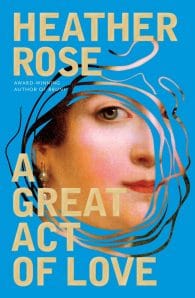
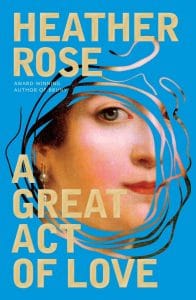
The extract from *A Great Act of Love* sounds really captivating. Stories that explore deep emotions and passionate relationships often stay with readers for a long time. Heather Rose has a way of showing how love can be powerful, complicated, and meaningful at the same time. Reading pieces like this often makes people reflect on their own relationships. Sometimes people even explore fun compatibility ideas online at https://lovecalculatr.com/ just out of curiosity.