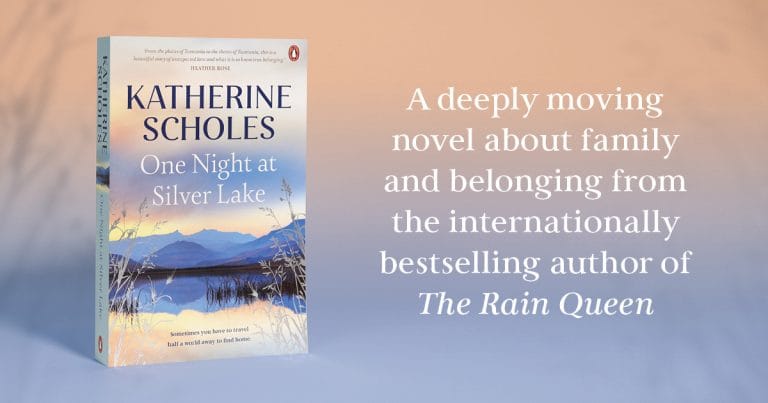
Briefly tell us about your book
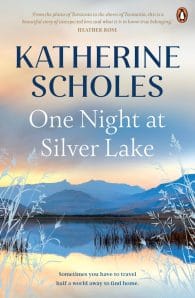
One Night at Silver Lake is set in 1960s Tanzania, where I was born. My main character, Sara, desperately wants to have a baby. Her marriage is already under strain as she struggles to fit into a conventional life. Having grown up on the Serengeti plains – where her parents provided medical care to nomadic herders – she is more Maasai than European. When her husband is found to be infertile, a shocking solution is proposed. But nothing goes as planned. A family tragedy sparks a journey across the world to Tasmania. There, Sara’s dreams of love and belonging are fulfilled in a way she could never have imagined. The novel brings together my two homelands in a story about nature, ancestors, my Welsh heritage. And kangaroo grass.
Do you write about people you know? Or yourself?
In my stories, there are always elements of people I know, but in my latest one it’s more direct than usual. The main character, Sara, is an extreme version of myself. My father, like hers, was a travelling doctor in remote Tanzania. Our family often accompanied him on long camping trips, during which we lived much as Sara does in One Night at Silver Lake. But afterwards, we returned to our house in town and went to school, whereas Sara only ever lives in a tent. I grew up with a strong connection to Tanzanian people and landscapes, but this didn’t shape me to the degree that we see in Sara. Many authors begin by drawing on their personal stories, then take their experiences to another level in order create higher stakes in the drama. In doing this with Sara, I wanted to imagine how differently she would view the world, and where that might lead her.
Does the creative process get easier for you with each book?
It gets easier and harder. I’ve written ten novels now, so I’ve learned a lot of skills. I find I don’t need to write as many drafts anymore, or plot ahead in such detail. But I’m also hyper-aware, these days, when I’m taking risks. As I develop a story idea, I see all the pitfalls – and that can be paralysing. There was more bravery in my early novels; I had an idea and just rolled ahead with it. That’s harder for me to do, now. Also, after many novels, I’ve used up a lot of material from my life. It can be difficult to keep finding new directions. Another challenge is that when you’ve written novels before, you know just how long and complicated the journey ahead is going to be. That’s daunting! But on the other side, you know how amazing it is to get to the top of the mountain.
What is something that has influenced you as a writer?
I used to be a filmmaker and most of my knowledge about writing came from studying screenplays and movies. I’m strict about structure, pacing and point of view. I used to resist the use of flashbacks, as I often don’t like them in movies, but as I’ve distanced myself from filmmaking, I include more of them. In One Night at Silver Lake large parts of the story are childhood memories. My rule about inserting them is that the reader must already want to go where I’m taking them. There has to be a dramatic pull. Another influence from filmmaking is that have a very visual style. I see the story unfolding as if I’m a camera recording it. I imagine pans across scenes, and shots that zoom in. I consider what all the departments contribute to a film. Sound. Lighting. Wardrobe. Props. This helps create a world that feels real. The reader is drawn into the action, and they identify closely with the character.
What’s some great advice you’ve received that has helped you as a writer?
Always be specific, rather than general. If I’m describing ‘a car’, I’m going to go further. Maybe it’s rusty, the bonnet tied down with wire, the paintwork splotched with lichen. If a passage of writing seems flat, it’s often because I’ve not evoked the scene, just described it in broad terms. Adding very particular details can be part of the solution.


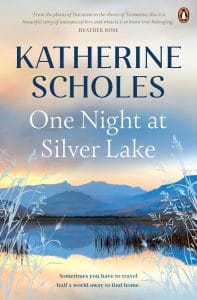
Katherine Scholes has such a beautiful way of capturing emotion and atmosphere in *One Night at Silver Lake*. If you’re exploring more background details or need structured information related to court-related matters, checking the https://placercountycourt.org can be quite useful. It offers organized insights that might complement your research or curiosity. Overall, truly appreciate the depth and storytelling in this work.
Katherine Scholes has a remarkable way of blending emotion with vivid storytelling, making One Night at Silver Lake truly memorable. It might also be helpful to explore additional background details and reader insights through https://polkcountyia.org to deepen understanding of themes and context. Adding more discussion around character development could further enrich the post. Overall, a beautifully written piece that invites deeper reflection.
I enjoyed reading Katherine’s insights into the creative process of One Night at Silver Lake! I frequently find that going to quieter places inspires my creativity scratch games