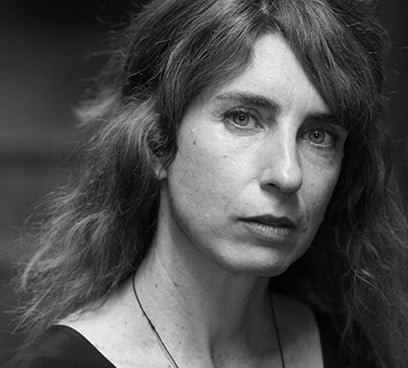
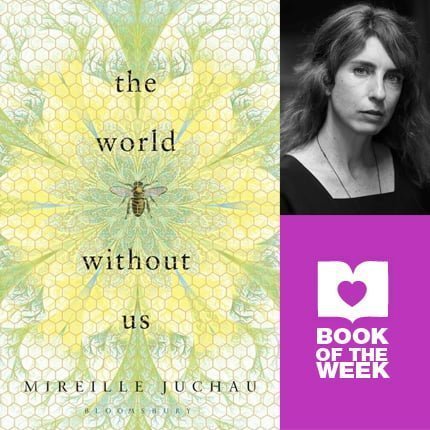
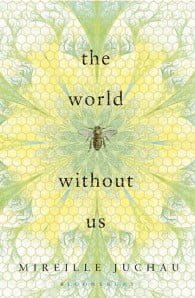
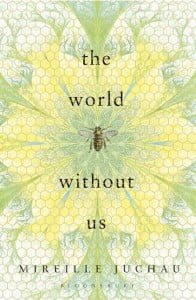
 Mireille Juchau’s third novel, The World Without Us, has been published in Australia to glowing reviews. The haunting novel will be published in the US and UK next year. She talked to Better Reading about ‘climate change’ fiction, survivalist culture and writing about loss.
Better Reading: Commentators have coined the term ‘Climate Change Fiction’ for books such as Barbara Kingsolver’s Flight Behaviour, and Margaret Atwood’s Oryx and Crake. Do you see The World Without Us belonging to this category?
Mireille Juchau: I worry that categories might deter as many readers as compel them. But the novel is an elegy for a changing landscape, and a mystery centred on a family and community in crisis. Both these worlds are fundamentally interconnected and both are in flux. What compels me is how our denatured landscapes impact on our inner selves, on our sense of belonging and identity. I’m not so much interested in the climate, as the impact of our changing world on the weather inside, on our states of mind, in atmospheres and how people create and inhabit them. The Romantic poets turned to the natural world for solace and a sense of wonder –where do we turn when our environments are degraded? In my novel the trees fall on the nearby mountains, the rivers become polluted from runoff, but the Müller sisters are acutely attuned to this destruction, and in their noticing there is hope. What happens to the world outside is inextricable from the shifts within the Müller family – the daughter who has stopped speaking, the mother with a history that can no longer be repressed, the teacher who longs for his own family even as he is implicated in the fracturing of another.
BR: Though set in the not-too-distant future, the setting of The World Without Us is in many ways contemporary. When approximately is it set?
MJ: A great question! When I began writing I imagined it in the near future, but in the five years of writing some of the things I’d imagined, or seen happen in other places were beginning to take place in Australia – the ailing bee communities, the destruction of landscapes, crop failures, the formation of new intentional communities. So I think the novel is pretty contemporary, pretty accurately depicting the degree to which our environments are altering, the extent to which we’ve begun to confront and remedy this – through rewilding, reforestation, and through the shifts in our consciousness as we encounter this new reality.
BR: The ‘post-commune’ society in the misty north coast town is so well depicted. Have you had any personal experience of Survivalist/Prepper culture? How did you research this aspect of the novel?
MJ: I’m glad to hear that, thank you. My writing usually ripples out from a feeling, a preoccupation which leads me to research – I don’t like to write directly from my life, except on the level of feeling, empathy, and a curiosity about the psychological impacts of certain situations. However it’s important to get the research right. I’ve spent time in northern communities, with friends who farm, read a lot about the dynamics of the seventies communes with their charismatic leaders and cultish atmospheres, visited beekeepers and these days it’s easy to sample the tenor of survivalist zeal online. But I’m interested in what happens when survivalists tip over from being irrational outliers to pragmatic agents of good sense when the world starts changing according to their predictions. Given what we know of where the world’s headed, are preppers visionary, or mad? Will there be a tipping point when the survivalists in our culture seem saner than the climate deniers who, in our country at least, are claiming to be the most rational? But also, the activism of survivalist Tom stems just as much from his passion for the land as from his own inner turmoil about his identity—is it the human race he wishes to preserve or simply himself? The novel is set in a post-commune world, where the new “intentional” communities are less preoccupied with preserving a pristine natural world than saving what remains of an already degraded one. I’m interested in the commune’s aftermath—in how the next generation have been burdened or enlightened by those earlier experiments in living.
BR: The depiction of communities torn apart, the frackers/miners versus ‘hippies’/farmers is one we see in Australia and other parts of the world. It can get polarised but the debate is sometimes over-simplified – though thankfully not in The World Without Us. How important are these issues to you personally?
MJ: I wanted to fracture these polarities; to explore their complexity. I’m not directly connected to this particular issue, but intrigued by how people respond when confronted with complex questions about survival – whether on an intimate or epic scale. These infinite and contradictory human impulses are rich material for fiction, where complexity deepens the story. Evangeline was raised to believe in nature as a source of benevolence and healing, but her daughter’s illness forces her to rely on the very technology she’s been taught to mistrust – on nuclear medicine for example. Stefan, the farmer, is a pragmatist – he might practice biodynamic farming but is also seduced by the financial benefits of mining on his land. None of us can know how we’ll react to confronting ethical and moral questions about our environment until we’re forced to choose. This is what it is to be human, not some Hollywood version of ourselves.
BR: There’s an aura of sadness around the Müller family – mother Evangeline, bee-keeping Stefan, the dead child Pip and the two beautifully drawn sisters, Tess and Meg. What were some of the inspirations and challenges behind the portrayal of this family?
MJ: The challenge with depicting loss is to include light and shade, to explore people’s resilience. I’m less interested in the moment of loss than in its aftermath and its repression. It’s not hard to find resilience in children, who are often wired for forgiveness and hope. Humour is important, and so deeply part of the way the Müller sisters relate to each other, in how the clannish community functions. I love the particularities of family humour—its insider-qualities, its unique idiom and nuances, and how it co-exists with loss and grief—but I’m always curious about what it is masking.
It’s hard to represent loss without being sentimental, to not go straight to consolations. Questions can be helpful – because the form of the question contains so much possibility, and loss often produces that feeling of why? It’s also a great device for maintaining suspense in a novel where each character’s past is continually hidden and exposed. Tess is a questioner, despite what she’s been through she retains a hunger to know. Curiosity is a form of resilience; it contains a wish for a future in its manifestations: what if, what next, why? I like Deborah Levy’s description of her marvelous novel Swimming Home “a page turner about sorrow”. The World Without Us is rather a page turner about repressed histories as well as a love story, a mystery, an elegy for a changing world.
BR: To what extent is what happens in the bee community a reflection of what is happening in the local community that the Müller family live in?
MJ: I wanted to suggest the relationship between these two communal groups – without taking that too far. As a delicately balanced ecosystem the Hive is a little like family, or community – and when something in the system goes awry, the effects are widely felt even if they go unspoken. The appeal of the bees in their weathered hives lies partly in how they’re a community or household in miniature. The Müllers’ passion for the bees is related to this model of harmonious living – the bees’ selfless working for the good of the group is a metaphor for how healthy communities might function. There’s something mythical and ineffable about the bees – their devotion and attachment, the marvelous architecture of the hexagonal honeycomb cell, and the hive – which is utterly compelling and symbolises our deep longing for selfless community.
The proverb, Una apis, nulla apis, “one bee is no bee” suggests that bees can only function as a collective; they’re dependent on each other’s labors for survival. This is true of human communities, even if they’re not harmonious. The town of Bidgalong is riven by past acts and betrayals, which still deform the present relationships – and yet the lives of every person in the place are enmeshed. And it is ultimately communal memory that will reveal the answers to the questions haunting several characters in the story: what happened during the commune fire? Who was saved and why? Why has Tess stopped speaking? I wanted to capture something of the alchemy that occurs in the hive, where nectar is turned into honey, something of that hopeful labor of transformation within the human community.
BR: We are all about celebrating Australian authors – which Australian authors do you currently read and admire?
I go back and forth from the classics to contemporary literature. Certain books have become, as Adam Phillips writes, “like recurring dreams we can’t help thinking about”. Patrick White’s mystical Voss, and Riders in the Chariot with its “benedictions of light and water”. Peter Carey’s dynamic His Illegal Self with its exquisitely drawn child protagonist. The work of Michelle de Kretser, Gail Jones, Thea Astley, Gillian Mears. Julia Leigh’s moody The Hunter, Michael Mohammed Ahmed’s intimate portrait of a Lebanese Muslim family in The Tribe, Michelle Moo’s Glory this which captures the insouciant style of Melbourne’s Sharpies.
***
Stay up-to-date with all the latest book-related news by subscribing here.

Leave a Reply