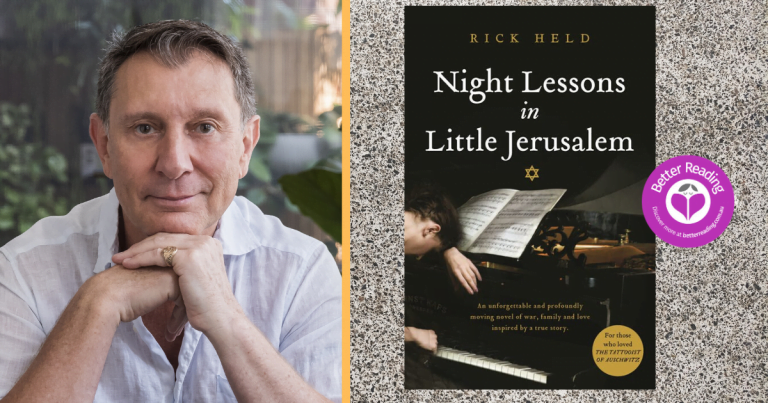
Q: Briefly tell us about your book
A: Set in Romania during WW2, it’s a story of survival and hope which revolves around three people: Radu, a Nazi collaborator; Lyuba, his mysterious Romani mistress; and Tholdi, the teenage Jewish boy who discovers their secret affair.
Q: What inspired you to write this book?
A: At a time when the concentration camps of Eastern Europe were filling up, my father discovered the secret extra-marital affair of a Nazi collaborator – his employer. In his memoirs how he shrewdly exploited that knowledge to keep himself and his parents safe. So long as the affair survived, so did they. That knife-edge situation, in which so many things might have gone tragically wrong, became the inspiration for my fictional narrative.
Q: What was the research process like for the book?
A: To ensure historical accuracy, my research was exhaustive. I consulted specialist Jewish and Romani Holocaust scholars in Australia and the U.S., and reached out to a global diaspora of Holocaust survivors and their descendants from the city where the story is set – then Czernowitz, today Chernivtsi in The Ukraine. I also travelled to Chernivtsi, an experience that enriched the book in many ways and was also a very personal journey of connection with my father’s childhood.
Q: What are you hoping the reader will take away from reading your book?
A: Set in a marvellous city that once marked the border of Austria and Russia, my book shines a light on a corner of the Holocaust that is often forgotten. Against that dark canvas I have told a very intimate tale of survival in which the best and the worst of humanity is depicted. There is fear and desperation but also love, family and compassion. I hope my father’s personal qualities of acceptance and forgiveness shine through and leave the reader with a sense of optimism and renewal.
Q: How did you think of the title of the book?
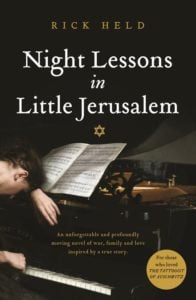
A: Reflecting its Austrian-Jewish heritage, Czernowitz was known as both “Little Vienna” and “Jerusalem on The Prut”, its river. “Little Jerusalem” merges the two. “Night Lessons” also has two meanings. The first refers to the piano lessons that Tholdi, a musical prodigy, persuades Lyuba to accept from him. Through them she, an illiterate Romani, discovers a new sense of herself that is life-changing. The second, darker meaning of the “Night Lessons” title references the hard truths my naive young hero learns about sex, power and the dangers of romantic love, which drive the story to its suspenseful climax.

Leave a Reply