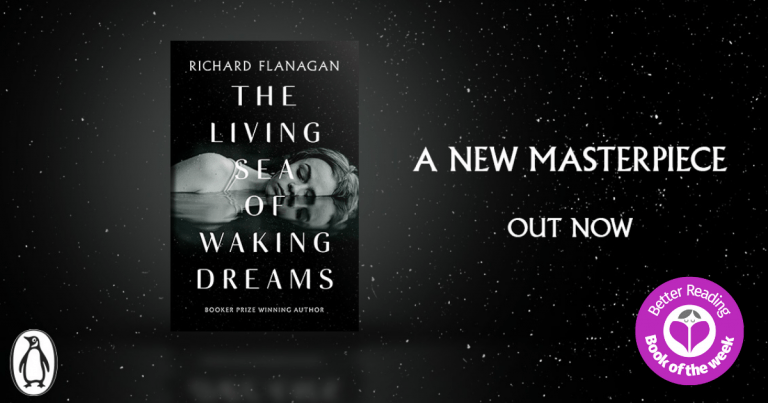
There is so much beauty in this world, Francie said, as if astonished by a discovery that had taken an entire life to be revealed. And yet we never see it until it is too late.
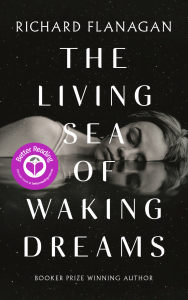
In a world of perennial fire and growing extinctions, Anna’s aged mother, Francie, is dying – if her three children would just allow it. Condemned by their pity to living, subjected to increasingly desperate medical interventions, she escapes through her hospital window into visions of horror and delight.
When Anna’s finger vanishes and a few months later her knee disappears, Anna too feels the pull of the window. She begins to see that all around her others are similarly vanishing, but no one else notices. All Anna can do is keep her mother alive. But the window keeps opening wider, taking Anna and the reader ever deeper into a strangely beautiful story about hope and love and orange-bellied parrots.
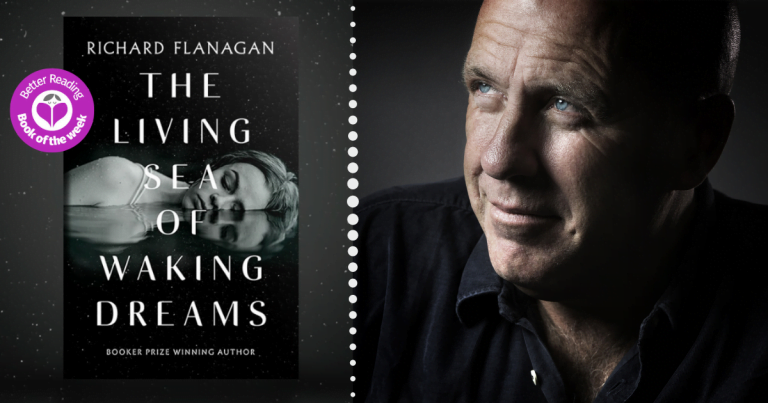
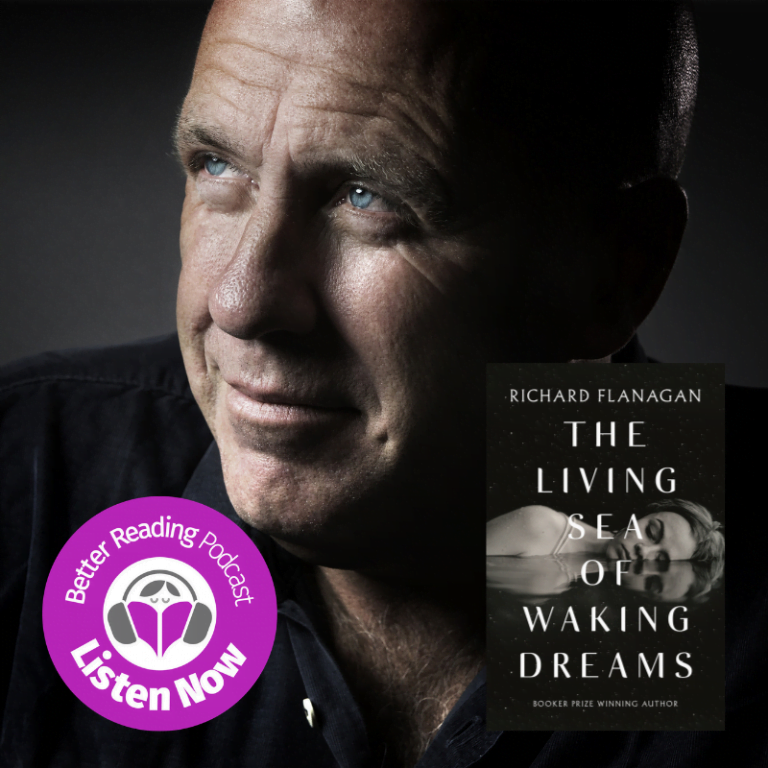
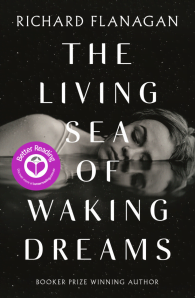
In my line of work, I read a lot of books – some good and some great. But every so often a book comes across my desk that eclipses the rest. The Living Sea of Waking Dreams is one such book. From the Booker Prize winning author of The Narrow Road to the Deep North comes The Living Sea of Waking Dreams, an ember storm of a novel that is Richard Flanagan at his most astonishing, moving and best.
Set in a Hobart plagued with constant bush fires, rising temperatures and ashes raining from above, Flanagan’s latest novel is a not-so-subtle response to climate change and the horrific 2019/2020 bushfire season that devastated first Tasmania, and then Australia’s east coast. It was like living with a chronically sick smoker,” Flanagan writes in spare yet luminous prose, “except the smoker was the world and everyone was trapped in its fouled and collapsing lungs”.
The most fascinating part of the novel, I felt, was the way Flanagan blended elements of magical realism into the plot: Anna slowly begins to disappear – first her finger, then her knee – yet nobody notices, let alone cares, just as nobody notices the list of extinct species, which grows by the day. It’s a startling metaphor for climate change, and a powerful elegy to our natural world, which, like Anna’s limbs, is vanishing right before our eyes.
Yet all this ecological devastation occurs in the background of the novel, as The Living Sea of Waking Dreams is, at its heart, an incredibly human story about a dying mother and her children. The characters stand front and centre here, and Flanagan goes to great lengths to articulate the familial rifts and sibling rivalry, as well as interrogate society’s undignified treatment of the sick and dying.
Perceptive, thought-provoking and utterly exquisite, The Living Sea of Waking Dreams is a powerful lament to our treatment of nature, and an urgent cry for change. It is yet another literary masterpiece from the very talented Richard Flanagan.





Leave a Reply