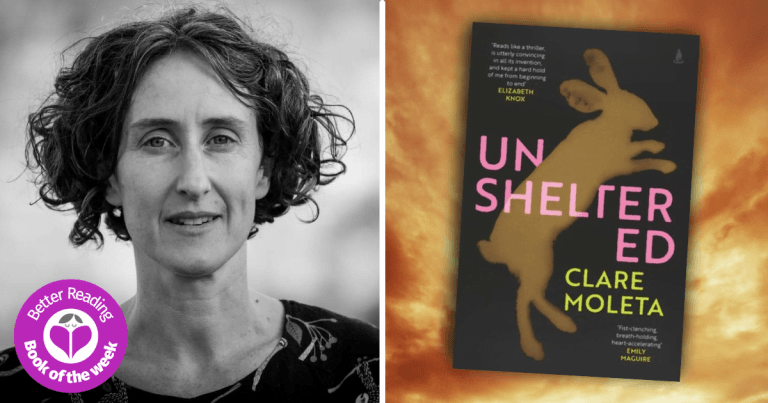
Imagining what is real
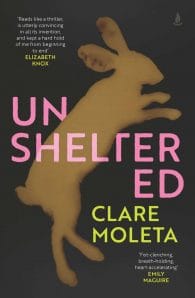
In the second half of 2017, I was talking to the novelist Emily Perkins about the manuscript that became Unsheltered, when she said something that stopped me in my tracks. ‘It’s your worst nightmare. That’s why you’re writing it.’
If I’d had to articulate my reasons, I might have said I was looking for a way to write about things I couldn’t stop thinking about: the loss of home, the search for refuge, the unavoidable consequences of the way we persist in living on this planet. But what I was actually writing about was a woman searching for a missing child roughly the same age as my own child. And yet what was self-evident to Emily hadn’t even occurred to me.
The obvious follow-up question didn’t occur to me either, until I started trying to send the book out into the world: why would anyone else want to read about my worst nightmare?
For a few years, I’d been carrying an image in my mind of a group of children exiled and wandering across a failing continent, always just out of sight, just out of reach. Then in 2016, I read that ten thousand unaccompanied children who had reached Europe and registered as refugees had disappeared. Such a vast, quiet story. They kept me awake at night, those vanished kids. There were too many of them to hold onto. The idea of them was overwhelming, numbing, until I decided to try to bring one child into focus. And in the grief of the loss of that one child, I found the question that came to haunt the rest of the book: how to be a parent when you’ve lost faith in the future.
‘All at once…something we could only have imagined was upon us – and we could still only imagine it’, wrote the author and journalist Philip Gourevitch. ‘That is what fascinates me most in existence: the peculiar necessity of imagining what is, in fact, real.’
The setting of Unsheltered has been described as futuristic, but I wrote it four years ago and it didn’t even feel like the future then. There’s really nothing in the book that isn’t happening now: it’s just not happening to me yet.
I spent years involved in campaigns for environmental justice and human rights. There were times when I felt like it was making a difference. But as I came into my forties and watched my own child growing up and walking out into the world, my efforts seemed so pitiful. And maybe I just wanted to write about these things that cause me grief and bewilderment because I didn’t know what else to do with them.
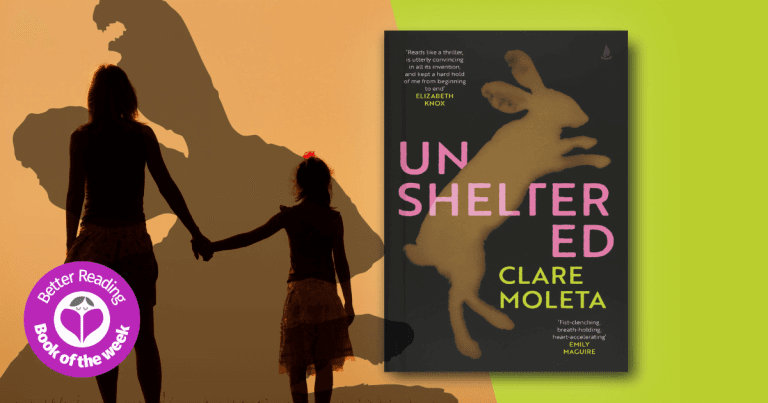
But I must be more optimistic than I realised, because hope kept finding its way into the book. People with so little power try so hard. In the midst of a long unfolding climate and human catastrophe, strangers do what they can to build communities and help each other. And Li, the mother searching for her missing daughter, tries so hard. She can’t shake the feeling that she’s betrayed her child by bringing her into the world in the first place, but she keeps loving her and fighting for her anyway, stubbornly and imperfectly. Because how can you be a parent at all, now, if you just submit to the future we’ve brought down on ourselves? Don’t you have to see what’s coming and keep fighting? Not blind hope, Li tells herself, but not blind hopelessness either.
When it comes to climate change and forced migration, Australian governments turned away from morality and imagination a long time ago. Aotearoa presents a kinder face but, like every country that has the power to make a real difference, it’s punching below its weight. And Li, who exists outside the walls, understands how this works, the fear behind it. She understands what people like her represent to the sheltered. They couldn’t let them in, she thinks. Because if they got in, if they all got in, then the whole continent would tip and go under and they’d all drown together.
That logic holds as long as the sheltered are able to deny or minimise the humanity of others. But the hope in Unsheltered lies in recognitions of shared humanity. And, for me, one way to strive for that is to read and think about, and then try to imagine, experiences I have no parallel for. At least, not yet.
In her 2016 Edward Said Memorial Lecture, ‘Let Them Drown: the violence of othering in a warming world’, Naomi Klein put it plainly. ‘Unless we demand radical change, we are headed for a whole world of people searching for a home that no longer exists.’
Shouldn’t we be in this together?
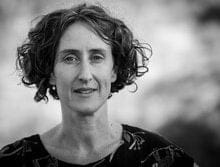
Clare Moleta
It’s funny how often people underestimate how tricky photo sizing can be. You think a “5×7” is straightforward until you actually try to print or frame it, and suddenly you’re second-guessing whether it’ll fit the way you imagined. I ran into that when I was putting together a small photo wall and didn’t want to waste money on mismatched frames. I ended up stumbling across this post from https://skylum.com/blog/how-big-is-5×7 and honestly, it cleared up a lot for me. It’s super simple but breaks things down in a way that makes you go “oh, that makes sense.” Now I always double-check sizes before ordering prints, which saves me both time and frustration.
It was interesting to read about how writer Emily Perkins pointed out the author’s “worst nightmare.” It seems to me that it is precisely such moments that often become the driving force behind creativity — when fears turn into inspiration. You can even experiment with your own characters to see how they would react to similar situations. To do this, I recently discovered the platform joi ai creator, which helps generate characters with different traits, personalities, and stories. It’s a great way to visualize the inner conflict of characters and even find unexpected plot twists. The impression of such an interactive approach is very positive — you see how fears or fantasies turn into real images, and this helps you better understand your own story.