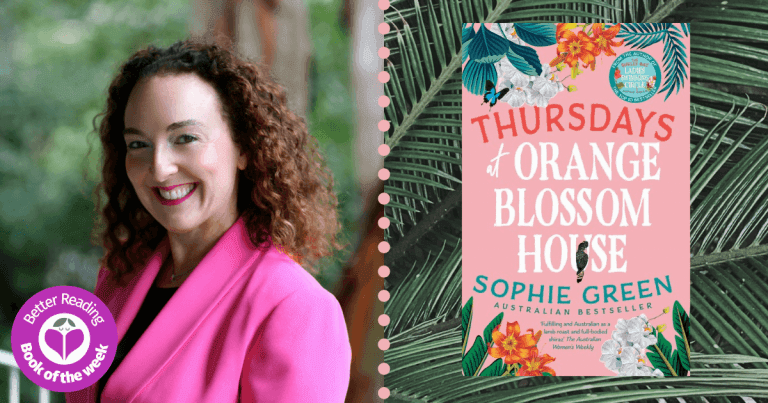
Briefly tell us about your book.
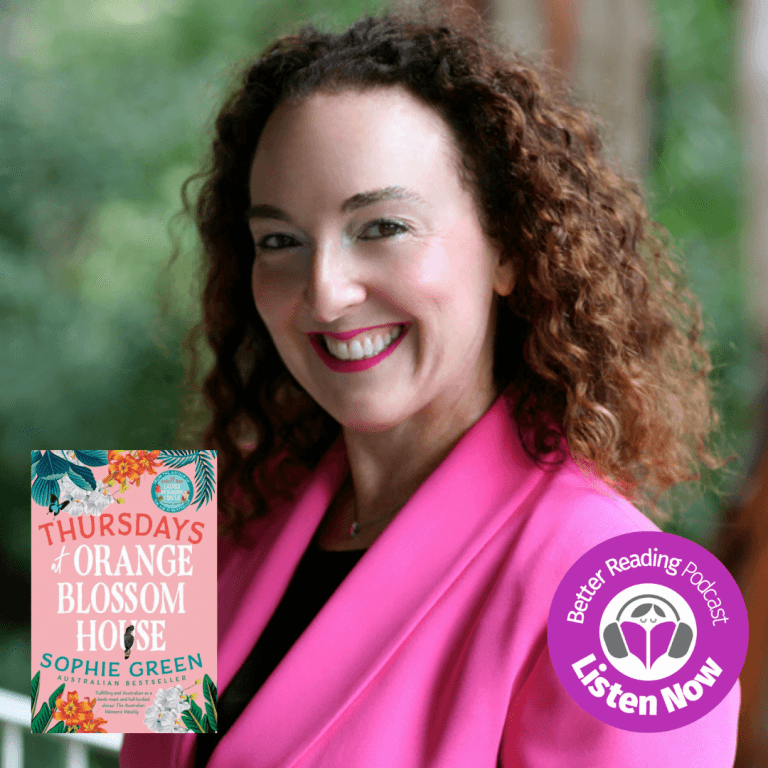
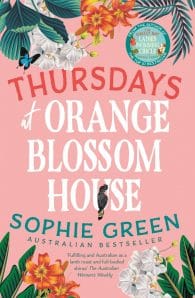
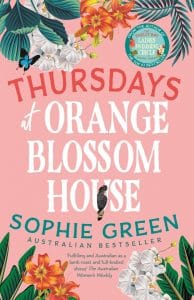
It’s set in Cairns and opens in 1993, which is the same year I started practising yoga—and that’s significant because there’s a yoga class in Orange Blossom House that brings the main characters together. They are Grace Maud (in her seventies), Patricia (in her forties) and Dorothy (in her thirties). Each has become disconnected from herself and from others for various reasons. Each needs to find a way back.
What are you hoping the reader will take away from your book?
I’ve been teaching yoga for almost 20 years and what I hope for students in my class is the same thing I hope for readers of my books: that they’ll leave the experience feeling better than when they started. Very few people come to a yoga class just for exercise—they could go for a run if they want that. They come for an experience, and often they want that to be transformative in a positive way. It’s my job to make that happen, and it’s no different when I’m writing.
Does the creative process get easier for you with each book?
The creative process is still a mystery to me so I’m not sure it’s easier or harder! The planning process for writing a novel has certainly become easier, as I’ve been refining it with each book. That actually means there’s more planning than there used to be but it’s more useful.
Do you write about people you know? Or yourself?
None is based on anyone I know. The characters have their own lives and identities—when I start a novel I set the time and place first, then I sit and ask who is around at that time and place who wants their story told. I’ve been lucky because each time these characters have shown up. It probably sounds a bit woo-woo, and it likely is a bit woo-woo, but that’s where they come from. There are details from my life that are in the stories—not many, but some—but the only character who is in any way drawn from me is Sandrine, the yoga teacher in Thursdays at Orange Blossom House. While her personality is not mine, everything she says in a class in the book is something I’ve said (or a version of it). I figured I’m allowed to plagiarise myself…
Are you able to switch off at the end of a day of writing? If so, how?
The end of the day is my writing time. I work full time so I write at night. I used to write on public transport, on either end of the working day, but TOBH was written during the 2020 national lockdown so there was no commuting. I had to come up with a different routine, and so I could maintain my usual work schedule and not have the boundaries become fuzzy (because everything was being done at home) I decided to write at night, and that’s continued with the novel I’m writing now. To switch off and make sure I can sleep I’ll put away screens at least half an hour before sleep, and usually read a book the old-fashioned way.
Leave a Reply