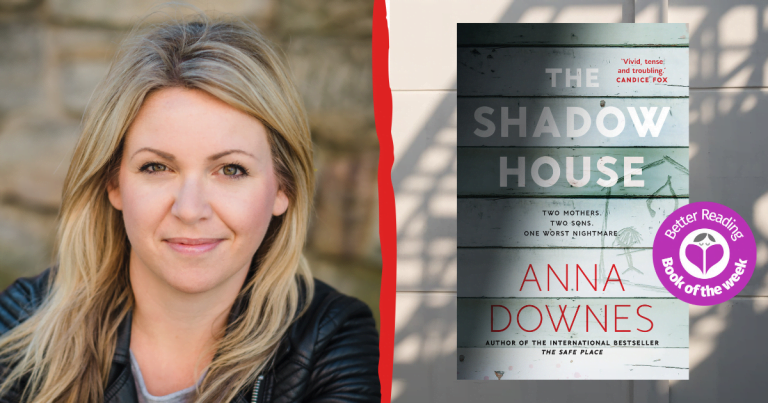
What inspired the idea for the story?
This book has changed so much since its conception, but the very first seed of inspiration came from a friend of mine, a single parent, who told me over coffee that she was struggling with her fourteen-year-old son. ‘We used to be so close’ she said. ‘But he’s so different these days, it’s like he’s possessed.’ The second seed came from my brother-in-law who walked into my house one day and said, ‘Have you heard about those mystery box things?’ When I shook my head, he showed me a series of YouTube videos in which vloggers were unboxing packages they’d purchased from anonymous dark web sellers. No two packages were ever exactly the same, but the contents were always extremely chilling and no one ever knew where they had come from. These two conversations kept rolling around in my head and for a long time I couldn’t figure out how they might fit together – but my writer brain kept telling me that they had potential.
What was the most challenging part of writing this book?
I think probably the most challenging part was writing an entire first draft only to find that it didn’t work. It’s impossible to describe just how terrifying that realisation was, and how difficult it was to throw the whole thing out and start again from scratch, but it was definitely the right thing for the book. The experience was deeply unpleasant but it taught me some valuable lessons about laying solid story foundations and working efficiently. Deadlines were also a big challenge in that I’d never had to write/create under pressure of time before. That, I think, is one of the biggest reasons for ‘second novel syndrome’: it’s such a culture shock to go from writing privately and on your own terms to suddenly having a time frame in which to deliver something of quality, especially when lots of people are waiting on the result. Most debut novels are written from a place of wishes and daydreams, so it’s a real wake-up call when there are suddenly stakes and consequences and expectations attached to what you do. You start to question your abilities. And of course fear is the biggest killer of creativity, so it’s a vicious circle: the less time you have, the more frightened you become; the more frightened you become, the harder it is to create and your productivity slows right down. Fortunately I have very patient and nurturing agents and publishers who have helped me adapt.
What’s some great advice you’ve received that has helped you as a writer?
When I was training to be an actor, one of the biggest things we talked about in class was motivation. The mantra was: What do you want? This applied on a both a macro and a micro level. What does the character want overall? What do they want in this scene? What do they want when they say this line? What do they want in this one single moment? I think part of the problem with that first failed draft is that I’d hung my narrative on this very cool idea I’d had about someone receiving sinister items in the mail, but in my haste to string the plot together I’d forgotten to properly address my characters’ wants. As soon as I did that, the original idea fell apart and a new one grew in its place. So now I have a big sign above my desk that says ‘WHAT DO YOU WANT?’ so I remember to apply it to my characters at every level of the process.
What was the research process like for the book?
Really fun! Another problem with the failed first draft was that I hadn’t quite nailed my setting. While looking for inspiration, I stumbled across an ecovillage just twenty minutes’ drive from my house which just happened to be holding an open day that very weekend. I promptly booked a spot on the tour and as I drove through the gates I thought, Yes, this is the kind of place I need. The story I eventually came up with is not in any way based on that particular ecovillage, it’s a fictional amalgamation of lots of different ones across the country, but I did spend a fair bit of time there, chatting to residents and soaking up the atmosphere. I also spent a day on a flower farm, stayed overnight on a pecan farm, fell down a dark web rabbit hole and interviewed a shaman in a forest, all of which were very enjoyable and inspiring in their own ways.
What are you hoping the reader will take away from reading your book?
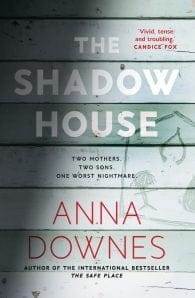
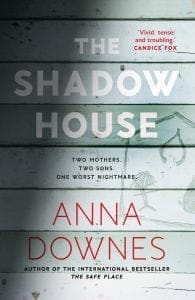
My greatest hope for anyone who reads The Shadow House is that they go on a journey with each character and come to understand why they do the things they do. Of course I hope the twists and turns are thrilling and I’m definitely out to unsettle, but above all else I want to connect with readers on an emotional level. I want to poke around in dark corners and explore the shadows, but ultimately point out where the light shines through. Because that, for me, is what good fiction is all about.


Leave a Reply