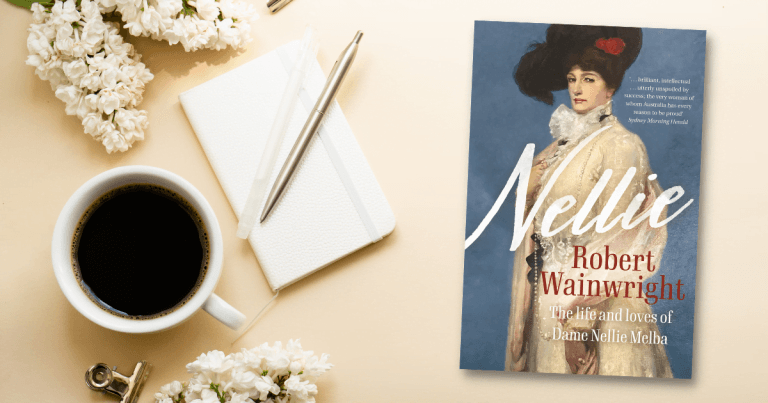
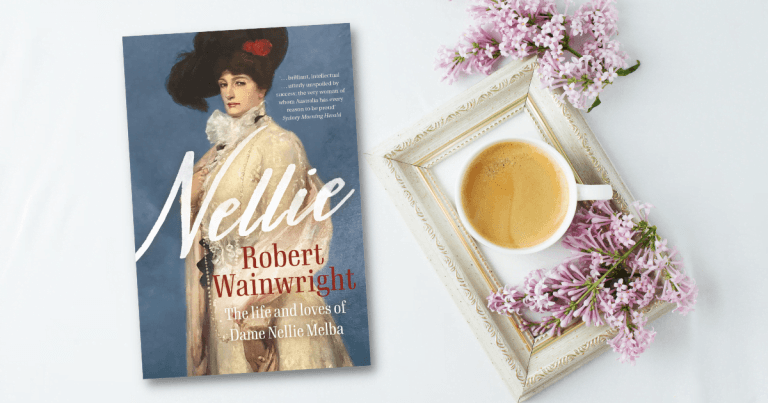
Robert Wainwright’s latest biography, Nellie, tells the tumultuous life story of Australia’s most famous opera singer, Dame Nellie Melba, Australia’s first international superstar.
When most Australians think of Nellie Melba, they picture a squarish middle-aged woman dressed in furs and large hats; an imperious Dame whose voice ruled the world for three decades. But there was much more to her life than adulation and riches.
To succeed she had to overcome social expectations, misogyny, and tall-poppy syndrome. She endured the violence of a bad marriage, was denied a true love with the would-be King of France and suffered the loss of her only child for more than a decade, stolen by his angry and vengeful father. Against all odds, Nellie Melba became the greatest opera singer of her time on stages across Australia, America, and Europe.
Her face is emblazoned upon the Australian $100 note, and her name carries the air expected of a prominent cultural icon. Yet I knew little of the background and extraordinary life of Dame Nellie Melba before getting lost in journalist and biographer Wainwright’s new biography, Nellie. It’s a compelling, accessible book, which doesn’t get bogged down in details. It paints a vivid picture of one woman’s journey from obscurity in Melbourne to the world’s biggest stages and glitziest galas in London, Milan, Paris, and New York in the late 19th century. Nellie is the story of how Helen Mitchell became Nellie Melba – the stage name she adopted as a tribute to her hometown.
Far from living a carefree life of fame and luxury, Melba overcame personal and career struggles which at times threatened to destroy her. Wainwright delicately explores this lesser-known side to Melba’s life. She lost her mother and a sister at a young age. Her father was not encouraging of his daughter’s musical talents. She suffered a violent marriage, and her husband, Charles, took away her son, George, who Melba was unable to see for most of his teenage years. Her resolve to pursue the stages of international opera houses shows her strength and determination as a woman at a time in which odds were well and truly pitted against her. Melba’s affair with an extravagant French prince is an important part of her story, yet her love interests are not my key takeaway from this biography. My lasting impression of Nellie is of a powerhouse woman with a success story that deserves its lasting legacy.
Nellie is a fabulous read which will appeal not only to fans of opera and classical music, but also to those who are interested in reading about Victorian-era society, and biographies of notable Australians. Wainwright has written another moving biography of an exceptional woman.

Leave a Reply