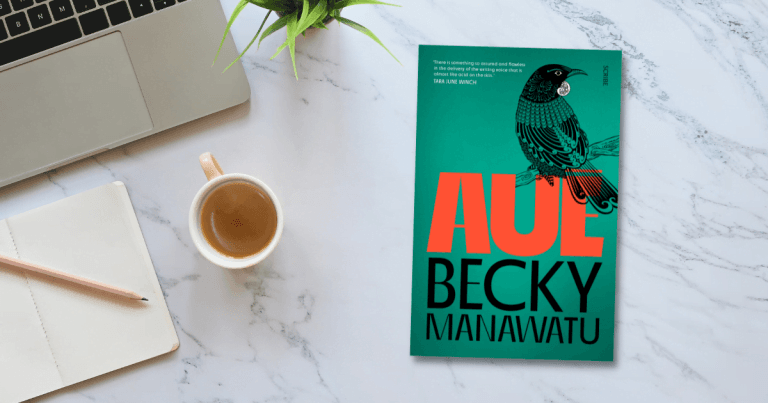
aue
- (verb) to cry, howl, groan, wail, bawl.
- (interjection) expression of astonishment or distress.
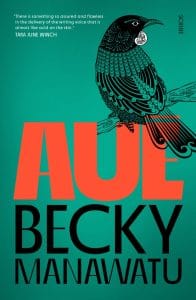
Taukiri was born into sorrow. Aue can be heard in the sound of the sea he loves and hates, and in the music he draws out of the guitar that was his father’s. It spills out of the gang violence that killed his father and sent his mother into hiding, and the shame he feels about abandoning his eight-year-old brother to a violent home.
But Taukiri’s brother, Arama, is braver than he looks, and he has a friend, and his friend has a dog, and the three of them together might just be strong enough to turn back the tide of sadness.
Becky Manawatu’s debut novel, Aue, has already received numerous accolades, including winning the Jann Medlicott Acorn Prize for Fiction (one of New Zealand’s most prestigious fiction awards), and the Ngaio Marsh Award for Best Crime Novel. This is a raw, sublime and incredibly assured debut from a compelling new voice in New Zealand fiction.
Told from the alternating perspectives of young brothers Taukiri and Arama, separated from one another and without their parents, as their mother has disappeared. The story of young lovers Jade and Toko, set twenty years earlier, is also interspersed throughout this novel. As the storylines of all the characters converge, dark family secrets are revealed. Domestic violence, drugs and gangs make for some intense reading, yet the humour and innocence of the children as narrators really shines through. Manawatu includes fascinating insights into Maori culture, as well as a glossary of Maori terms at the end of the novel. Manawatu’s style is unique and gripping, and Aue’s climactic final chapters pack a punch.
Aue is an impressive debut that will appeal to fans of literary and crime fiction, as well as anyone interested in learning more about New Zealand and Māori culture.

Leave a Reply