What are you hoping the reader will take away from reading your book?
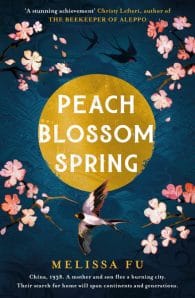
What a great question! Curiosity about family stories, compassion for people they don’t always understand, and maybe an awareness of how complex the experiences of migration can be. And I hope they take away a few of Meilin’s scroll fables and tell them to other people. These stories are meant to be told and shared.
How does it feel to hold your book in your hands?
It’s an astonishing feeling. I think that’s something a lot of aspiring writers dream about: the moment you hold the physical object in your hands, the heft of it, the pages, the tangible proof that it really exists. Especially if you’ve been someone who has always loved books, holding one with your name on the cover and spine is indescribably happy-making!
What’s the easiest and most difficult parts of your job as a writer?
Maybe the easiest and most difficult parts of being a writer are the same for me: showing up at the page, again and again. On good days and bad, just coming back to the work and putting down the next words.
If you could give one piece of advice to aspiring writers, what would it be?
Write about something you care so much about that you are compelled to write it, even if no one else reads it. There’s a quote from the saxophonist Stan Getz about playing jazz that I often think about for writing. He says, ‘I never thought of it as an art. It was just work that I loved. Not just work, but work that I loved. I loved it so much, I would play it if nobody listened to it. Any jazz musician, if there’s nobody around to listen, would play just for the sheer joy of improvising music.’ That sheer joy of creating is what needs to sustain you, because there’s no promise that anyone else will ever love the work as you do, so you’ve got to do it for yourself.
Are you able to switch off at the end of a day of writing? If so, how?
That’s one of the things I had to learn how to do while working on the novel. Writing in the long form takes a lot of stamina, and I needed to have ways to refill the well and keep myself motivated and interested in the work. If I’m bored or impatient, it shows in the prose. Time away from the desk is another way of working on the project. So, a lot of long walks, listening to music, or immersing myself in visuals with no text – looking at art or even doodling and colouring. Cooking is a great way to turn off from writing because you’re not dealing with an imaginary world. You have all these pots and pans and ingredients that need your complete and immediate attention and if you don’t want to burn things, you can’t be daydreaming about plot-twists and character motivations.
I really enjoyed the historical context of this book. The storyline is easily read and enjoyable. The one thing that was dissapointing to me was the fact that the author seemed to be tempted by the way of society in her writing. When Tony is arguing with Lily in her dorm, all of the sudden, and totally unexpected he flies off with totally unneccesary and unwaranted bad language. For someone who likes a clean read, and thought I had found one, this was so irritating. Just like movie makers who think they have to throw that language in to change a pg-13 rating to an R , just to fit societys expecatation. So sad to see that she stooped to this. Totally unnecessary and didnt change or add to the storyline at all. Sad.