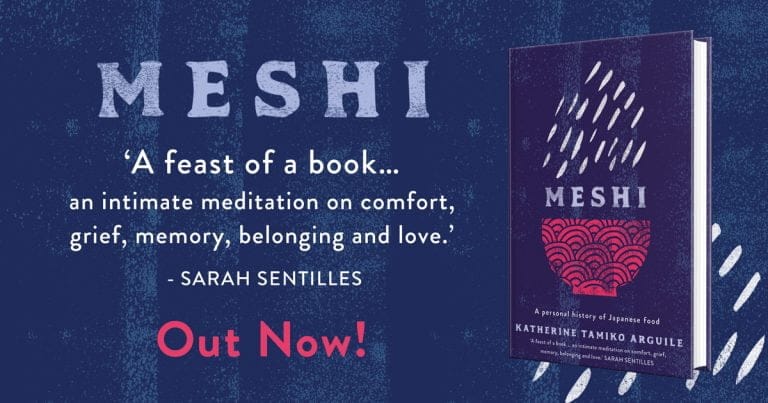
For Katherine Tamiko Arguile, the Japanese food her mother cooked was a portal to a part of her that sometimes felt lost in the past. In Japan, food is never just food: it expresses a complex and fascinating history and is tied to tradition and spirituality intrinsic to Japanese culture.
Exploring the meals of her childhood through Japan’s twenty-four sekki (seasons), Katherine untangles the threads of meaning, memory and ritual woven through every glistening bowl of rice, every tender slice of sashimi and each steaming cup of green tea.
With rich, visceral prose, vivid insight and searing emotional honesty, Meshi (‘rice’ or ‘meal’) reveals the culture and spirit of one of the world’s most beloved cuisines.
Katherine Tamiko Arguile’s debut was The Things She Owned, a beautiful novel about grief, resilience and the legacy of what we leave behind, unfolding over two generations in Tokyo, London and the Japanese island of Okinawa. I have a long history with Japan, and this was one of my favourite reads of 2020, so I was thrilled to hear Tamiko Arguile was releasing a new book. This time, the Tokyo born, Adelaide based writer returns to her roots with her memoir Meshi: A personal history of Japanese food.
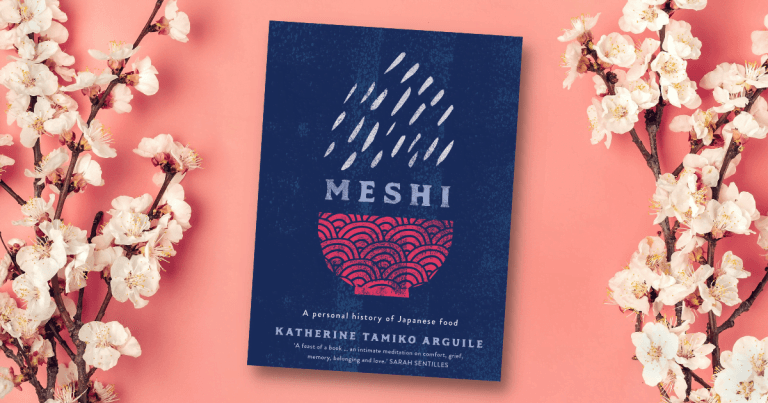
Meshi is a beautifully presented hardcover, with high-quality paper and a gorgeous design. It’s an excellent gift for anyone who loves food, Japan or travel literature, as it’s a wonderful combination of all three of these. But it’s also so much more.
The memoir is broken into twenty-four chapters based on Japan’s complex seasonal calendar. Tamiko Arguile writes, “I’ve never come across a seasonality – culinary or otherwise – that’s as deeply embedded in the national culture and psyche as it is in Japan.” In Japanese, there are hundreds of words for different weather patterns, and cultural traditions and food are tightly woven into this seasonal fabric. Plotting this story through the seasons of a year works beautifully. It is exquisitely written, with all the delicacy and space that makes Japan so unique.
Tamiko Arguile shares much of herself and her family in Meshi. For her, the ceremonial act of preparing and eating the Japanese food that her late mother cooked is a portal to a part of her that sometimes feels lost. Through food, she remains connected to her heritage and the home she left decades earlier.
It’s impossible to read Meshi and not crave Japanese food – not just to eat, but to savour and experience it as Tamiko Arguile does in this book.
Meshi is delicious. It’s interesting. It’s beautifully written. I read so many books for work, passing them on to others after I finish. I’m keeping this one to read, and read again.


I enjoyed reading this review of Meshi. The way food is described as a bridge between culture, memory, and personal identity really makes the story feel meaningful and relatable. It’s fascinating how meals can reflect deeper emotional journeys throughout a narrative. I often like exploring different sources of regional records and legal insights as well, such as https://bexarcountycourt.us which can also reveal interesting social contexts behind communities. Overall, this was a thoughtful review that truly highlights the impact of food in storytelling.
Loved reading your review of Meshi! Food really has a way of connecting cultures and telling stories through flavors. Speaking of insights, I recently came across a tool for vit gpa improvement that makes understanding academic performance so much easier. It’s amazing how small details can make such a big difference, whether in food or studies. Definitely looking forward to more of your posts!
I really enjoyed reading your thoughts on Meshi. The way food connects memory, culture, and identity in Japanese traditions is beautifully captured in your description. It reminds me how certain simple rituals can carry deep emotional meaning across generations. Interestingly, when I need a quick mental break after reading something reflective like this, I sometimes play around with https://wordleletterboxed.vercel.app to unwind and keep my mind active. Books like this truly make you appreciate the stories behind everyday experiences like a shared meal.
What an insightful review! Meshi seems like a perfect blend of creativity and flavor that really inspires the senses. For those who enjoy challenging their minds after a great meal, I recently tried the Wordle puzzle help tool, which makes daily word games even more engaging. It’s amazing how little strategies can enhance your skill and add extra fun. Definitely adding this book and the game to my weekend plans!
This sounds like such a thoughtful and beautifully written memoir. I love how food is used to explore memory, identity, and culture across the seasons—it makes the story feel very immersive. While reading about different hobbies and ways people relax, I sometimes unwind with word puzzles, and tools like https://letterboxanswer.vercel.app can be surprisingly helpful for sharpening thinking. Overall, this review really makes me curious to experience the book and its reflections on Japanese cuisine and tradition.