Does the creative process get easier for you with each book?
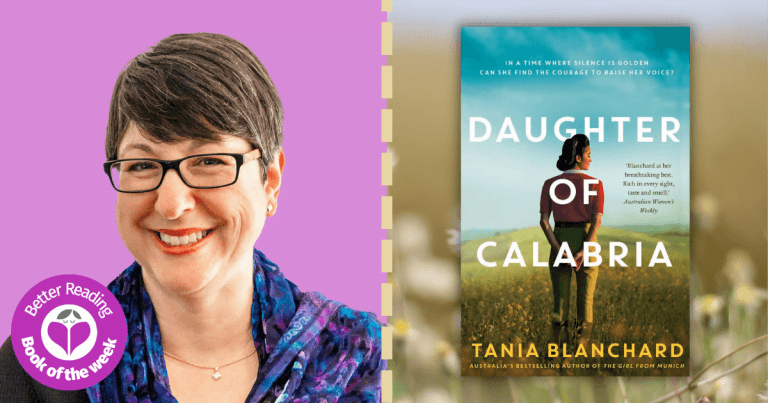
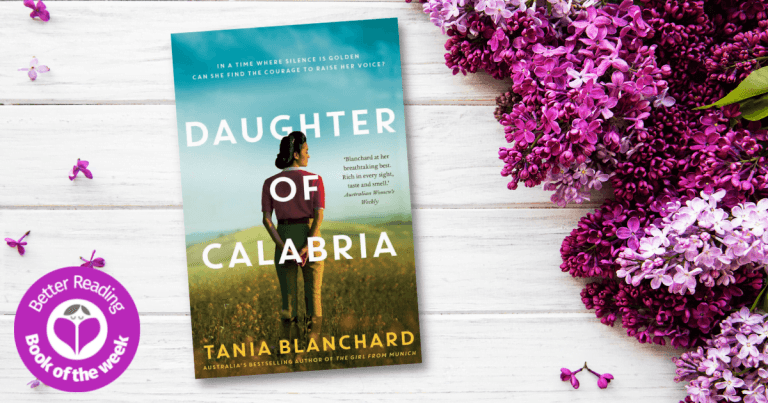
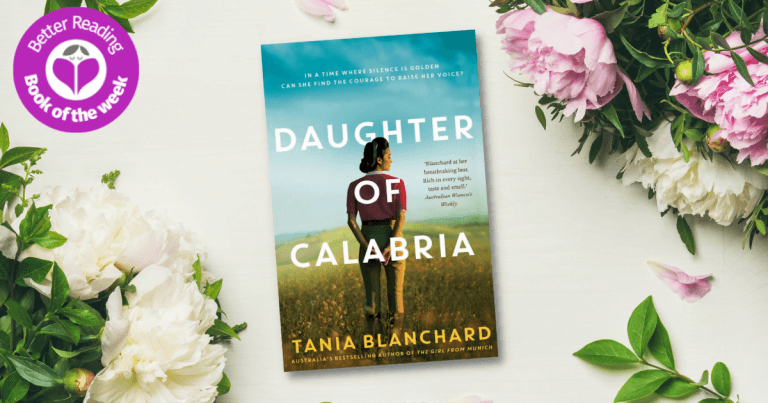
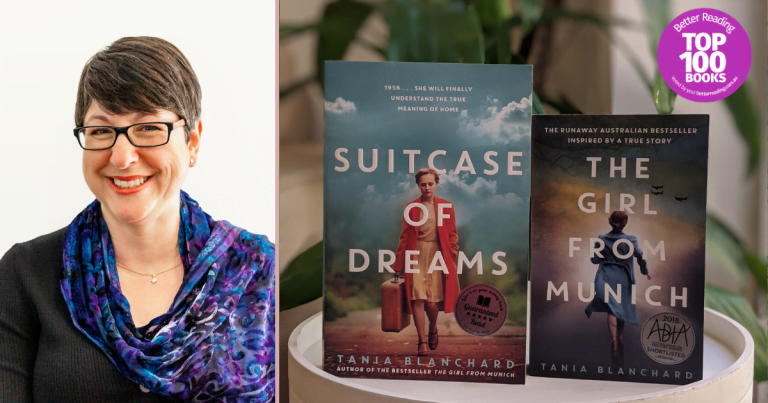
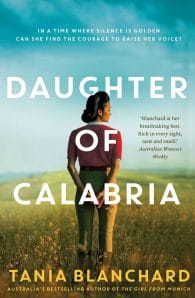
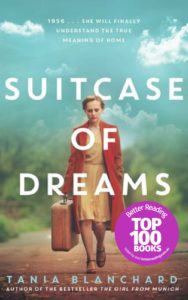
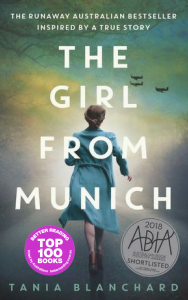
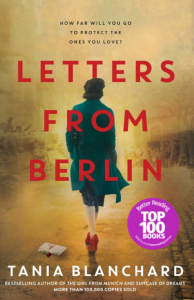
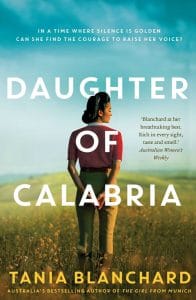
I wouldn’t say it gets easier, because although all my novels are inspired by family stories, the creative process is different with each book I write. I didn’t really know what I was doing with my first book The Girl from Munich, but I knew my grandmother’s story (which was the inspiration for the novel) inside out and I was blessed with all the documents, photos and letters she left behind. It made the research process more personal and that made the creative process somehow easier. It was much the same with Suitcase of Dreams, inspired by my grandparents’ migration to Australia in the 1950s. I had many stories about this time from my grandmother and parents, as well as my grandfather’s journal of the journey to Australia and their time in the migrant camps. This all helped make the creative process easier. It was a case of joining the dots with the information I had and then filling in the rest of the story with what I imagined might have happened. With Letters from Berlin, I had the newspaper stories about my grandmother’s cousin and his family but I wanted to write the story from a fictional woman’s perspective. This gave me freedom to explore a fictional storyline to highlight the story of mix marriages in Nazi Germany but it was a different challenge to weave the fictional storyline with the family story I knew. With my latest novel, Daughter of Calabria, I had fewer stories or family documents to draw from and the creative process was different again. I wrote a largely fictional story set in the village my Italian grandparents came from, piecing together what life might have been like for them or others like them in the years leading up to and during WW2. What I did have this time from family and friends, were cultural stories – of food, religious belief, the importance of family and the value of folk healers, to name a few. These helped me to build a story that was authentic for the time and place, something very important to me.
What is something that has influenced you as a writer?
My German grandmother’s stories. They made me see, even at a young age, how stories differ depending on the point of view and who’s eyes you’re looking through. I have always tried to look through the eyes of my characters, often inspired by family members, when I tell the story from their unique point of view, as a way of honouring my family stories and remaining authentic to the flavour and essence of those family members’ lives.
What’s the easiest and most difficult parts of your job as a writer?
The easiest is coming up with story ideas and the big overview of the story. I always get excited at the beginning of a new story, putting the big moments together and imagining how it will all come together. I love the research too, almost as much as the writing. I’m a history buff through and through and sometimes I can go down the rabbit hole researching the historical events and times around the story I’m writing. I always try to imagine how my characters, who are ordinary people like you and me, live and react to the circumstances they find themselves. I find that most fascinating of all.
The hardest part is sometimes not knowing how I’m going to get from one big moment to the next, how the story will unfold in those smaller moments while remaining authentic to the bigger story, to the historical period and events of the time and to the characters who grow to have a life of their own. Often, it’s about trusting the process and allowing the story to unfold. When I can do that, it becomes magical and fun. At the beginning of the day, I might not know what to write, but at the end of the day, I may have written a great scene I didn’t expect to write, or the story will have taken a new turn or direction. When I feel like I’ve hit a wall and can’t see how to write forward into the story, it can be a leap of faith to do something that feels so counterintuitive like stepping away from the story for a while. Sometimes all I need is a little space to let the story breathe and percolate at the back of my mind, until I feel inspired once again and ready to write.
What’s some great advice you’ve received that has helped you as a writer?
I’ve been blessed to have received so much valuable advice about writing. Perhaps the one piece of advice that has helped me the most, is to write to a word count each week. That way I don’t edit and rehash sections of story over and over, and the manuscript actually gets written. I find that sometimes the story changes as I write further into it and I need to finish the first draft to know what definitely needs changing in the second draft. It can be more economical this way too with deadlines to meet. Another piece of advice I was given was not to include too much research into my story, only add just enough to move the story forward. It was a hard thing to learn when I first began writing. I found all this information relating to my story fascinating but in the end, it only bogged the story down and slowed the pace. I’ve learnt that it’s a real art to keep a story well paced and not too heavy or too light!
What’s your daily writing routine like and what are you working on at the moment?
I’ve been fortunate to be able to work on my novels full-time. Up until COVID, my routine would revolve around getting children to school and picking them up in the afternoon. But since lockdowns, my husband and daughter working/studying from home and my boys now older, my routine hasn’t been working. I wasn’t getting to my desk until much later in the morning and decided to experiment with cooking dinner in the morning and writing through the afternoon when my flow was best but it wasn’t always practical with family life. I still find I work best if I get straight to my desk when I get up in the morning, but that’s not always possible. Now I write as soon as I can in the morning for about three or four hours and again later in the afternoon for a few hours until my boys get home from school before dinner. Finding a new routine is a work in progress and I’m still exploring the best way to structure my day, around my most productive times and the demands of family life in this new post covid world. But most importantly, whenever I write, the prime focus is to meet my daily word count, so that I can move forward and get the story written.
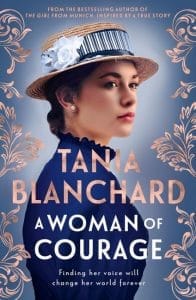
At the moment I’m working on a novel inspired by my husband’s family heritage. It’s something quite different, set in Durham in northern England and in the late Victorian period, around the turn of the twentieth century. It’s a lovely change of pace and I’ve loved exploring this fascinating period in history. Following the industrial revolution, there were so many social, health and education reforms and great advances in science, technology and medicine. It truly was the beginning of our modern world. My main character is a young woman who moves from the coal driven industrial city she grew up in, to a nearby agricultural village where her parents have unexpectedly purchased a pub. She’s a school teacher and influenced by her time at teacher’s college, begins a new suffrage society in the district. But of course, life throws curve balls and she becomes more involved in running the pub than she ever expected, as the industrial north draws ever closer to the village and progress threatens the traditional lifestyle of their community. It’s a story about the rising voice of women in a changing world, their need to have a say in the lives they lead and the political decisions of their communities and nation, and their desire to follow their hearts in a world still ruled by men.

Leave a Reply