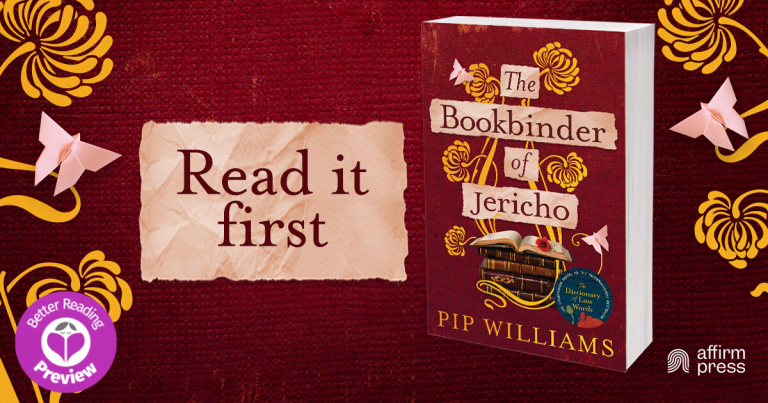
What is lost when knowledge is withheld?
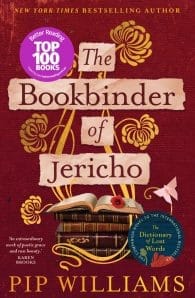
In 1914, when the war draws the young men of Britain away to fight, it is the women who must keep the nation running. Two of those women are Peggy and Maude, twin sisters who work in the bindery at Oxford University Press in Jericho. Peggy is intelligent, ambitious and dreams of studying at Oxford University, but for most of her life she has been told her job is to bind the books, not read them. Maude, meanwhile, wants nothing more than what she has. She is extraordinary but vulnerable. Peggy needs to watch over her.
When refugees arrive from the devastated cities of Belgium, it sends ripples through the community and through the sisters’ lives. Peggy begins to see the possibility of another future where she can use her intellect and not just her hands, but as war and illness reshape her world, it is love, and the responsibility that comes with it, that threaten to hold her back.
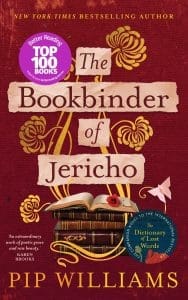
Buy a copy of The Bookbinder of Jericho here.
Read some great reviews from our Preview readers here:
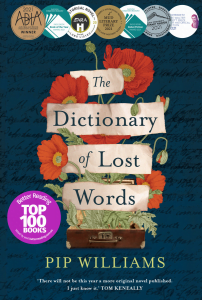
What a treat this book is! A fascinating part of history from the female perspective, with such elegant prose and vibrant, vividly real characters you could swear you are right there with them. Set in the book bindery of Oxford University Press from the onset of World War I, we follow bindery girl Peggy and her twin sister Maude as they adjust to the new world order. The men are gone, refugees are arriving, and the work is up to them. Peggy is hungry for knowledge and education but her status and family responsibilities hold her back. The book delves into themes of class, inequality, disability, and love vs obligation, and it is beautifully done. The Dictionary of Lost Words is one of my all-time favourite reads, so I had high expectations for The Bookbinder of Jericho. It delivered. The ties with the first novel are perfection — neither too much nor too little. And it is, above all, a love letter to books, words, and the craft of sharing stories. Carlie, NSW, 5 Stars
Although I haven’t read The Dictionary Of Lost Words (companion book), I will and then I will read this book again. A lovely and beautifully written book, thought-provoking. Pip Williams weaves a tale of Peggy and Maude, twin sisters working in a book bindery at Oxford University Press in Jericho during WW1 in 1915, enduring sadness, loss, hopes, and dreams of a better future life. Very unputdownable. Nicky, QLD, 5 Stars
The Bookbinder of Jericho is billed as the companion novel to The Dictionary of Lost Words and I thought that this book wouldn’t make sense to me as I have not read that book. This turned out to not be true as this book is its own story. The Bookbinder of Jericho is a story of hardships and the working life of the lower class. It’s a book that will be adored by any book lovers all over the world. I found myself drawn into the world of Peggy and her sister Maude. Their working life in a bindery had me almost smelling the books around me and I could see myself collecting little bits of books as I was working. A lot of research has gone into the book and although you know this it doesn’t stop the story from flowing along. What was interesting was reading and learning about the whole bookbinding process. Ann-Marie, SA, 5 Stars
I enjoyed The Dictionary of Lost Words very much but I LOVED The Bookbinder of Jericho! I got drawn into the story early on and it kept me up late into the night. Both always excellent signs when reading. But I also stopped to google some of the tools and processes mentioned. It’s a fascinating topic with a very relatable heroine who dreams of more. A fabulous read, highly recommended. Sabrina, NSW 5, Stars
I thoroughly enjoyed The Bookbinder of Jericho. As she did with The Dictionary of Lost Words, Pip Williams combines her prodigious talent for historical research and beautiful storytelling. The novel is set over the period of WWI in the little-known world of a book bindery, Clarendon Press in Oxford. This was a significant time in history for women who, with the men away fighting in WWI, took over industry jobs and were simultaneously fighting for their rights to vote and higher education. I loved Pip’s well-drawn and complex main character Peggy, her twin sister Maude, supporting characters Rosie and Old Mrs Rowntree (the girls’ narrowboat companions), family friend Tilda who first appeared in The Dictionary of Lost Words, and the Belgian refugees Bastiaan and Lotte. Another character to add is the girls’ narrowboat Calliope, which I could easily and happily imagine lined with the manuscripts and fragments Peggy saved that didn’t make it through the binding process and her late mother’s large and much-loved collection of books. This wonderful novel explores sisterhood, love, tolerance, determination, the stresses of war, duty, loss and sacrifice, and the book as both an object and a source of knowledge and comfort, a carryover from Pip’s first novel. Five stars from me. Rachel, QLD, 5 Stars
I loved reading The Bookbinder of Jericho. It is a captivating book with impressive research and an engaging story. The characters are well-developed and interesting. Peggy and Maude, twin sisters, were my favourites. The story is set during the First World War in Oxford, England. Peggy and Maude live on a riverboat with support from kindly neighbours. The book covers the suffragette movement and the printing/binding industry and highlights the class divide. The importance of education is a clear theme. An easy and enjoyable read. I highly recommend it. Sandra, ACT, 5 Stars
What a beautifully written masterpiece! I’d be just like Peggy and would want to read all the books that I bind. I couldn’t stop placing myself in people’s shoes while reading this story: imagine being a bookbinder in 1915; imagine losing loved ones in the war and seeing all those innocent people hurt and wounded both physically and mentally; imagine wanting to further your education but you’re not allowed; imagine losing your mum at such a young age. There were so many thought-provoking scenarios, feelings, heartaches, and reminders throughout this book. I absolutely adored Peggy and Maude and I especially loved how all the characters were there for each other, they were supported, encouraged, cared for, and nurtured. Lotte was beautiful and cooked Brussels sprouts just like me!! It was truly amazing. And that ending!!! It was the perfect ending. Marie, NSW, 5 Stars
I must be one of the few people in Australia yet to read Pip Williams’ The Dictionary of Lost Words. The Bookbinder of Jericho enabled me to finally enter that universe – and, as a companion novel, rather than a sequel, I was hoping I wouldn’t be too much in the dark. Fortunately, these concerns were groundless. With its unique characters and historical perspective, The Bookbinder of Jericho can certainly be enjoyed independently of the other book. I particularly valued the research that had gone into giving depth to female characters from such a different background than is common in historical fiction from this era. All the characters felt like such individuals that it was sad to leave them at the end of the novel. The only benefit is that I now have The Dictionary of Lost Words ahead of me to enjoy! Katie, NSW, 5 Stars
This book is a treasure, which I highly recommend! There is so much to this story, I was constantly challenging my own thinking and preconceptions. It is hard not to feel compassion for Peggy as she navigates through the complexities of wartime and the privilege denied her as a woman of lower class. Peggy’s journey sees her wearing many hats, from a worker, a scholar, a carer, a lover and a dear friend. Most enjoyable however is following Peggy’s journey of self-discovery and empowerment, finding her own potential and using it to determine her own future. When reading this, I wanted to take my time, savour each person’s story. Pip Williams immerses you into each character’s storyline and you find yourself wanting to know more and more about each journey. Pamela, SA, 5 Stars
The Bookbinder of Jericho by Pip Williams is wonderful storytelling. Set in 1914, Peggy is intelligent and ambitious, with a thirst for knowledge, longing to be a scholar, but life and responsibility are weighing her down. Torn with caring for her twin sister, Maude, and hoping to achieve her own dreams, Peggy is unsure how she can reach her full potential. With unforgettable supporting characters, this is a beautiful story of family, heartache, responsibility, war, the stigma of social status, knowledge, and the importance of language. An emotional and heartfelt story, combining imagination with history, I highly recommend this novel. Christine, QLD, 5 Stars
Although books and words are also at the heart of this novel, it is more expansive in its explorations of the upheavals in women’s lives wrought by World War I. It is also about courage; when to step up and make changes in one’s own life. This excellent companion to Dictionary is highly recommended. Marina, VIC, 5 Stars
Anyone who loved The Dictionary of Lost Words will be delighted to enter that world again. The author’s meticulous research immerses the reader into the early twentieth century when war took millions of lives while creating an unprecedented wave of refugees, when a pandemic took yet more lives, and when English women were agitating for the vote. Williams also gives the reader an intimate look at early twentieth century bookbinding. Wonderful characters, gorgeous prose, and a plot to make you laugh, make you cry, make you feel. Utterly enthralling, this is historical fiction at its finest. Marianne, NSW, 5 Stars
The Bookbinder of Jericho will stay with you long after you have finished reading it!! You can feel the emotion from each page, from excitement and happiness to the sadness of war. Pip Williams captures the emotions and feelings of her characters in a way that no other writer seems to do. I didn’t want to stop reading and wanted more and more of the lives of the people of Jericho. I love how Pip has woven characters from The Dictionary of Lost Words into her new book. Anne, NSW, 5 Stars
Pip Williams has written another knockout novel. This too was difficult to put down! Now that I have finished, my family will be happy to see my face again, not just my head poking out the top of this book. Pip has a beautiful talent for making a reader feel fully immersed in the story. I have no doubt that this comes from her thorough research and compelling writing style. Alicia, QLD, 4 Stars
The Bookbinder of Jericho is an enchanting yet poignant tale of friendship and longing in a world that has to keep on moving through the constant changes and devastation of World War I, following twin sisters Peggy and Maud Jones as they navigate relationships new and old, opportunities, setbacks and finding their individuality. Pip Williams’s extensive research and beautiful way of weaving words together has allowed her to deliver a story that had me turning page after page, well into the early hours of the morning. I will be adding The Dictionary of Lost Words to my to-be-read pile immediately, to further submerge myself in this detailed and rich world. Emilia, QLD, 4 Stars
I found this book a joy to read. It tells the tale of twin sisters, ambitious intelligent Peggy and Maude who can be described vulnerable. The story is set at the onset of war in 1914, where both girls work in a book bindery. Peggy’s love of books was something I enjoyed reading about, along with her dreaming of attending Somerville College. It canvasses the responsibility that was placed upon women at the time of war. An emotional read about gender equality and women’s suffrage. Angela, QLD, 4 Stars
The Bookbinder of Jericho certainly will not disappoint fans of her first novel. Like Lost Words, this story centres around the Oxford University Press. This time we meet the girls in the bindery whose job it is to fold pages of books and stitch them together. Twins Peggy and Maude work in the bindery, as their mother did before them. While Maude is content, Peggy dreams of reading books, not just binding them. I personally found this book more engaging than Williams’s first. The history of the war and of the Belgian refugees and wounded is woven beautifully into the story of the Oxford residents. This is also a love letter to books, libraries, readers, and learners of all kinds. A love of books and their power is loud and clear. Collections of books in all stages of production are a strong theme, as well as the importance of reading and the power of books to heal and to change lives. Kim, QLD, 4 Stars
Think Fiona McIntosh and Tania Blanchard kind of thing. It’s a great story but a mammoth effort to get finished. It’s expertly researched and you can imagine yourself sitting there taking a sneaky peak at what you’re folding. It is an untold story of a subject you’d never give a second thought to. It’s the perfect companion to the previous novel and you don’t need to have read it to appreciate this one, although I felt a few characters kind of crossed over from that novel, much to my delight. Settle in for a long read; it’s not one to read in one or two sittings and you wouldn’t want to. Penny, NSW, 3 Stars
I finished it but it was difficult. I think I couldn’t connect as I don’t have a sister, maybe. I passed it on to one of my friends who loved it. Louise, NSW, 3 Stars
Leave a Reply