What inspired the idea behind this book?
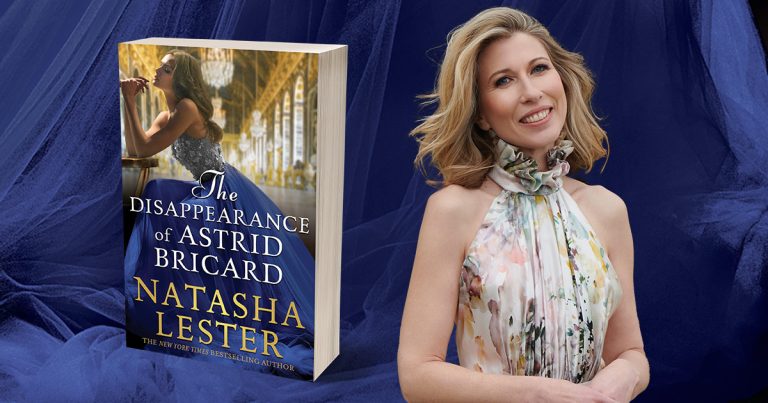
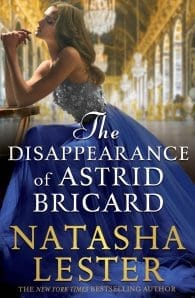
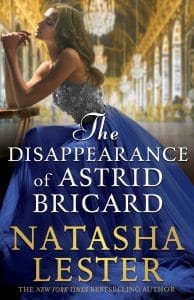
Three things: firstly, the incredible Battle of Versailles that took place at the Palace of Versailles in November 1973. This was a battle for fashion supremacy between five French couturiers and five American fashion designers, including Yves Saint Laurent, Pierre Cardin, Oscar de la Renta and Halston. Everyone expected the French to win – they invented couture, after all – but the Americans took out the crown. The Disappearance of Astrid Bricard opens in the Hall of Mirrors at the Palace of Versailles on the eve of that battle.
What was the research process like for the book?
I was writing The Disappearance of Astrid Bricard during COVID, so I couldn’t travel, but luckily I’d been to the Palace of Versailles many times and could pull out all my photos and use them to help me write the scenes set there. I was also very lucky that archivists from all around the world answered my emails and, because travel was impossible, went to great lengths to send me letters, articles and other documents from their archives that helped me write about all the many real people who inhabit my book – everyone from Bianca Jagger to Christian Dior’s infamous and so-called muse, Mizza Bricard.
If I looked at your internet history, what would it reveal about you?
That I could just about fly a plane, make a couture gown, whip up an expert Harvey Wallbanger, frug on a podium at a 1970s Manhattan nightclub, as well as tell you when the word disco was first invented, and that LSD blotters from decades ago are now considered pieces of art – because I’ve spent hours researching and reading about all of those things and more!
What are you hoping the reader will take away from reading your book?
The Disappearance of Astrid Bricard is also about the huge gender imbalance in the fashion industry – those in charge are mostly men, but the workers down the chain are all women – as well as the way women working in creative industries alongside men are often cast into the role of muse, their stories rewritten and their talent erased. I’m hoping that the next time readers see a media report about a woman, with a juicy headline and a string of titillating accusations, they’ll think about what it might be like to be the woman in the article, and they’ll question how much of it is truth and how much is fabrication. I’m also hoping they’ll rediscover a love of 1970s fashions, because they were spectacular!
Does the creative process get easier for you with each book?
Never! This book just about killed me – although I think I say that every time! But this one spans more than ninety years, from 1917 to 2010. It has three different story strands and four point of view characters and includes scenes set in the 1910s, twenties, thirties, forties, and seventies, as well as contemporary times. That’s a lot of things for a writer to juggle!





Leave a Reply