About the author:
Alice Williams is an author, freelance writer and yoga teacher. At nineteen years old she  dropped out of university and lived in a Buddhist monastery in Nepal where she learned that even complete buttheads just want to be happy, so we should probably try and be nice to each other. Who knew? When Alice returned from Nepal, she finished her degree and worked low-level office and hospitality jobs to support her writing. Her first book, Would it kill you to say please?, was published in 2007. She celebrated this milestone by having a quarter-life crisis and becoming a yoga teacher. Alice lives in Melbourne with her partner and two young children.
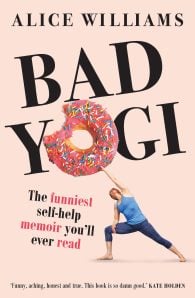
Purchase a copy of Bad Yogi here
Read our full review of Bad Yogi here
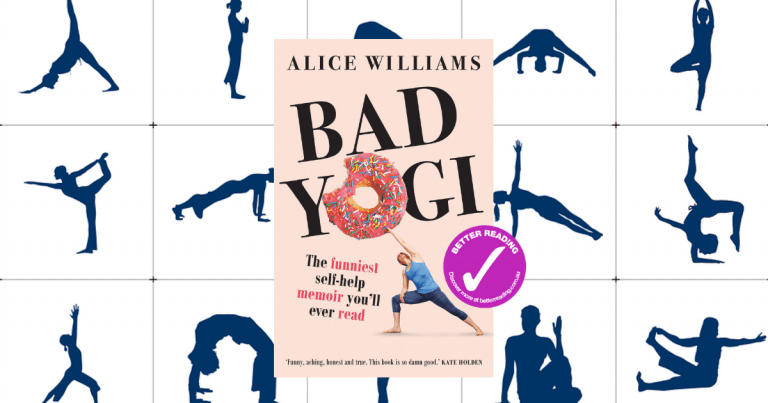
Bad Yogi is described as ‘the healing’ memoir for people who hate healing memoirs.’ Can you tell us a bit about the book?
It’s a memoir covering the two years I spent training to become a yoga teacher while doing treatment for an eating disorder. But it’s also a piss-take on the whole ‘wellness’ genre. If you believe the marketing imagery yoga, you’d think it was just tanned and dewy limbs and dawn yoga sessions on the beach where sand never gets all up in your cracks. The reality is that ‘healing’ in any meaningful way is really messy! It involves getting down and dirty in your s**t (literally, as you’ll see in some of the more extreme yogic cleansing practices), and it ain’t always pretty! (But definitely worth it, I’d hasten to add.)
What inspired you to write Bad Yogi?
I wanted to write the book I wish I’d had when I was going through what they call ‘the fires of transformation’. The healing path, for me, was so heavy and painful, but also quite ridiculous a lot of the time. We in the yoga community can get our heads stuck up our asanas sometimes, I wanted something that would acknowledge the pain but also make me laugh.
This is your first memoir. What was your writing process like? Did you find it confronting to write, or cathartic?
Oh my lord, never again! Writing a memoir is really a constant loop of three thoughts: ‘everyone will laugh at me, but mostly no one will care, except my family who will never speak to me again.’
In fact it was cathartic and I had a blast writing the first ‘draft’ if you want to call it that. I kept a lot of journals around that time and it was so much fun unleashing on the page every night when I thought no one would read it. And that’s the way to write, really, because when you start thinking people will read it, let alone judge you, it can be crippling. Writing the second draft, when I knew I was submitting it for publication, was grueling!
But I had faith that other people might relate to my story, and relate more to the embarrassing parts than any #blessed malarkey. And that gave me the courage I needed to get over myself and the excruciating embarrassment it took to write the book itself.
Your book talks a lot about yoga and how it has helped you navigate various challenges and obstacles in your life. What do you think people have to gain from yoga, and what are its benefits?
First of all, throw away any concept you may have around having to be flexible/thin/look good in Lululemon hot pants to do yoga. Yoga is about helping you release not only physical tension, but also psychological tension. If you go at a level that is appropriate for you, I guarantee you will feel lighter and freer. And don’t listen to my earlier response about it being messy – if there’s stuff you don’t want to feel or look at, yoga isn’t there to force you. It’s there to help you find a way back to yourself.
Your book is very much about healing and transformation, but is written in a very accessible and humorous manner. Why did you choose to write in this style?
Because I am secretly very basic and have a very short attention span. Seriously, I think I was just bored by a lot of the earnestness around spirituality and healing, as if the higher the consciousness the more devoid of personality you have to be. (I think they call it ‘going clear’ in Scientology? Imagine putting that on your dating profile.) Reading should be a joy, not something that makes you feel like you’re dutifully eating your vegetables while being ‘bettered’.
Bad Yogi is refreshingly honest and insightful. What do you want people to take away from this book?
First of all, the recognition that they’re not alone in all their wickedness. And second (now I really am going to sound earnest) is recognition of a different kind. When you know you need to change (as I did) you can start desperately looking outside for answers. Which is important and there’s a lot of wisdom out there to be had. But the best teacher we will ever have is the one inside us. There is a light in each of us that is so incredibly bright, but we don’t see it. There’s a voice of wisdom that many of us have no idea how to access. So I want people to take away a bit of faith, that if someone as far gone as I was can sorta find it, then maybe they can too.



Leave a Reply