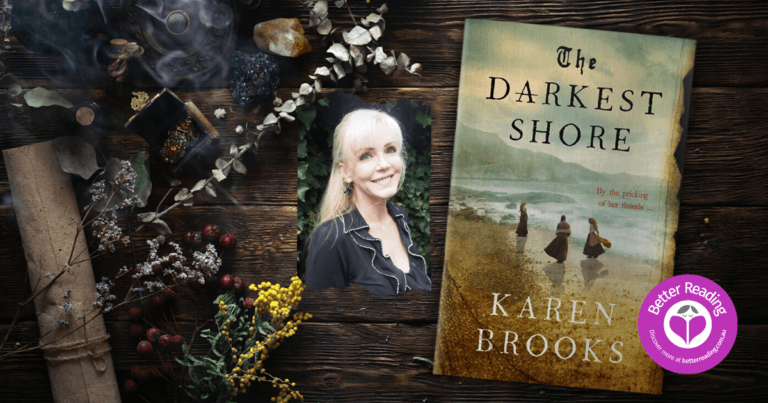
Briefly tell us about your book
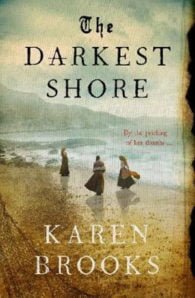
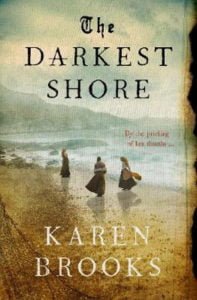
Set on the wild east coast of Scotland in the early 1700s, The Darkest Shore is based on a true story about a terrible witch-hunt that tears a small village apart. It features the formidable fishwives of Fife, superstitious and loyal locals, soldiers preparing for war, a malevolent man of God, and the unpredictable sea. Despite its dark tone and the dreadful tale at its heart, it’s a story that celebrates women, friendship, loyalty, community, love and truth.
What inspired the idea behind this book?
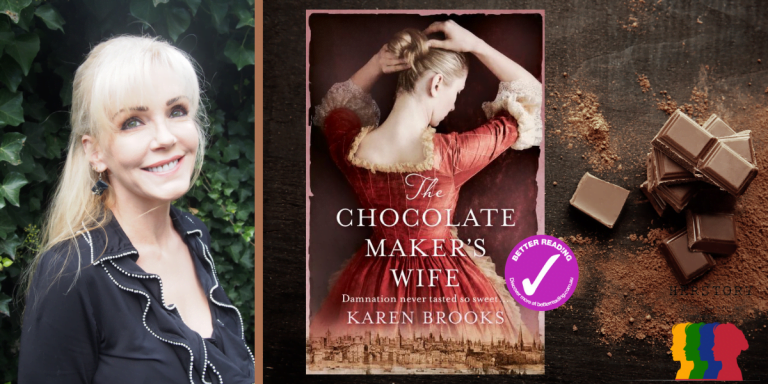
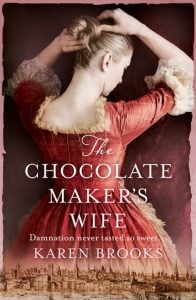
Two dear and much-travelled friends who, when they learned I was flying to Scotland to attend a wedding, as well as to finalise research on my previous novel, The Chocolate Maker’s Wife, and story-hunt, whispered to me about the feisty fishwives and the possibility of witches. That was it: I was hooked. I encountered some serious obstacles and denial – which just made me more determined than ever to get to the source of things – but also wonderful support and, best of all, met some amazing people.
What was the research process like for the book?
It was very intense – mainly because of the subject matter (I don’t think I’ve ever cried so much or so often when researching and writing a book) – but I also literally walked (and rode) in the footsteps of my characters and the historical figures who populate the tale. I also read dozens and dozens of non-fiction books, academic treatises, newspaper articles, searched archival records, read local council minutes from the era, immersed myself in Scottish law, researched witch-hunts and trials of the period and before and beyond. I also read some fabulous fiction set in Scotland – old and recent – listened to Scottish music, watched documentaries and took prolific notes, photos and pored over maps. Only once I felt my blood and heart were filled with Gaelic history and culture (and a few too many drams) did I start writing.
What’s some great advice you’ve received that has helped you as a writer and what’s one piece of advice you would give aspiring writers?
The best advice I was ever given came from my beloved friend Sara Douglass, who said to me always treat writing as a business. At first, I didn’t really understand what she meant, but it gradually came to me: treat it seriously, with respect. Just as you would a regular job, dedicate a certain number of hours to it, set goals and do your utmost to meet them and work hard. In other words, be professional. Writing is a profession – a wonderful, privileged one (all of us, writers, illustrators, publishers, readers, librarians, booksellers, bloggers, etc. are the custodians of culture and imagination). Don’t allow yourself to be distracted (this is the hardest bit!). Though I write in solitude, I’m also part of a writing/publishing team who rely on me to meet deadlines, or give notice if they cannot be met, get my work over the line and ensure it’s the best I can make it. Be respectful, communicate openly and as often as needed and accept criticism with grace. I think it’s the best advice I was given and happily pass it on to aspiring writers as well.
What’s your daily writing routine like and what are you working on at the moment?
I rise early, go for a run, and then dress as if I was going to work out of the house – this is part of my treating what I do like a business. I never write in my pyjamas (unless I have a midnight inspiration, which can and does happen). I write for six to eight hours at least five days a week, with a lunch break and a brief coffee break, and try to meet my goal of a minimum 3000 words a day. Sometimes I write a great deal more (record is 8000) and sometimes a great deal less (0-1000). I commence each writing day by reading over and rewriting what I accomplished the day before, but with the intention to always move forward. Sometimes even the best of intentions fail J. I try not to beat myself up over it – that’s hard – but understand if I’m struggling it’s often because I’ve gone in the wrong direction, so I have a rethink, delete and try again. I do many, many drafts of each chapter and of the entire novel. Often what I do write is rubbish and needs complete rewriting, but until it’s on the screen/paper, you don’t know. That’s all part of the process.
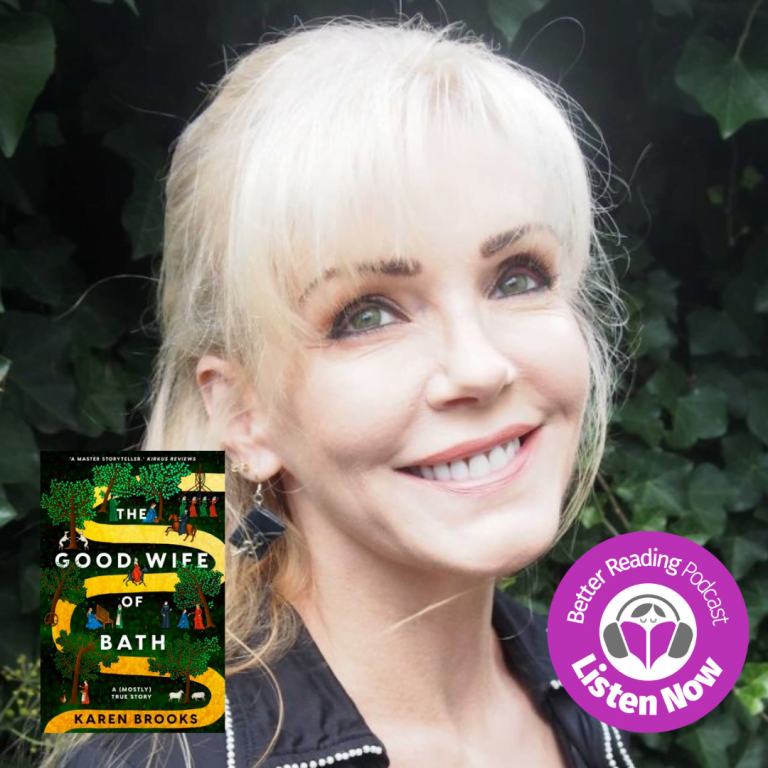
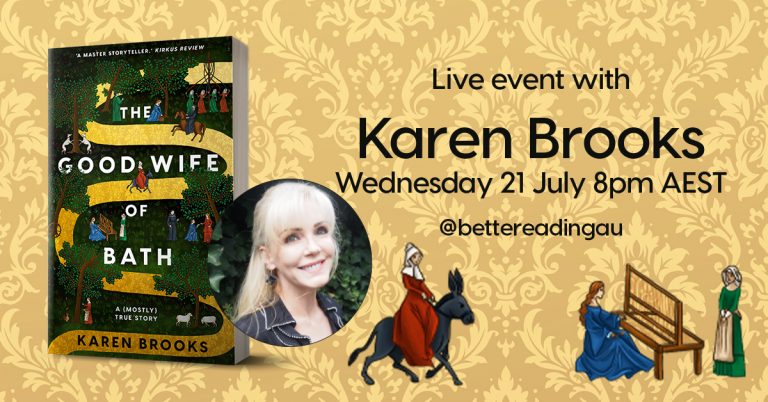
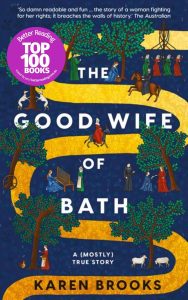
At present I’m working on my next novel The (Mostly) True Story of the Wife of Bath. It’s about one of Geoffrey Chaucer’s most famous characters from The Canterbury Tales, the irrepressible Alison (who featured in my earlier novel The Brewer’s Tale). According to the poem, she’s married at the age of twelve, and then over the course of three decades, four more times. Chaucer presents her as lively, smart, demanding, boastful, sexual, adventurous and very loud. She defies so many social conventions and appears to confirm every negative male stereotype of women – or does she? Remember, a man told her story. In this novel, she wrests her rich tale from Chaucer and posterity, and tells us what really happened (mostly). I started 2020 by deleting the entire 40000 words I’d managed to write the year before (it WAS rubbish!) and started again. In just over a month, I’m more than halfway through a fairly hefty novel, so know a rethink and a rewrite was the right decision. Well, I hope it was!
Keen to read more books about women in history and win great prizes?
Find out more and WIN a $500 Visa gift card and Herstory book pack at harpercollins.com.au/herstory.



Reading historical stories like The Darkest Shore can be intense, especially after a long day of getting lost in books. I recently took a short break and came across Win aura . I tried a few spins and noticed they even offer welcome bonuses for players from Belgium. At first, I lost a few rounds, but after risking a slightly bigger bet, I finally hit a solid win. That little pause really helped me relax before diving back into the tale of loyalty, friendship, and the fierce women of Fife.