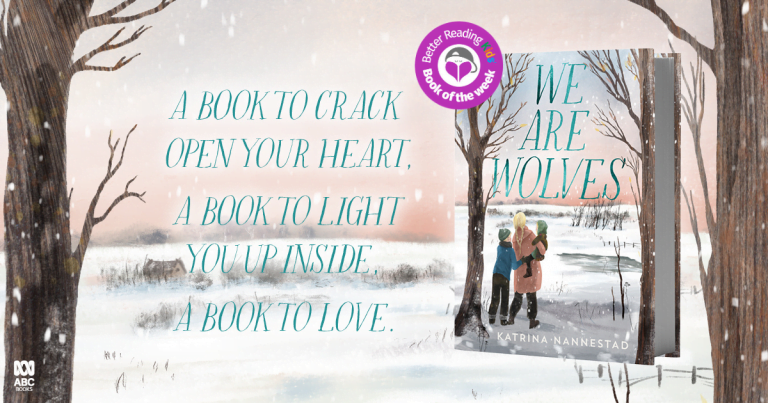
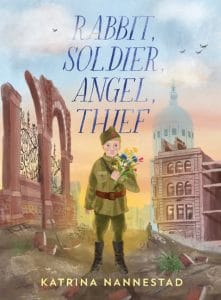
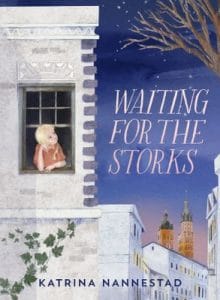
Toward the end of World War 2 the German army started to conscript elderly, lame and infirm men. The war was not going well for Hitler and he needed more resources to hold the frontline against the Russian Army. East Prussia, where this story begins, is close to the frontline and the German families who still reside there can hear the sound of artillery.
Liesl Wolf, the narrator of this story, is a twelve-year-old German girl who watches her limping father leave the village heading for Hitler’s war. Liesl and her seven year-old brother Otto have been heavily indoctrinated at school to believe that the Germans cannot fail and Hitler is a revered hero, but her parents and grandparents are beginning to realise the terrible situation East Prussia is in and that Hitler is failing the German people. They live in a climate of fear, where a wrong word can be reported to authorities, food is scarce and household items such as shoes are in short supply.
Her grandparents and mother debate whether to leave the village, making some surreptitious preparations such as sewing jewellery into the hems of garments. When they see the broken, wounded men of the German army passing back through their village from the frontline they quickly organise their departure. They don’t have a firm plan of where to go, but they know they must flee before the Russian Army arrive. The baby, Mia, is just starting to walk so it is fortunate that they have the resources to acquire a horse and cart.
This novel is based on true stories, drawing on the experiences of the Wolfskinder – German children who survived this period of great civil unrest by making their homes in the forest and living wild. It is the imagined story of Liesl, Otto and Mia through the German and Lithuanian countryside as they learn to forage, scavenge and hunt.
Their world has completely changed and at first they struggle to accept this new reality. They wait for help, but no-one comes to their aid. The challenges they face are not only physical; they also struggle with the need to steal, borrow and beg. Liesl has a strong moral compass which she learns to reset to accommodate their changed circumstances.
Separated from the adults in heartbreaking and dramatic circumstances they must rely on their own resilience and strength. Liesl is determined to fulfill her promise to her mother: she must keep the children together and not let them be separated.
They keep pushing on, finding a safe place to stay until circumstance pushes them on to the next. They meet Russians who alter their view of their enemies, Germans who alter their view of their countrymen, and animals who provide warmth and companionship. They are often frightened and desperate, fighting for their lives and to stay together.
Katrina Nannestad is an award-winning Australian author and her descriptive writing and talent for finding the right voice makes this story a joy to read. She was researching for a totally different book when she came across the true accounts of the survival of the Wolfskinder, and was so engaged by the stories of survival, resilience and hope that she was inspired to write this book.
Her exploration of this time in history brings to our attention the moral dilemmas, identity crises and life-altering experiences that occur during times of war. It is undoubtedly a coming-of-age story where Liesl learns much about herself and the world.
In a world where animals are more trustworthy than human beings, Katrina Nannestad shows that we are defined by our values, regardless of ethnicity. It is a story of hope, resilience and strength and though it was heartbreaking and harrowing I feel uplifted by the courage portrayed.
Suitable for readers 10+ this will be a book for classrooms, libraries and for everyone who enjoyed The Boy in the Striped Pyjamas.








Leave a Reply