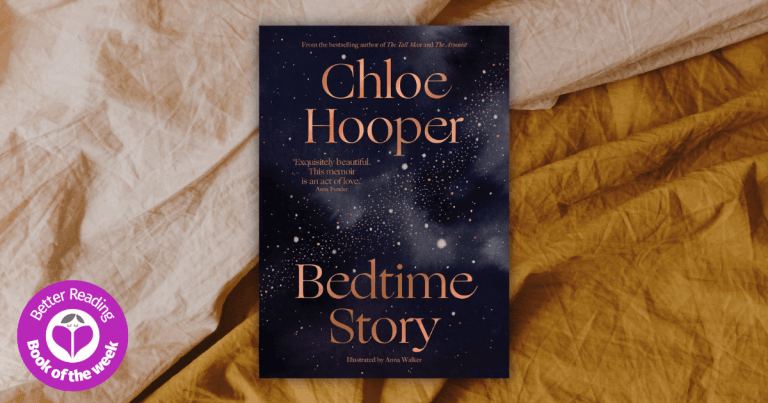
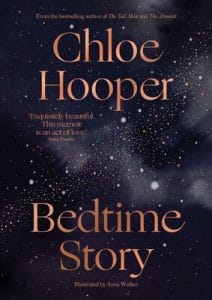
When Chloe Hooper’s partner is diagnosed with a rare and aggressive illness, she has to find a way to tell their two young sons. By instinct, she turns to the bookshelf. Can the news be broken as a bedtime tale? Is there a perfect book to prepare children for loss? Hooper embarks on a quest to find what practical lessons children’s literature – with its innocent orphans and evil adults, magic, monsters and anthropomorphic animals – can teach about grief and resilience in real life.
We begin with chapter one…
Every night when the light’s switched off, familiar objects in your room mutate. What daylight tames, the dark untames. Book-shelves, reading lamp, a dressing gown draped on the door, all gather a silent force. The stillness feels alive, as if each thing is deciding how to behave.
At first, there’s a thrill to this sudden chaos. You’re not yet listening to the in-and-out of your own breathing, not yet decoding the noises in and outside the house. The shimmer of the dark makes climbing into bed feel less like surrendering. You’ve used all your wiles to put off this moment, and yet it turns out your limbs are heavy and the sheets are cool.
You wait while we draw the curtains against the night (or any dawn waking). You wait as we straighten you and your brother’s bedclothes; already he can’t stop his eyelids from closing. You keep waiting and we reshelve the picture books. On these books’ pages life is reduced to its essential elements. The sun is a yellow ball in the sky. The road a black ribbon leading to green. The woods are reliably timbered, and within them a monster is a monster; no need to factor in his childhood. The stories are soothing because the turnings of the plot are so well-worn, their surprises practised. Each night people are sad then happy. They get lost and found, and return to their houses that have a front door between two windows…




Leave a Reply