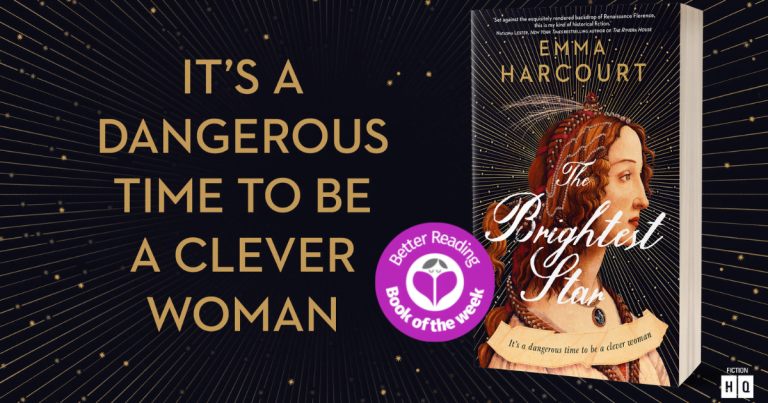
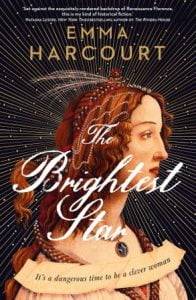
1496. It is the height of the Renaissance and its flowering of intellectual and artistic endeavour, but the city state of Florence is in the grip of fundamentalist preacher Friar Girolamo Savonarola. Its good people believe the Lord speaks through him, just as certainly as the Sun circles the Earth.
For Leonarda Lunetta, eldest daughter of the learned Signore Vincenzio Fusili, religion is not as interesting as the books she shares with her beloved father. Reading is an escape from the ridicule flung her way, for Luna is not like other girls. She was born with a misshapen leg and that, and her passion for intellectual pursuits alters how society sees her and how she sees the world.
Luna wants to know, to learn, to become an astronomer who charts the night sky – certainly not the dutiful, marriageable daughter all of Florence society insists upon. So when Luna meets astronomer Nicolaus Copernicus, she is not surprised that his heretical beliefs confirm her view that the world is not as it is presented – or how it could be. These dangerous ideas bring her into conflict with the preacher Savonarola, and her future is changed irrevocably as politics, extremism and belief systems ignite in a dangerous conflagration.
Luna is a woman born out of time, the brightest star of her generation, but can she reconcile the girl of her father’s making with this new version of herself? And if she does, will Renaissance Italy prove too perilous and dark a place for a free-thinking woman?
Emma Harcourt is an author, researcher and journalist. Her previous novel, The Shanghai Wife (2018), was a critically acclaimed, international bestseller. Our readers loved it, and we’ve been eagerly looking forward to her next offering ever since. Now she returns with The Brightest Star, a beautifully crafted piece of historical fiction that will appeal to readers of Karen Brooks’ The Good Wife of Bath and Pip Williams’ The Dictionary of Lost Words.
The story takes place in Renaissance Florence, set against the intellectual maelstrom, political complexities and religious extremism rife during this period. Although the Renaissance is often regarded as a time of great change and free-thinking, this was not the case for Renaissance women, who were mostly uneducated and expected to fulfil their traditional roles as wives and mothers. Enter Luna Fusili, a disabled young woman with a passion for astronomy. In a time when radical views and a physical disability might mark one out as heretical, Luna is not content to conform to the role society has laid out for her, but instead wishes to forge her own path. She is a fascinating protagonist whom readers are sure to fall in love with. Harcourt brings both Luna’s story and this historical period to life through vivid detail and meticulous research.
The Brightest Star is a sweeping and richly imagined historical novel with a unique and captivating heroine at its centre. Another marvellous read from Harcourt.



A role in conflict with the headstrong Luna’s dreams of pursuing her education. Historical figures such as the astronomer Copernicus are woven into Luna’s story. His appearance in her life leads to some fascinating https://vidmate.bet/ discussions.