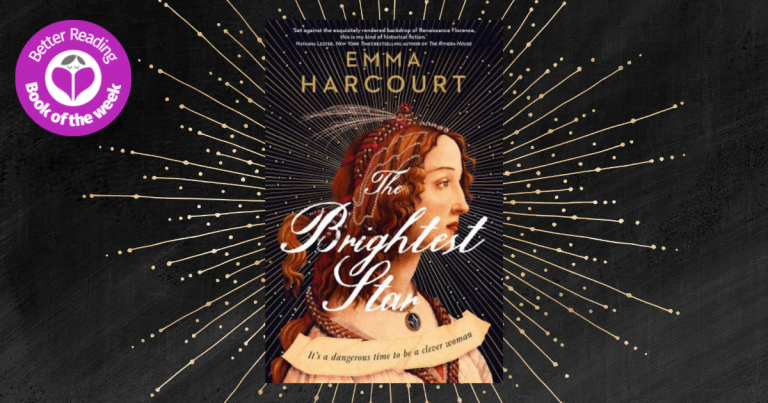
June 1496
The young woman sat as still as she could, but a tickle had started in the small of her back. It moved up her spine with the swiftness of the kitchen mouse she’d seen darting across the flagstones that morning and just when she felt some relief, it began again. She had a fierce desire to scratch the spot, but she was determined not to give the master painter any further reason to think Vincenzio Fusili’s daughter immodest. Instead, she clasped her hands together and fixed her mind on dislodging the piece of apple that was caught in her teeth. She pressed her tongue against the gap between her molars where the bit of apple was stuck and felt it move. It didn’t take much more to free the morsel and she swallowed it.
The fruit monger in the piazza had given her the apple as she passed his stall earlier that morn and she’d enjoyed its juicy sweetness as she walked on to the monastery, not thinking anything of it till she’d seen the painter’s reaction. She’d stepped into the room with the apple to her lips and halted, still as one of his painted likenesses, under the critical gaze of his artist’s eye. Her good humour had withered at the sight of his prickly brows rising. How could something that tasted so good have evoked such judgement? Of course, it wasn’t the apple—fruit of man’s downfall such as it was—that the painter had frowned upon, it was the provocation of her eating it in front of him. She’d briefly considered her options before settling on the simplest and most satisfying, and taken another bite. She ate the remainder of the apple after the painter had retreated outside to wait in the cloister whilst she changed behind the curtain. When she’d called to him to reenter and had taken her seat in the high-fashion dress, they’d both nodded as if it were their first welcome of the day, and thereafter she’d adopted so obliging a demean-our that not even the brow of the Pope himself would have raised. The terce bells had sounded shortly thereafter and she’d not moved since.
So here she still sat, hands clasped together, body uncomfortably constrained by this fine woollen gown, and with a devilish tickle about to undo her. She set her mind to another distraction and recalled the path she’d walked to the monastery, having left home when the sun was already risen and any chance of taking note of her beloved stars had passed. She would make up for that another night; the pages of her small notebook would soon be full of descriptions of the positions of the stars she spied. It was simple astronomy but she’d not the skill to do more. If she was a student of the subject, she’d have access to books such as that of Ptolemy or Sacrobosco, with valuable tables that gave instructions for predicting the positions of celestial bodies. She hoped to be in possession of such a text soon.




Well written. As a writer with 20 years of experience, I can say this with confidence. Not my favorite genre, but the author definitely has talent. https://essaypay.com/capstone-project-writing-service/ get help with your capstone project and also with your favorite texts and projects.
First, shadows are the reflection of our existence in the space. Then, our shadows overlap, intertwine, communicate. In this project, shadows are turned into subjective via https://ladydahmer.com/ representations of our mind states. Instead of being distorted by the source of light, the audience will be able to control their own shadows by wearing the headsets that collect EEG data from them and accordingly form fake shadows projected onto the ground beside them.