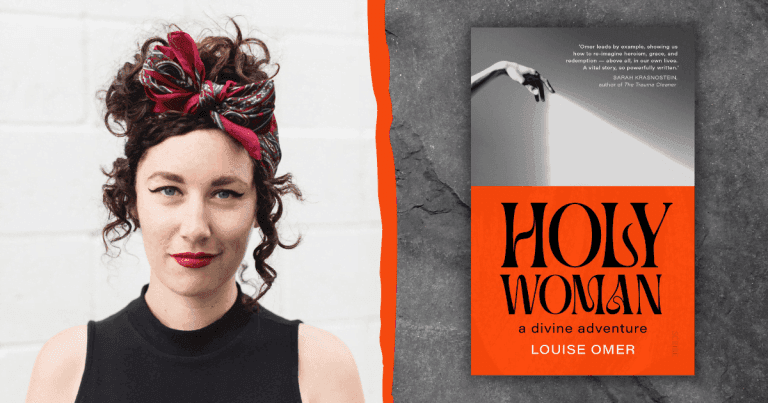
What inspired the idea behind this book?
Holy Woman asks what the consequences are of being a woman who worships a male god. After I left my marriage, I was propelled by my own existential crisis and deepest spiritual questions: could I exist in Pentecostal Christianity, the religion I’d chosen for the past twelve years? Could I resolve the conflict between my two identities, feminist and faithful? These questions led to more questions. I wrote as I explored, I wrote as I unraveled. And then I wrote to piece it all together.
What was the research process like for the book?
A journalist friend once told me, ‘Go to where the action is.’ So I read about women and myths who rebelled and resisted, and bought a plane ticket to meet them. I travelled to ten different countries without knowing where I’d go next. My first stop was Ireland, where I learnt about St Brigid, a fifth-century abbess whose legend contains remnants of a goddess. Then I went to Mexico to meet the Holy Mother, joining a pilgrimage to La Virgen de Guadalupe. Then Sweden to see if referring to god with gender-neutral pronouns could liberate my faith. Everywhere I went I read feminist theology and theory, and emailed artists and activists and priests to see if they would meet me and show me the way. There were a lot of dead ends, every damn one of them compounding my spiritual crisis, but there were many magical, synchronous moments, and I was received by a colourful range of generous strangers. It was an incredible journey, and telling you about this now, it seems to have direction and clarity, but at the time, my quest was a muddle of uncertainty and fear. I was guided by intuition, serendipity, and hope.
What are you hoping the reader will take away from reading your book?
The spiritual is political. I would love to bring attention to the default-setting of a male god in our mainstream religions and in wider Australian culture, and how this upholds patriarchy (and, in most circumstances, white supremacy). I’m also very grateful to share my story of individuation, and encourage anyone who picks up Holy Woman to honour the questions in their own heart – particularly the scary ones.
What was the most challenging part of writing this book?
Apart from the terror of having my cosmology destroyed when I lost my faith, it was a huge task to confront the internalisation of male authority. The Irish-American feminist scholar Mary Daly wrote that if god is male, then the male is god. The symbology of Christianity creates a psychological dependence on male authority, which I transferred to my husband. It was during the writing of this book that I accepted my marriage was marked by coercive control. The hierarchical relationship to the father god made the control of my husband seem normal and good. In using the term ‘domestic violence’, it was terrible to accept this vision of myself.
However this challenging part was also a key to my freedom. In writing about my marriage, I finally gave myself permission to tell my own story. What was true for me? I began to regain agency, and recover from the trauma of emotional abuse.
What is something that has influenced you as a writer?
Queer theory unlocked some of my greatest truths. Firstly, Audre Lorde’s and James Baldwin’s unflinching depictions of the world, and burning hope for better allowed me to be dramatic, condemning, and bare-hearted. Then, Marcella Althaus-Reid (The Queer God), Paul B Preciado (Apartment in Uranus) and McKenzie Wark (Reverse Cowgirl) unveiled embodied knowledge. Through their brilliant thinking, I understood that systemic injustice echoes in the flesh; intimate experience inspires how we act. The structural and the erotic are a pairing, a loop, a web.
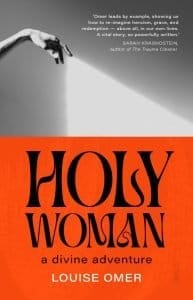
In any Family there is a Matriarch and a Patriarch and in a real Christian Church, Christ Mary and God are equal. ST Mary is indeed is the holiest of Holy. The worlds first basilica was prior to the Vatican (which is a disgrace), was established 1000 AD in Constantinople, it wasnt named Christ’s Church or Gods church, it was named ST Sofiao in Greek Agia Sofia. Sofia is Greek for wisdom.. it is a basilica dedicated to Mary as hse holds the worlds wisdom. This is recognised by true Christain religions!! Yes thats right Mary, the holiest of Holy.. By the way Basilica means to be KING. Oh does that confuse you that Mary is King. I guess that you have forgottne the fact that Mary, Mother of God is a FEMALE…….This book is disgusting. Why is it that typically Anglo saxon women lost in their cultureless world write books these days that are just utter nonsense to promote their own self so that they can overcome their own failings and insecurties and proclaim to be wise souls. Louise Omer was a pentecostal preacher….thats NOT a true Christian faith , it is a dangerous aberration cult! . You have no right to use the term HOLY. It originates from ancient Greek and applies to the true Christian religion alone. Dont rubbish what the word means. Get a real job.
God is Spirit according to Jesus. The Holy Spirit is also Spirit . Spirit is neither male nor female.
The reason why Jesus was male was to represent all humanity as the ultimate high priest and sacrifice.
Sadly feminist theology distorts scripture which so so many other non-biblical ideas has happened many times throughout history laying waste to the ignorant, the work performed similar to those who sought to kill Christ.
The point of this point is make the Biblical God into our likeness or image, not the other way around.