Briefly tell us about your book.
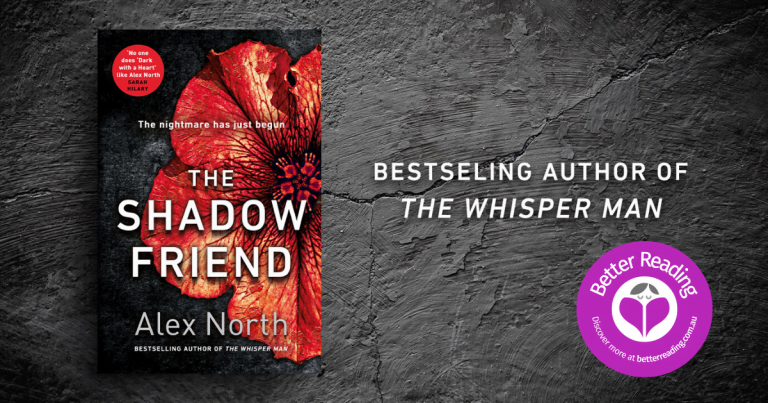
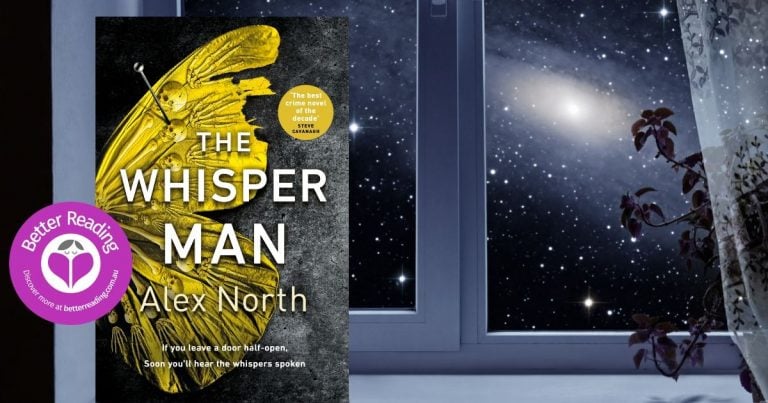
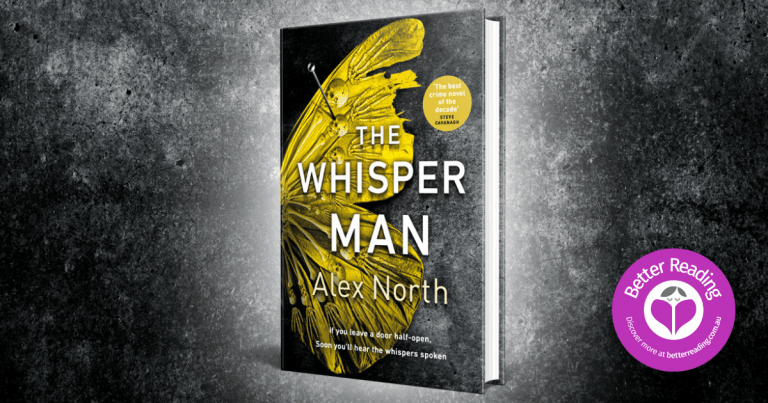
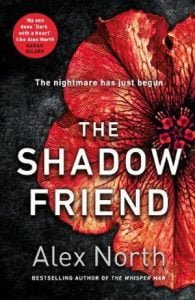
Twenty five years ago, two teenage boys conjured up a shared fantasy world based on lucid dreaming. Believing a sacrifice to the monstrous figure they saw in their dreams would help them escape the real world forever, they murdered one of their classmates – and then one of those boys really did vanish, and was never seen again. A quarter of a century later, Paul Adams – who grew up with the killers and their victim – is forced to return to his childhood home for the first time in years. And when he does, the horrible nightmares that haunted his past begin to resurface in the present.
What inspired the idea behind this book?
There was a case of attempted murder in Wisconsin in 2014. Two young girls tried to kill one of their friends as a tribute to the entirely fictional character of Slender Man. I was never particularly interested in Slender Man in himself, but I found myself fascinated by how, between the two of them, these two girls had ended up believing in something – and something so obviously fabricated – that they would commit this terrible crime. From there, it felt natural enough to bring lucid dreaming into the equation, as that’s something I’ve always been interested in. But the crime in my book ended up being very different: the murder occurs a long time ago, pretty much pre-dating the internet that spawned Slender Man, and it’s committed by two older boys, which is obviously a very different psychological dynamic. It’s often the way, though. Those things were just jumping-off points, and it was only by writing the book that I figured out what it was going to be about.
What was the most challenging part of writing this book?
To be honest, the whole thing was quite challenging. I went through a few very different drafts on my way to the finished book, and while there was stuff I liked about all of them in their own ways, they just didn’t quite work. It was only really when I wrote the prologue, which was late in the day, that it felt like a key turned and the story unlocked in front of me. It’s Paul’s mother driving him to the police station as a teenager and, when I started it, I didn’t know what she was going to do – it took me by surprise in real life as much as it does him in the story. It was like his mother stepped forward at that point and said “you realise this book is about me too, right?” So that entailed another rewrite, albeit a more confident one. But on that level, the most challenging part was probably abandoning material from earlier drafts I really liked: scenes that worked in their own context, but which didn’t fit with the final story. The bright side of that: it’s all still there on my computer. Hopefully I’ll find a different home for it at some point.
Does the creative process get easier for you with each book?
I wish! You would think it might do, but the reality is that every book is a new story, and the creative process is inevitably going to be different for each one. Hopefully you’re challenging yourself to do something fresh, the whole time pushing yourself to do better, and so the more you write, the more you realise how much you have to learn. In addition, there is likely a well of material that attracts you – themes, ideas, subject matter – and you want to make sure you’re finding different angles to look at those interests from. The only thing that does get easier is that you become more familiar with the difficulties. If writing a book is like climbing a mountain then with experience you learn to recognise the harder parts of the expedition. When all seems lost and you feel like giving up, you can tell yourself you’ve been there before and got through it in the past. It doesn’t make the pitch any easier to climb, but at least you know the handholds are there if you keep going. And keeping going is really the most important thing you have to do when you’re writing a book.
What’s your daily writing routine like and what are you working on at the moment?
I used to have a routine, but obviously it’s been completely disrupted by circumstances this year! At the time of writing, we’ve been in a kind of lockdown in the UK for a few months now, and while it seems like that shouldn’t affect a full-time writer all that much, it’s actually had a huge impact on me. In the old days, I would drop my son off at school, go to the gym in the morning, and then find a pub to work in until it was time to collect him again later in the afternoon. That’s all out of the window. But I have converted a small corner of our spare room into somewhere I can write, and I’ve been attempting to get a few words written here and there in between risible attempts at home-schooling. I’m trying not to be too hard on myself – these are weird times for everyone, after all. But despite all that, I remain superstitious when it comes to talking about work in progress. I have a couple of ideas in play. I’m exploring both of them, trying to work out which of the expeditions I’m going to set off on. And then I’ll keep going.

Leave a Reply