
Briefly tell us about your book.
As Cold Cold Bones opens, forensic anthropologist Temperance Brennan is helping her daughter move into a new Charlotte home. To Tempe’s relief, Katy has returned to civilian life after two stints in the army. When the two quit for the day to have dinner at Tempe’s place, they find a box on the back porch. To their horror, the box contains a human eyeball.
GPS coordinates etched into the side of the eye lead Tempe to a Benedictine Monastery where she makes another, equally macabre discovery. Soon the medical examiner sends her to a state park to recover a mummified corpse hanging from a tree.
There seems no pattern to these random cases. Yet Tempe’s anxiety deepens. Why? Are the victims linked? Then realization. Each death mimics a killing that she has witnessed, analyzed, or barely escaped earlier in her career.
Someone is targeting her. Who? Why?
Helping Tempe discover the answer is detective Erskine “Skinny” Slidell, retired but still volunteering with the CMPD cold case unit—and still displaying his gallows humor. As the two penetrate a bizarre survivalist’s lair even Skinny’s mood darkens.
And then Tempe’s daughter disappears.
At its core, Cold, Cold Bones is about revenge. And the lasting damage caused by violence, trauma, and loss.
If I looked at your internet history, what would it reveal about you?
I have actually pondered that question. Or a variation on it. What if the FBI or some other law enforcement agency confiscated my hard drive and checked into my cyber prowling? How might I be perceived? My stories involve some very dark themes. Serial killers. Satanism. Pedophilia. Infanticide. The dark web. Trafficking in endangered species. Poisons. Devil worship. Human trafficking. I think you get the picture. I might have some explaining to do.
What was the most challenging part about writing this book?
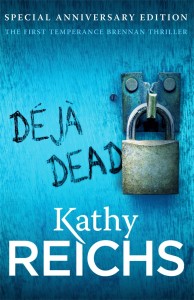
I began writing fiction in 1994. Déjà Dead, the first “Bones” book, was released in 1997. Cold, Cold Bones, the twenty-first entry in the series, is coming out in 2022. That’s a lot of years, a lot of characters, a lot of stories, a lot of details. Readers of forensic thrillers are very astute. If an author makes a mistake, rest assured they’ll catch it. When I decided to use a theme involving the revisiting of old stories, I knew I had to be careful. If the lady’s eyes were green in Devil Bones, they’d better be green in this book, too. Therefore, I spent endless hours researching myself, checking the very facts and minutiae that I’d created!
If you could give one piece of advice to aspiring writers, what would it be?
Write every day, or every block of time that you have designated for that purpose. Hit the keyboard (or the journal or the legal pad or whatever) even when you aren’t feeling motivated or inspired. As with most endeavours, writing requires discipline and constant polishing. If you hate what you’ve written at the end of the day, you can always edit your work. Or toss it. Don’t wait for inspiration from the muses. Just keep writing.
What’s your daily writing routine like and what are you working on at the moment?
Since I was full time faculty at a university and working forensic cases at two different labs, for the first few books I had to fire out of bed at dawn to write, and sandwich in hours on weekends and during summers and school vacations. That’s not the case anymore. For the past several years, I have been able to focus on my novels full time. I try to get to the keyboard by eight, go through my email, then settle into serious writing no later than nine. I stick with it until sometime around two, then break for lunch, and move onto other things in the afternoon. A workout? Right.
I am currently working on the twenty-second Temperance Brennan novel, The Bone Hacker. The story opens in Montreal with Tempe and Ryan caught in a small boat in a violent storm while watching a fireworks display. The following day, Tempe is asked to recover the remains of a man struck by lightning and knocked from a bridge into the St. Lawrence River. What she discovers does not tally with eyewitness accounts of the man’s death.
When the man is identified as a foreign national, a detective from the Royal Turks and Caicos Islands Police Force flies to Montreal to persuade Tempe to travel with her to Providenciales to help with a series of disappearances and murders involving young men visiting as tourists. Reluctantly, Tempe agrees. What she uncovers in the island paradise poses greater personal threat and has far broader global ramifications than she could have imagined.












Leave a Reply