
Briefly tell us about your book.
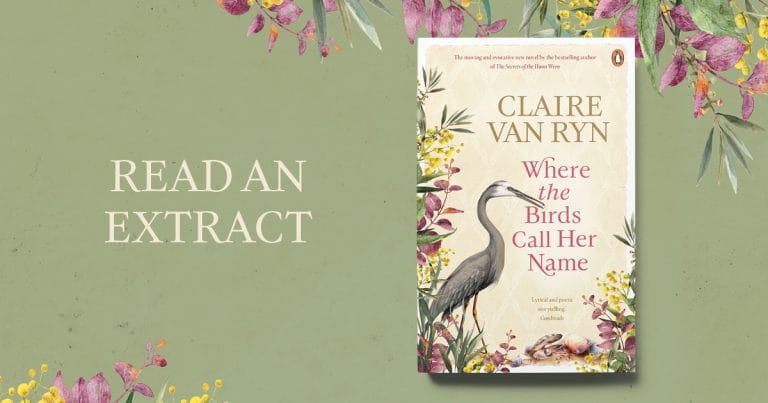
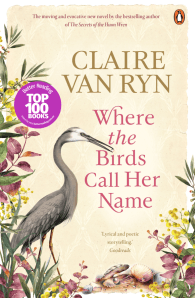
Where the Birds Call Her Name is essentially a journey of discovery for Saskia, a burnt-out teacher fed up with the humdrum pace of her life. When her mother dies and leaves her an old caravan with a ticket on the ferry to Tasmania, she takes the most unlikely step and pulls her daughter from school, waves goodbye to her workaholic hubby and hits the road. On the trip from Broome to the seaside village of Stanley in Tasmania’s north-west, and with the help of her mother’s diary, Saskia learns why her mum changed her name and never breathed a word about her childhood.
Alternating between Saskia in 2023 and Greta in 1968, the story is stitched together with evocative references to the wetland birdlife that was once prolific in Stanley, and meaningful to Saskia’s mother when she was a girl on the cusp of womanhood. Secrets are revealed and life-changing decisions made that affect four generations of women in this tender family mystery.
What inspired the idea behind this book?
At my grandparents’ house, there was always a large glass case in the lounge room – a diorama of wetland birds. It was a piece of the furniture, and more recently I started asking questions about it. It was made by my great-grandfather who was a taxidermist and preparator with the Tasmanian Museum and Art Gallery in the 1950s and ‘60s, a prolific collector of all kinds of specimens that are still held in the museum’s collection today. It intrigued me – my great-grandfather’s occupation, the legacy he left in the 1300 items attributed to him at the museum, but also who he was to his family, which was a sadness that is still etched into our family story. I used this information to create a completely new narrative, with a female taxidermist working on commissions from the seaside town of Stanley in 1968 with the help of her daughter Greta and husband, the ambiguous Dirk De Winter. The 1968 timeline spans the time it takes to create a wetland birds diorama similar to the one that lived in my grandparents’ lounge room.
I was also inspired by a family caravan holiday we took in 2022, and the incredibly varied and gobsmackingly beautiful Australian landscape. I had hoped to write a book that year which, in retrospect, was a naively unachievable goal! Think homeschooling two kids in a poky van, travelling great distances every three or four days, and simply not wanting to miss out on any sight, experience or memory-making opportunity. Instead, I jotted short observations of places, and they have made their way into Where the Birds Call Her Name, in the 2023 chapters.
If I looked at your internet history, what would it reveal about you?
Where to begin! You’d find YouTube tutorials on how to skin a bird to make a taxidermy mount. No, I didn’t actually execute this myself, but the clip was helpful! You’d find searches of Dutch recipes, late-1960s fashion and slang, distances from various WA, SA and Vic towns to Stanley. You might get sick of seeing birds pop up! In fact, you definitely would. Birds carry the symbolism and themes of this novel, and I’ve included stand-alone descriptions of native Tasmanian birdlife in a way that connects with the chapter nearby. You would also find correspondence with artist and friend Dr Anna Van Stralen, who created gorgeous line drawings of these birds to provide another layer of storytelling that I hope will enhance the experience for readers.
What are you hoping the reader will take away from reading your book?
I would love for readers to ask: What is important? And does my life reflect that?
When Saskia inherits her mum’s caravan, it becomes a catalyst for scrutinising where all her energies are invested. Covid did that for a lot of people. This is not a Covid book, and I promise you are spared any reference to that chapter of recent history, but the residual impetus people found to be brave and make positive change is definitely there.
I’m also going a little bit eco warrior with this novel, and that would be because I’m in this era of developing a fascination and deep love for the birdlife that exists all around us. It saddens me greatly to know that we’ve lost a fifth of our wetlands in the last 300 years across the world, and obviously, they’re birdlife habitats, not to mention the countless other animals, fish and invertebrates that rely on these rich ecosystems. One such wetland that was a birdlife paradise and a playground for Stanley’s youngsters no longer exists. I didn’t know anything about it until I began my research for this novel and stumbled across it purely by accident when chatting with some locals. Likewise, many of the habitats my great-grandfather collected his museum specimens from no longer exist. With knowledge comes empowerment, so that we don’t repeat the mistakes of our past. And I believe the greatest tool we have to inspire action is to nurture a sense of wonder in the glory of creation. That’s something I truly hope that readers grasp.
How did you think of the title of the book?
I love a book title that evokes an ‘Aha!’ moment for the reader. That is, you’re reading the novel and perhaps halfway through, or even further, you read a line and the title suddenly makes sense. I find it so satisfying, luminous even, probably because I’m a sucker for symbolism and motifs too. Where the Birds Call Her Name is a title like that!

With Worldguessr, I can challenge myself with endless geography quizzes and improve my skills.
Thank you. fnf mods
“Where the Birds Call Her Name” is a dual-timeline mystery where Saskia’s Tasmanian road trip in 2023, spurred by her mother’s death and a caravan, unearths family secrets linked to her mother Greta’s life in 1968 Stanley and its Welcome To E-ZPassNY wetland birdlife, inspired by the author’s family history and travels, aiming to prompt reflection on life’s priorities and environmental awareness, with a title designed to reveal its meaning through the narrative.
I discovered https://luckyvibe-aus.com/ while searching for something to do during a rainy afternoon in Australia. I wanted entertainment without complications. The interface felt intuitive, and I didn’t have to think too hard about where to click next. It made the session enjoyable instead of tiring. I closed the browser feeling satisfied with how the time was spent.
The 1300 items in the museum really got me thinking about the past. I mean, it’s amazing how one family’s story can intertwine with history. Nano Banana
This sounds like a beautifully layered story about family secrets and self-discovery. The dual timeline and bird symbolism add depth, and the Tasmanian setting is a bonus. Looking forward to reading it! AI Image Editor