Briefly tell us about your book
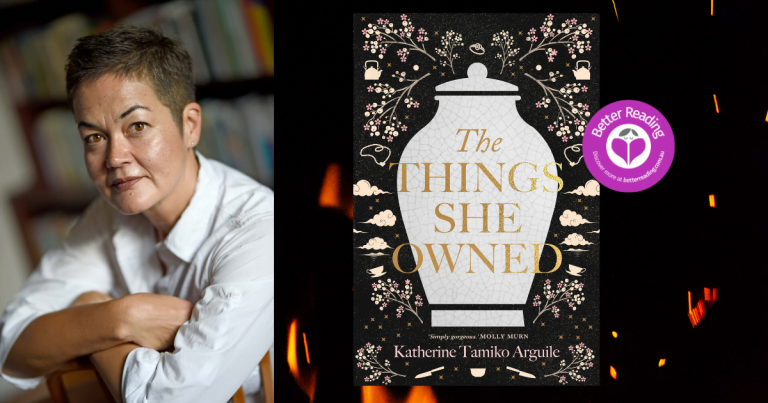
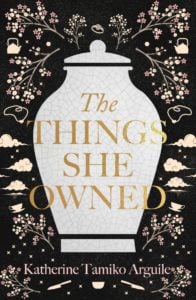
The Things She Owned, which is my debut novel, intertwines the stories of Michiko and her daughter Erika, unfolding over two generations against a backdrop of Second World War Tokyo, early-2000s London and the southern Japanese island of Okinawa. Years after the death of her complicated, cruel mother, Erika is forced to confront feelings she’d kept buried away with Michiko’s possessions when her Japanese cousin arrives in London for a visit. These possessions – the ‘things’ of the title – act as catalysts for Erika’s grief, eventually leading her to Okinawa, the island of her maternal ancestors. Tangling hatred with love, the story of Michiko’s and Erika’s fraught relationship throws a spotlight on expressions of memory and loss, the role of women in traditional Japanese society, conflicted cultural identity, war trauma, the ritualistic preparation and eating of food and the sacred connection of women to nature in Okinawa’s indigenous spiritual practices.
Tell us about your background and what led you to the writing of this book.
I’m of mixed Japanese and British descent, exactly fifty-fifty. I was born and raised in Tokyo, close to my Japanese family until I was sent to boarding school in the rural north of England. My parents moved to Hong Kong at the same time, and although they later returned to Tokyo to live in a different neighbourhood for a while, the profound cultural rupture I experienced rattled my sense of identity and initiated much of what I write today.
Many of the stories my mother told me as I grew up were from her childhood in Tokyo during the war, and these are echoed in Michiko’s experiences in the novel. My mother was six years old on the ‘Night of Black Snow’, when bombs dropped by American B-29s obliterated a quarter of central Tokyo over the course of a single night in March 1945. While the leaders of Japan’s militaristic government ordered acts of atrocity overseas, Japanese civilians, especially children, suffered as civilians do everywhere when they are caught up in war. Starvation was a constant threat, and the ‘eating game’ played by the child Michiko and her siblings in the book is one my mother played during the war to soothe the pain of hunger.
Food occupies a significant space in the Japanese psyche. As a child, I stood beside my grandmother and mother in the kitchen, learning how to prepare it the way it had been prepared for generations. My mother was an excellent cook, and while our relationship was nowhere near as fraught as Michiko’s and Erika’s, we, too, connected through the rituals of cooking and eating together.
My mother died in 1995, five years after my parents separated. We’d been very close. For years after that, anything I wrote sidestepped this feeling of loss and seemed contrived as a result. Nearly ten years later, a prose poem I wrote for a creative writing assignment describes in detail a thumb-sized statuette my mother had owned of a jizō, or bodhisattva, carved from clear quartz crystal, ending in a fleeting verbal image of my mother in her final hours. I soon began writing about other things she’d owned, thinking about the power objects of the dead hold over those they leave behind.
The crystal bodhisattva has a cameo role in my book, and all but one of the fifteen objects described throughout are real objects owned – or once owned – by me or by my mother, but despite this, and despite Michiko’s and Erika’s experiences echoing my mother’s and my own, the book is pure fiction. My mother was empathetic and funny, worlds apart from the troubled Michiko, but it was her death, ultimately, that led to the writing of this book.
How did you think of the title of the book?
For a long time, my manuscript had a working title that didn’t really resonate with me. When I reached a bit of an impasse while writing an early draft, one of my early readers suggested I use the collection of prose poems I’d written about my mother’s things as a springboard to push through the block. I’d called the collection Things My Mother Owned, so when I incorporated some of them into my book, I tweaked and requisitioned the title, too. It immediately felt right.
What’s some great advice you’ve received that’s helped you as a writer.
What served me best out of the plentiful, excellent advice out there was never give up. I learned to see every rejection as a step towards finding the right home for my manuscript, and to keep seeking critical feedback from writers I respect and trust so I could improve it along the way. Most of all, I learned to remind myself why I write – because I love it, especially when it’s going right and magic flows – so that on difficult days I can find the determination to keep going regardless.
What’s your daily writing routine like and what are you working on at the moment.
My ideal writing day kicks off with meditation, yoga and a quick check of my social media feeds before I settle down at my desk at 9 with a cup of coffee and the cat curled up nearby. I prefer writing in Pomodoro-style segments, using the five-minute breaks to stretch, make myself another coffee, or check on the sourdough I’ve got proving in the kitchen. After lunch, I’ll write for another hour or so before spending the rest of the afternoon reading, or doing a bit of writing-related admin. Note my use of the word ‘ideal’ though. It’s been easier to stick to this routine since the temporary, Covid-19 induced closure of the small city coffee shop I run with my partner, but when it’s open, it’s quite the juggling act to keeping up with the different demands of my writing and coffee-making lives.
I’ve been working on a nonfiction manuscript centred around a Buddhist 1,200 km mountain pilgrimage in Japan I planned to take later this year. Since Covid-19 has made this impossible for the moment, I’m turning my mind to writing the second novel I’ve had brewing for a while. It’s set in Okinawa, linking the lives of an 18th century British missionary’s wife and a young contemporary woman apprenticed to a traditional Okinawan bashōfu textile weaver. Thank goodness it’s still possible to travel wherever we want in our imagination.
Leave a Reply