Masters of Disguise is a gorgeous hide-and-seek extravaganza that showcases twelve of the most elusive animals on earth that use camouflage to disguise themselves. It’s a timely and beautiful non-fiction picture book for nature lovers of every stripe.
Test your knowledge of these elusive animals with our short quiz!
- The Ornate Wobbegong is a type of:
- Sea turtle
- Rhinoceros
- Shark
- Dog
- Polar Bears can be found in:
- Antarctica
- Arctic Circle – Canada, Greenland, Norway, Russia and United States
- New Zealand
- Iceland
- The ability of a creature to change colour to blend in with their surroundings is called:
- Camouflage
- Kaleidoscope
- Disappearing
- Morphing
- The Owl Butterfly forms its own pupa (a.k.a. chrysalis, or cocoon) to resemble what type of creature’s head in order to deter predators?
- Elephant
- Tiger
- Blue-tongue lizard
- Viper snake
- How fast can African Leopards run?
- 20km/h
- 58km/h
- 100km/h
- 36km/h
- The Three-Toed Sloth moves so slowly that a plant grows on its fur. What is the name of the plant?
- Algae
- Frangipani
- Slime
- Moss
- The stripy sea creature Mimic Octopus gets its name from:
- Loving to mime
- Talking in different voices
- Imitating around fifteen different sea animals
- Copying their predator’s appearance
- One of the best forms of defence that a Brown Vine Snake can use is to:
- Slither away really fast
- Release a foul-smelling fart
- Honk like a goose
- Wrap itself up into the shape of a pretzel
- The word ‘nocturnal’ means:
- Creating a knocking sound
- Only sleeping at night
- Sleeping during the day and awake at night
- Turning in circles to confuse a predator
- In what part of the world could you find an Orchid Mantis?
- Outback Australia
- The Amazon Rainforest
- New Zealand
- Southeast Asian rainforests
ANSWERS:
1c, 2b, 3a, 4d, 5b, 6a, 7c, 8b, 9c, 10d
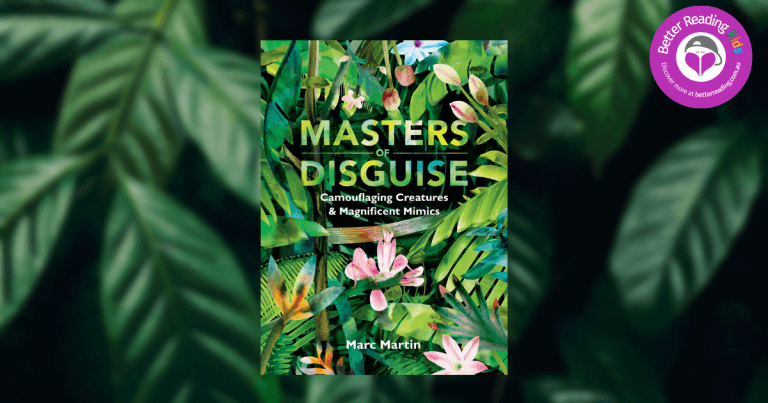

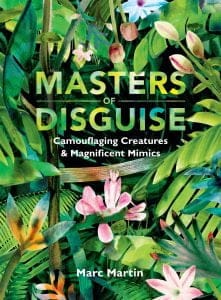
Marc Martin skillfully combines art with entertainment, creating a reading experience that is not just about enjoying a slice master story but also an adventure of discovery.