Briefly tell us about your book.
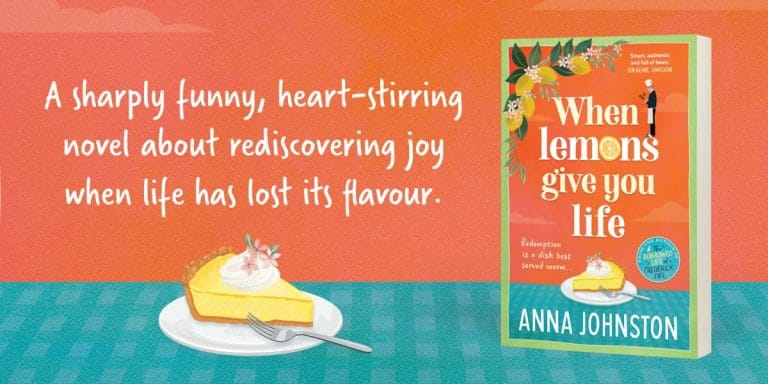
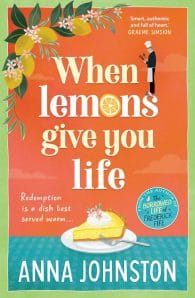
Retired Michelin-star chef Griff Barlow was once an esteemed icon of the culinary world. Still mourning the death of his beloved husband, Beau, he now lives in a nursing home – grumpy and depressed. He has created a ‘Death Menu’ – a list of ways he might depart this earth. He just has to choose which one…by Friday. Determined that his last meal will not be the flavourless mush they serve at the home, on the night of his planned demise, he breaks into the nursing home kitchen to cook himself one final meal – a lemon-tart – an act which sparks a long-dormant joy. Soon, he’s regularly sneaking in after dark, serving up flavour and comfort to fellow residents. As they begin to come alive with each bite of his delicious concoctions, Griff reconnects to the land of the living one plate at a time. Yet behind the apron is a lie so big it could destroy the one thing he has left to protect.
Meanwhile, Lisa, Griff’s younger half-sister and sole visitor, is navigating a midlife ADHD diagnosis, the spark of a new romance, and unexpected medical news that may change life as she knows it. Despite their long-fractured sibling relationship she dutifully shows up for Griff, though hope of a reconciliation is long gone, buried in the silence between them.
Yet the truth has a way of boiling over, and when secrets, soufflés, and second chances collide, Griff and Lisa may discover a recipe for redemption.
What inspired the idea behind this book?
The seed for the novel came from my years working in aged care – including dementia-specific care – where I saw how much of a person’s identity, joy, and dignity can quietly erode, and how much of it can be restored through small, human acts. I also witnessed how food, like music, could evoke memory, emotion and connection for people living with dementia in ways that words sometimes could not.
That understanding came into sharp focus during one of the most formative experiences of my career: developing an award-winning local government cooking program for widowed older men. Many of the men arrived barely eating, socially isolated, and dependent on services like Meals on Wheels. What surprised us was how quickly cooking changed everything. As they learned to prepare meals for themselves – and eventually for others – something shifted. They weren’t just being fed anymore; they were hosting, inviting, providing. Confidence grew. Friendships formed. A sense of purpose returned. Food became far more than sustenance – it became a way back into the world. That idea sits at the very heart of the novel. I’ve also been greatly inspired by the work of Maggie Beer and her foundation, which champions better food in aged care.
Another important influence came from my own experience. Like many adults in recent years, as understanding of the condition has grown, I was diagnosed with ADHD at forty. I came to realise how misunderstood it is, particularly in women. ADHD is too often framed as a lack of effort or discipline, when in reality it is a differently wired, wonderfully creative, deeply empathetic – and sometimes chaotic – way of moving through a world that is not always set up for difference.
My diagnosis helped me make sense of many contradictions – how I could obtain high grades and push myself through medical training, yet still be floored by the simplest everyday tasks; how impulsivity, distraction and clutter could exist alongside the ability to hyperfocus, feel deeply for others, and create with intensity and imagination. I wanted to bring that full spectrum to the page with empathy, humour and truth, and much of what you see in Lisa reflects my own experience, as well as that of women I love, who are far richer and more complex than the labels placed on them.
What was the research process like for the book?
I naturally had to try as many lemon tarts as possible – purely in the name of research, of course! I love cooking and am a die-hard MasterChef fan, but I knew that alone wasn’t enough to write a Michelin-starred chef convincingly. I found it incredibly helpful to read a range of chef autobiographies, including those by Marco Pierre White, Gordon Ramsay and the late Jock Zonfrillo. I was also fortunate to visit Benoit, a Michelin-starred restaurant in Paris (where Griff once worked), which brought a wonderful sense of authenticity to those scenes.
Having worked in aged care for many years, including caring for my own grandfather Fred, I was able to draw on personal experience when writing about dementia, including early-onset Alzheimer’s disease. However, I also wanted to ensure the portrayal was accurate and respectful, so I spoke with a range of medical professionals, including gerontologists, psychiatrists and nephrologists, as well as people with lived experience of the medical journeys represented in the book.
One of the greatest privileges of being an author is the opportunity to step into someone else’s shoes. I felt a deep responsibility in writing a queer relationship outside my own lived experience and wanted to approach it with care, respect and curiosity. I was incredibly fortunate to work with a queer sensitivity reader, as well as two older gay male writer friends—one of whom is close in age to Griff. Through generous conversations and beta reads, they helped me better understand both Griff and his late husband, Beau, and encouraged me to dig deeper into how their relationship and their queerness would shape both their past and present. That process not only made the characters far more fully realised than I had initially imagined but also opened my eyes to some of the realities still faced by queer people as they age, allowing the story to reflect this with greater authenticity.
I was also incredibly grateful to individuals who shared personal experiences that echoed aspects of Griff’s past. Their generosity and trust helped ensure those elements were handled with sensitivity.
What are you hoping the reader will take away from reading your book?
In a post-pandemic world marked by conflict, uncertainty, and fear, I think we’re hungry for stories that offer hope and a renewed faith in humanity. When Lemons Give You Life was written as an antidote to despair. I hope readers come away with the idea that joy is still possible even when life has lost its flavour – and that redemption and healing from trauma can be found, even in the darkest of days.
It also speaks to how we view ageing. In a youth-obsessed society, driven by a multi-billion-dollar anti-ageing industry, I hope the story encourages readers to reconsider what it means to age well – whether we see it as something to resist, or as a privilege not afforded to everyone. I hope it invites reflection on what really matters when we look back on our lives: the number of wrinkles we’ve accumulated, or the number of times we were able to be part of something kind and restorative.
What was the most challenging part of writing this book?
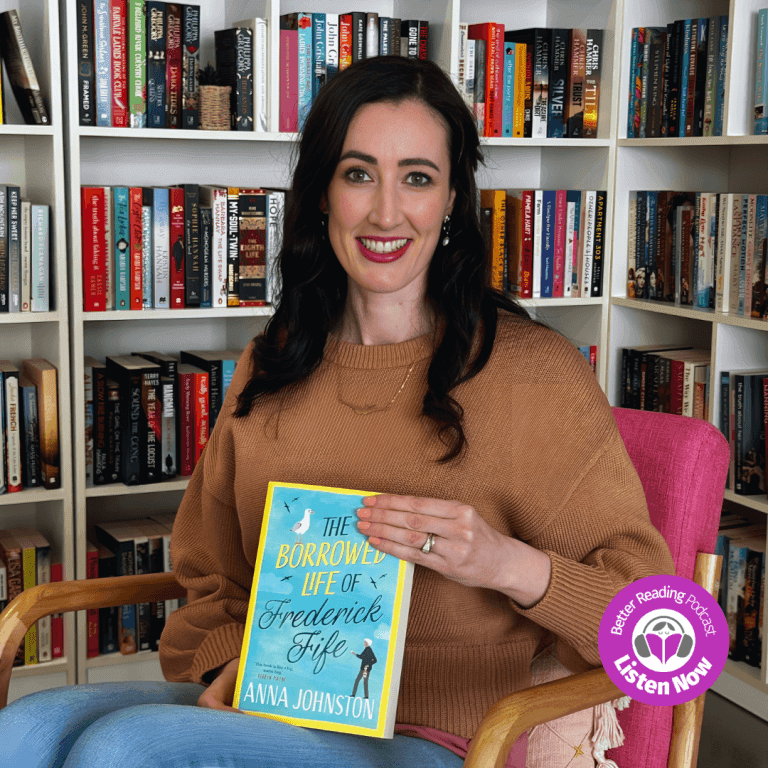
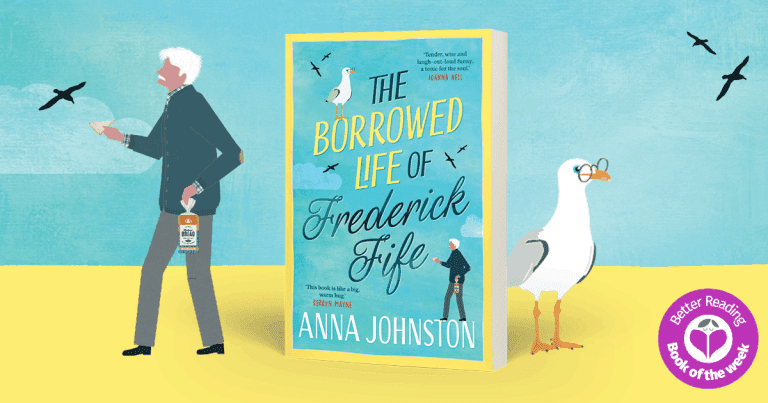
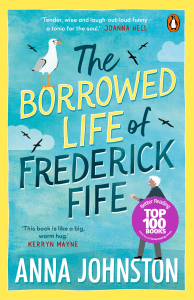
When I started writing my debut, The Borrowed Life of Frederick Fife, I had no idea how far it might go – whether I’d even finish it, let alone see it published or optioned for screen. When it came time to write my second book, there was a strange mix of pressure and a kind of theoretical confidence that I could do it – though I still felt, and continue to feel, a huge amount of imposter syndrome!
I credit much of the first book’s success to the magnetic kindness of my grandfather Fred, who inspired the main character. The protagonists in When Lemons Give You Life had very big shoes to fill, and one of the biggest challenges was creating characters that readers would still root for, but who couldn’t rely on that same unwavering goodness that defined Frederick Fife. In this novel, I wanted to explore heavier themes and lean into more complex characters – messier, perhaps – but still deeply human and, I hope, even more relatable.
The structure was also a significant challenge. The narrative unfolds across two points of view, with flashbacks to different moments in the characters’ lives, which required careful handling to maintain clarity and momentum. As with The Borrowed Life of Frederick Fife, I aimed to fuse two genres that are rarely combined: the pace, tension and narrative drive of crime fiction with the warmth, humour and emotional uplift of feel-good novels. It’s not an easy balance to strike, but my goal is always to write stories that keep readers turning pages – full of reveals and surprises – while also offering comfort, delight, and a sense of hope.

Love how Griff’s sneaky lemon tart sessions roast that nursing home’s sad menu! Get your recipe snaps Michelin-ready using free bg remover: instant bg removal and image upscale, totally free, no sign-up!
Loved this Q&A with Anna Johnston! For gamers who love a good strategy guide as much as a good book, nte guide is a must-bookmark.
Finally, a subnautica 2 guide that doesn’t skip the important stuff. Love how you explained the new biomes and creature behaviors—feels way less overwhelming now.