
When Jozef is commissioned to paint a portrait of Alicia, the younger daughter of Krakow’s grand Oderfeldt family, it is only his desperate need for money that drives him to accept. He has no wish to indulge a pampered child-princess or her haughty condescending parents – and almost doesn’t notice Alicia’s bookish older sister, Karolina.
But when he is ushered by a servant into their house on Krakow’s fashionable Bernardynska street in the winter of 1937, he has no inkling of the way his life will become entangled with the Oderfeldts’ or the impact that the German invasion will have upon them all.
As Poland is engulfed by war, and Jozef’s painting is caught up in the tides of history, Alicia, Karolina and their parents are forced to flee – their Jewish identity transformed into something dangerous, and their comfortable lives overturned.
For readers of The Book Thief and All the Light we Cannot See comes Eleanor Wasserberg’s The Light at the End of the Day, a heart-breaking novel of exile, survival and how we remember what is lost.
In our Q&A with Eleanor Wasserberg, she shares how The Light at the End of the Day was inspired by her own family history, particularly that of a painting called Portrait of Girl in a Red Dress, which is of her great aunt, Josepha. Wasserberg cleverly translates this history into fiction – Josepha becomes Alicia, and around her and the painting the story unfolds.
One of the first things that struck me while reading the novel was Wasserberg’s use of point of view, which takes after Virginia Woolf’s Mrs Dalloway, as it smoothly shifts from one character’s stream of consciousness to another, sometimes within a single paragraph. This effect could have been dizzying, but I found it liberating as it allowed Wasserberg to represent the struggles and experiences of all her characters, granting the story a large emotional scope. Each of the character’s fears, anxieties, desires and wishes was brought to life so vividly that I felt they were real people rather than fictional beings.
Another strength of The Light at the End of the Day is Wasserberg’s depiction of the settings and storyworld. The warm and opulent surroundings of the Oderfeldt’s earlier life in Bernardynska street contrasts heavily with the hardships they experience later in the novel, first as refugees then in labour camps.
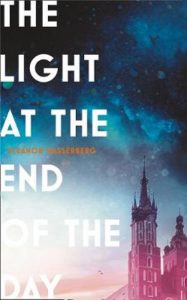
From the gorgeous front cover to Wasserberg’s exquisite prose, The Light at the End of the Day is an inspiring and powerful read, and the sort of novel that stays with you long after you turn the final page.






Leave a Reply