Briefly tell us about your book.
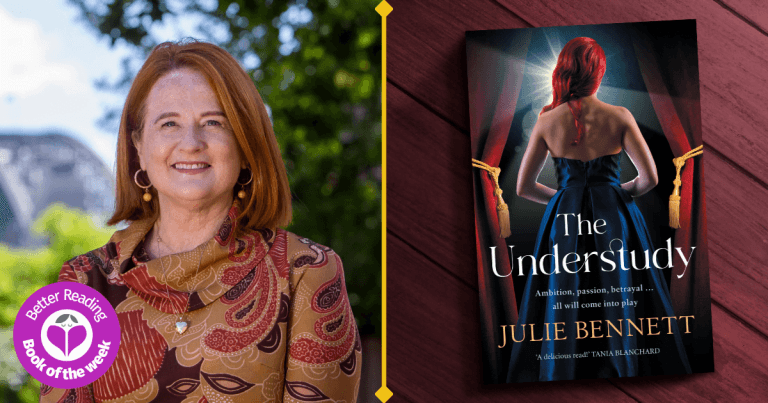
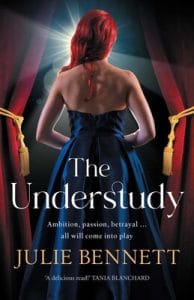
The Understudy is a tale of ambition, passion and treachery. It is the story of Sophie, an up-and-coming soprano, and a prima donna, Margaret, who is due to perform the title role in Madama Butterfly at the Royal Opening of the Sydney Opera House in 1973. When Margaret mysteriously disappears, Sophie steps centre stage and into the arms of world-famous Italian tenor, Armando Cecchi. It’s her time to shine but with Margaret still missing, Sophie knows she has to be very careful in the spotlight.
What are you hoping the reader will take away from reading your book?
I hope they are caught up in the stories of two women who share the same passion and ambition but whose life experiences take them in challenging directions. I also hope they fall in love with the Sydney Opera House, the city of Sydney and Australia, in the same way I did. I know I’m biased but I think Australia is the most beautiful country in the world.
Who are some of your favourite authors or books?
I’m sorry that I haven’t had as much time to read as I had before writing this novel. I am a passionate fan of Philippa Gregory’s novels; she brings the history of royal women alive for me. I fell in love with the Bronte sisters early in life and devoured Gothic novels as a teen, particularly Victoria Holt and Jean Plaidy (Eleanor Hibbert).
I love Tim Winton’s books, I think of him as a poet, and I miss Bryce Courtenay’s annual epics. I enjoy Liane Moriarty’s novels and I’m also an admirer of Fiona McIntosh. I attended one of Fiona’s Commercial Fiction Masterclasses and her conference. She is a great champion of new authors, including me.
What’s the easiest and most difficult parts of your job as a writer?
The actual writing (as opposed to researching and editing) is the easiest part for me, most of the time. I love being able to create people and events and take them anywhere I want to go. I love being able to write anywhere, anytime, with very little by way of tools. When I was younger, I would write in notebooks, on serviettes, in exercise books. I’d tear out blank pages of a magazine and scribble on them, I’d make my handwriting as small as possible so that I could cram more words onto a page. I’d write on anything! I was given an old typewriter for my birthday one year and it was such a treat. Now I write on a laptop, and it goes everywhere with me. I feel lost without it.
The most difficult part of being a writer for me is letting go. I found the final edits of The Understudy a bit emotionally difficult because I knew I wouldn’t be with Sophie and Armando and Margaret and Geoff on a daily basis anymore, their stories were coming to an end. It was at that time that I started dreaming about them – they became so real to me that parting with them was like saying goodbye to dear friends. I think I’ve almost recovered from that now.
If you could give one piece of advice to aspiring writers, what would it be?
It’s hard to narrow this down to just one piece of advice – but if you already know you can write, the next thing you will need is a tenacity that just refuses to let you quit. You have to really want to write your novel because it is hard and often lonely work, so be prepared for that. Falling in love with my characters and being committed to telling their stories were what kept me going when the going was tough.
Are you able to switch off at the end of a day of writing? If so, how?
As well as being a novelist, I also run a business. I’ve heard lots of people, across numerous professions, say that you have to learn to switch off, but in my case, my writing work is a form of escapism, it’s my relaxation. I only switch off thoughts about my novel when I sleep – and then, as I mentioned, I dream about it!

Leave a Reply