Writers often say that research is like stepping down a rabbit hole. You never know what you will find, and it almost always leads you to places you had no idea you were going to go.
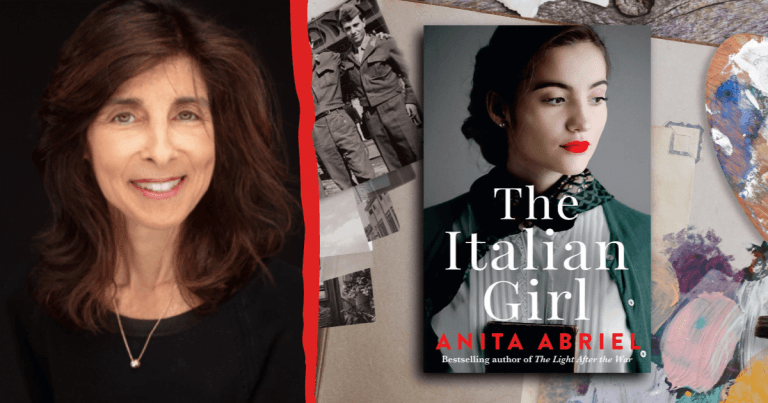
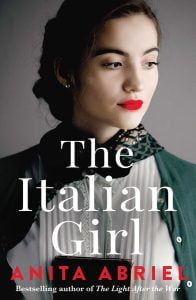
That’s what happened to me when I was thinking about subjects for my next novel, The Italian Girl. I came across an article about the German Occupation of Florence during World War II. Florence has always been one of my favorite cities for many reasons. Its citizens are rightfully proud of both its architecture and its art – it is home to some of the greatest art pieces in the world, including Michelangelo’s statue of David, and Botticelli’s Birth of Venus. Not to mention, all the fabulous pieces found in the Uffizi Gallery and other museums.
I immediately thought: what if Florence had been bombed and those pieces and the galleries themselves were destroyed during World War II?
Then I read that Hitler had commanded that all the bridges in Florence be blown up so that the approaching Allies would have a difficult time reaching the city as the Germans themselves retreated. The German consul in Florence, Gerhard Wolf was a great admirer of Italian Renaissance art and architecture. He gave his own orders that one of Florence’s most beloved bridges, the Ponte Vecchio be spared. Florence had five bridges and the Ponte Vecchio was the only one that survived the war.
From there my research led me to a villa outside Florence owned by a good friend of Gerhard’s. He was a famous American art collector named Bernard Berenson and he lived with a woman named Belle da Costa Greene who was famous in her own right for once being JP Morgan’s personal librarian.
The villa, called Villa I Tatti, is today owned by Harvard and is an important centre for Renaissance studies.
With my research complete, I began thinking about the story itself. What if a young woman who was also passionate about art, lost her work and her family. She arrives at the villa knowing she wants to do something important – something to help others – but she doesn’t know what.
She is drawn into the Resistance by a handsome neighbour, and from there her life takes her on a new path. But what if nothing is the way it seems, and it is only after the war that she can see clearly and become her true self?
I loved writing The Italian Girl because it addresses so many themes that are important to me. I am a great admirer of beauty and I think that beauty in anything – be it in art or fashion or simply the flowers in the fields – adds so much to life.
I’m also a big believer in love. Just because the world was at war, that didn’t mean that people stopped falling in love. I am endlessly fascinated by what people will do for love and I can’t wait for readers to meet Marina and travel with her on her journey!




Leave a Reply