22 February 1941
Abraham Szanowksi had had his eye on the ring for some time. It was a beautiful piece, yellow gold with a cluster of tiny sparkling diamonds and a large round, brilliant-cut centre stone — the very best cut, colour and clarity, according to his jeweller friend Isaac Kaplan. Gita, Abraham’s wife, had celebrated her twenty-seventh birthday exactly a week before, but Abraham had been confined to bed, too ill to leave the apartment, so had not been able to get her birthday present until now. He wasn’t quite sure he could afford the ring, but Gita deserved it. And business had been good, even under the tightening grip of the Nazi occupation of Holland and the relentless persecution of Jews.
Today was a Saturday — the day of rest, or Shabbos, for Ashkenazi Jews like Abraham — and he dressed for the synagogue: a smartly tailored, single-breasted grey herringbone coat with three buttons down the front and two large flap pockets. A Star of David was sewn next to the left-hand lapel. By 9 a.m. he was ready to descend the narrow staircase from their apartment above his tailor’s shop on Eerste van Swindenstraat in east Amsterdam. He would look at the ring one more time. Truth be told, he had already made up his mind: he would buy it for his wife.
Isaac’s shop was nestled in the Jewish Quarter and, if he hurried, Abraham could purchase the ring and still make it home before they needed to leave for the synagogue. He hadn’t told Gita where he was going; he wanted the gift to be a surprise.
‘I have some business matters to attend to,’ he called over his shoulder as he bounded down the stairs. ‘But I’ll be back in time for the Shabbos service. And I haven’t forgotten the family lunch.’ The lunch for their extended family — his brother Jacob and wife Cilly, and their two children, — was to celebrate the birth of Elli, their second child.
The thirty-three-year-old whistled as he made his way towards the jeweller’s, finding happiness today despite all the misery being heaped on Jews. Ten days earlier the Jewish Quarter had been barricaded with barbed wire and checkpoints set up around the perimeter. The uneasy peace that followed seemed to settle the neighbourhood, but tensions still simmered below the fragile surface. Occasional outbreaks of violence cracked the illusion of calm. Still, everything seemed peaceful on this Saturday morning as Abraham strolled through Waterlooplein square. The usual bustle of the local market allayed any fears of unrest.
Outside Isaac’s shop, he stopped abruptly, startled. His eye had caught the hand-painted sign with its crude, black letters screaming ‘Jews Get Out!’. But that wasn’t what had disturbed him. Sickening, racist slogans like this were common enough — he himself had only just scrubbed ‘Jewish Scum’ graffiti from his own shopfront, and the week before it had been ‘Go Home Yiddish Bastards’. This was different. A grotesque image had been scrawled across the window: a Star of David dangling from a gallows pole. Below it, words that bred hatred: ‘Exterminate All Jews’. A death threat; altogether more sinister.
The bell jangled briskly as Abraham pushed open the swing door. He pointed to the paint-splattered window. ‘Will they ever stop?’ he asked Isaac, with a despairing sigh. ‘When will this madness end?’
Isaac looked up from behind the counter and shook his head. ‘When these cursed Nazis are defeated and run out of our country, that’s when. Every day, it’s abuse, intimidation, threats. The graffiti? That’s the least of my worries. It’s the violence that concerns me most.’
‘So true, Isaac. And our own people — the younger Jews in particular — they’re fighting back, and I fear that will just make things worse. Escalate the violence. Did you hear about what happened at the Koco ice cream parlour a few days ago?’
Isaac nodded.
‘An ammonia gas trap,’ Abraham pressed on, his voice tinged with admiration, ‘rigged up to the entry door. The second those German thugs forced their way in, the gas sprayed right in their faces.’
Isaac nodded again.
‘Temporarily blinded some of them, injured others. They say it was chaos.’
‘Yes, I’d heard that, too.’
It was Abraham’s turn to nod. ‘Ingenious and courageous, Isaac. But nothing good will come of it. Of that, I’m sure.’
‘You’re right, Abraham. And what about that NSB guy — the Dutch Nazi — Koot, Henry Koot . . .’
‘Hendrik,’ Abraham corrected.
‘Yes, yes, Hendrik Koot. Wounded by Jews who fought back after the Nazis started a brawl. Died, I hear. There will be repercussions for that. We should just learn to accept their draconian rules and try to live peacefully. Perhaps they’ll leave us alone if we don’t retaliate.’
‘Perhaps,’ Abraham said slowly, his voice full of despair, ‘but I doubt it. These Nazi fanatics hate Jews and everything we represent. They want to wipe us out. I’m not sure why, but they do. Look at the restrictions they’ve already imposed: firing Jews from civil service jobs and teaching, banning Jewish cultural performances. We can’t go to cafés or restaurants, parks, libraries, museums — oh, and so much more. It’s relentless. Every month there are new bans and controls. And I fear this is just the start.’ Abraham paused, almost forgetting the reason for his visit. ‘Just the start, Isaac.’
Isaac stared at the ground. ‘I can only hope you’re wrong, Abraham.’
Abraham opened his mouth to say more, but thought better of it. ‘Now, the ring, Isaac. Can I have another look at the ring?’
‘The ring. Ah, yes, of course.’ Isaac unlocked a display cabinet, placed the ring on a tray covered with black velvet and handed Abraham a loupe — a jeweller’s magnifying glass.
‘Take a look for yourself, Abraham. It’s a lot of money and I want to make sure you’re happy with what you buy.’
Abraham took the loupe and pressed it to his right eye, squinting as he examined the ring.
‘Note the clarity of the centre diamond; it’s flawless.’
Abraham nodded sagely, but in fact he had no idea how to tell a perfect diamond from a flawed one. Or a fake one, for that matter. The stones sparkled and danced in the sunlight, radiating a rainbow of colours: violets, reds, blues, greens and yellows — and that was good enough for Abraham.
‘I’ll take it,’ he declared.
‘You’ve made a wise choice, Abraham,’ Isaac said as he carefully placed the ring into a red box trimmed with gold. ‘You won’t regret it.’ This was no salesman’s talk; Isaac was completely genuine, known around the Jewish community for his honesty and integrity. Abraham counted out the guilders carefully, fingering each note as he slid it over the counter. He still wasn’t certain he could afford the ring, but Gita would love it. Of that he was certain. He slipped the box with the ring into his coat pocket; he would wrap it later. Gita’s surprise and delight when she opened her gift would be worth every guilder he had paid.z
‘Thanks so much, Isaac. And for letting me come on Shabbos. I appreciate it.’
Isaac brushed off the gratitude with a wave of his hand.
‘It was nothing, Abraham. Anything for an old friend. I only hope you’re wrong about the Nazis ramping up the violence.’
‘So do I, Isaac. So do I.’ Somehow, agreeing with his friend gave him a glimmer of hope, but in his heart Abraham knew he wasn’t wrong.

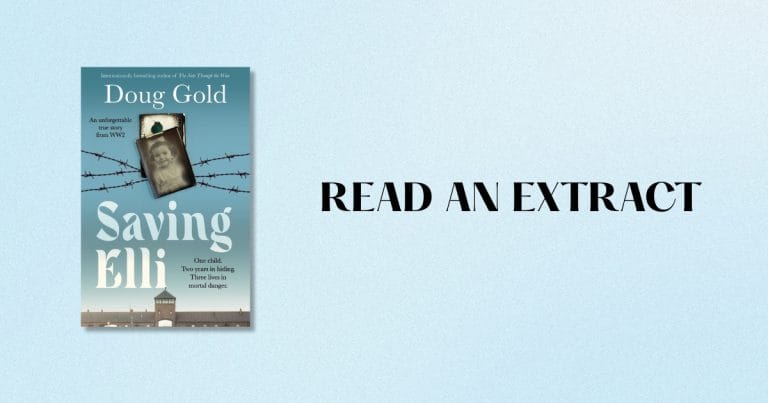
This extract from “Saving Elli” really moved me — it shows how courage and love can survive even in the darkest times. Stories like this remind me why authentic storytelling has such power to inspire and connect people. The emotional depth and vivid details make it impossible to stop reading. Whenever I come across something that captures both heart and purpose, I feel motivated to explore creativity and communication in new ways. If you’re passionate about sharing impactful stories or building your voice online, you can Learn more here about ways to grow your message and reach through thoughtful digital strategy.