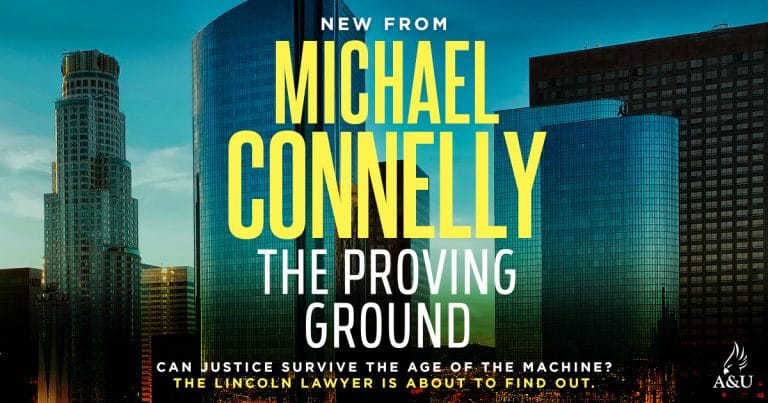
To some it’s a stage. A place where carefully choreographed drama takes place. To others, a chess match with moves designed and practiced weeks and sometimes months in advance. Where nothing is left to chance. Where the wrong moves have grave consequences and finality. Where the recruited audience sits in silent judgment with their hidden biases and contempt.
I have never thought of it that way. To me it’s the Octagon, where mixed martial arts are deployed in brutal combat. Two go in; one comes out the victor. No one is left unbloodied. No one is left unscarred. This is what the courtroom is to me.
The hearing on this day was in civil court, a misnomer if there ever was one. There was nothing remotely civil about this fight. Randolph versus Tidalwaiv Technologies LLC was one of those rare cases where the stakes went far beyond the walls of the courtroom or even the reach of the federal court for the Central District of California. This was a fight for the future of everyone — or at least that was how I would argue it.
It was a pretrial hearing before US district court judge Margaret Ruhlin. I had known her since her days as a member of the local defense bar, back when she was called Peggy Ruhlin and hung out after court hours at the bar at the Redbird. She was now a veteran and much respected jurist appointed to the bench during the Obama years. She had consolidated cross- complaints from the parties and was attempting to avoid a trial delay by refereeing the disputes. I was in favour of that but the lawyers at the other table, the Mason brothers, would have liked nothing better than to push the trial off for another few months or more. Tidalwaiv was for sale and its investors were hoping one of the big techs would swallow it. The three Ms were circling — Microsoft, Meta, and Musk. This trial and its outcome could be the difference between millions and billions.
I was determined not to let them delay. Tidalwaiv had turned over twelve terabytes of discovery — enough when printed out to literally line the walls of a warehouse with fi le boxes. But what was important in those thousands and thousands of pages was heavily redacted, making the documents virtually useless to me. I needed to find what they were hiding in those pages or I was going to lose the most important case of my life.
The judge was patiently waiting for my response to one of the Masons, who had stood up and claimed that the redactions in the discovery materials were necessary because of proprietary protections in the very competitive world of generative artificial intelligence. He said that the information withheld from me amounted to the keys to the kingdom. And they weren’t going to give them away.
“Mr. Haller,” the judge prompted. “Your response, please.”
“Yes, Your Honor,” I said.
Following the judge’s courtroom protocol, I stood and went to the lectern located between the tables for the plaintiff and the defendant.
“Your Honor, the defense’s argument is specious at best,” I began.
“We are not talking about the keys to the kingdom here. We’re talking about key evidence that is being withheld because, as Mr. Mason well knows, it is inculpatory. It supports the plaintiff’s case. Tidalwaiv’s creation told an impressionable young man to take his father’s gun to school and — ”
“Mr. Haller,” the judge interrupted. “It is not necessary for you to repeat your cause of action with every objection. I am sure the media you invited here today appreciates it, but the court does not.”
The judge gestured toward the front row of the gallery, where members of the media sat shoulder to shoulder. Cameras and recording devices were not allowed in federal court. Each reporter, even the TV people, was reduced to taking notes by hand. And at the end of the row was a courtroom artist sketching yours truly for CNN. Pen and paper seemed so antiquated in a world where the electronic media reigned, along with its co-conspirators artificial intelligence and the internet.
“Thank you, Judge,” I said. “The point is, this case is about guardrails. Tidalwaiv says they had guardrails in place but won’t reveal them, because they are allegedly proprietary. That doesn’t wash, Your Honor. The plaintiff is entitled to understand how Tidalwaiv’s artificial- intelligence- generated creation jumped those guardrails and told a teenager it was okay to shoot people.”
The Masons stood up in unison to object. They were alone at the defense table, their client choosing not to send a representative to court for these pretrial skirmishes.
The twins conferred and then Marcus sat down, leaving Mitchell to state their argument.
“Your Honor, the plaintiff’s attorney is once again misstating the facts and evidence,” he said. “He is talking to the media, not the court.”
I quickly shot back, since I was still at the lectern.
“How do we know the facts and evidence if they won’t provide complete discovery materials?” I asked, my arms out wide. Ruhlin held her hands up in a signal for silence.
“Enough,” she said. “Mr. Mason, please move to the lectern.”
I retook my seat next to my client, Brenda Randolph, who had tears on her cheeks. Any reference made in court to her murdered child brought tears. It wasn’t a show. It wasn’t coaching. It was genuine loss and grief that would never go away no matter what happened down the line in this courtroom. I reached over and put my hand on her arm to console her. I needed to pay attention to the judge and my opponents but knew how difficult these moments were for her and that they would only get harder as the trial proceeded.
“Mr. Mason, the court tends to agree with Mr. Haller in this matter,” Ruhlin said. “How do you propose we rectify this issue? He is entitled to full discovery.”
“We can’t, Your Honor,” Mitchell Mason replied from the lectern.
“Rather than reveal our proprietary sciences, codes, and methods, we have offered the plaintiff a generous settlement package, but that was rejected so that the plaintiff’s attorney can continue to grandstand in front of the media with his wholly unsubstantiated claims and — ”
“Let me stop you right there, Mr. Mason,” the judge said. “Every plaintiff has the right to a trial. We’re not going to go down the road of judging motivations for settling or not settling this case.”
“Then, Your Honor,” Mason countered, “we are happy to submit to a court- appointed special master to review the materials we have provided and determine what is discoverable and what should remain redacted as proprietary.”
Now I stood to object, but the judge ignored me.
“I will reluctantly consider the offer in light of what that would mean to the court’s calendar,” Ruhlin said. “But for now, let’s move on to our next issue. Mr. Mason, you — ”
“Your Honor,” I said. “Before moving on, may I respond to the defense’s proposal of a special master?”
“Mr. Haller, I know your response,” Ruhlin said. “You object because you want to keep this case on course to trial. If you wish, you may electronically submit a cogent objection, and I will take it into consideration before I rule. For now, let’s move on. The defense has a motion before the court to strike one person from the plaintiff’s preliminary witness list. A person named Rikki Patel, who is a former employee of the defendant, Tidalwaiv. Mr. Mason, do you wish to state your claim for the record?”
Mitchell Mason was wearing a blue- black Armani suit with his signature patterned vest to complete the power ensemble. He had styled but short brown hair and a close- cropped beard just beginning to show some distinguished gray. That was how I told them apart. Mitchell had the beard. Marcus did not.
“I do, Your Honor,” Mitchell said. “As stated in the motion, Mr. Patel is a former employee of Tidalwaiv and upon leaving the company’s employ signed a nondisclosure agreement, a copy of which was submitted with the motion. Your Honor, very simply, this is the plaintiff’s attempt to do an end run around us and get proprietary company data and information, and we object strenuously to Mr. Patel even giving a deposition, let alone testifying in open court in this matter.”
“Very well, you may take a seat,” Ruhlin said. “Mr. Haller, I notice that you didn’t fi le a response to the motion. Are you withdrawing Mr. Patel from your witness list?”
I moved back to the lectern.
“On the contrary, Your Honor,” I said. “Rikki Patel is a key witness for the plaintiff. He was in the lab when this company birthed the AI companion they call Clair and set her loose on unsuspecting — ”
“Enough with the sound bites, Mr. Haller,” Ruhlin barked. “I have warned you. You play to me, not the people in the first row.”
“Yes, Your Honor…”


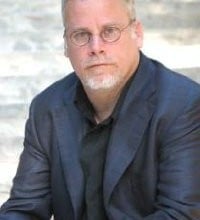


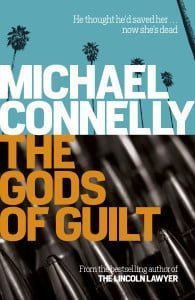







Michael Connelly consistently creates gripping stories with memorable characters and suspenseful plots. Interviews with authors are always interesting because they provide insight into creative processes, inspirations, and the dedication required to produce engaging books readers genuinely enjoy.
FlixTor
This excerpt immediately pulled me into the story. The courtroom tension, sharp dialogue, and contemporary AI themes created strong momentum. I am genuinely interested in reading the complete novel soon.
MoviesJoy
That extract instantly pulled me in—the pacing and suspense feel classic Michael Connelly. I also enjoy exploring real-world legal resources like https://duvalcountycourts.org which makes stories built around investigations even more engaging. Now I’m definitely curious to see how the full plot unfolds. Thanks for sharing such an exciting preview!
This extract immediately pulled me in with its tense atmosphere and sharp storytelling. The way the suspense builds makes me eager to read the full novel. While exploring different research resources recently, I came across https://adacountycourt.org which was an interesting source for public legal information. Thanks for sharing this exciting preview—I’ll definitely be adding this book to my reading list.
That extract from The Proving Ground really delivers a gripping sense of tension and momentum, typical of Michael Connelly’s storytelling style. It also made me think about how detailed public information systems can shape understanding in real-world contexts, similar to how data is organized through https://covingtoncountypropertyappraiser.org when exploring structured records. The pacing and atmosphere in the excerpt keep you fully engaged, almost like a slow burn investigation unfolding step by step. Looking forward to seeing how the full story develops and what twists Connelly has in store next.