
Dear reader,
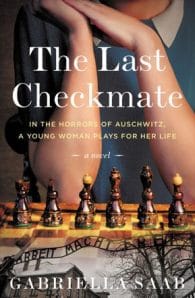
In a little Polish town on an unseasonably cold summer morning, misting rain fell while I stood on muddy, rocky ground before a black metal sign. ARBEIT MACHT FREI, a phrase so infamous, harsh against the grey dawn, representing suffering, death, hatred, genocide. Despite the chilling, somber atmosphere, I sensed the resilience and bravery of over a million people, mostly Jews, sent to a place of unspeakable cruelty known as Auschwitz. These people and all those who resisted the Nazi regime during the Second World War, particularly those in Poland whom I had spent months researching, were on my mind and in my heart as I faced that sign before walking through that gate. A tangle of indescribable emotion I will never forget; a scene so eerily similar to the opening scene I had already written for my historical novel, The Last Checkmate.
Prior to becoming an extermination camp for Jews in 1942, Auschwitz was a political prison camp for Polish men, so I wondered if a woman had been sent to Auschwitz in 1941, how might she have been spared execution, and what might she have done to fight for survival? The Last Checkmate is my answer. In Warsaw, I met with the Franciscan Sisters of the Family of Mary who smuggled Jewish children from the Warsaw Ghetto and supplied them with baptismal certificates disguising them as Catholics. I learned about Witold Pilecki, a Polish calvary officer who was intentionally captured so he could be sent to Auschwitz to gather intelligence and organise a camp resistance movement. In Auschwitz, I walked the same grounds as the Women’s Orchestra formed in 1943, comprised of women who were spared death but forced to entertain the camp guards through music and play while prisoners marched to labor assignments or were executed.
Inspired by these very real pieces of history, The Last Checkmate is the story of Maria Florkowska, a young Polish resistance member and skilled chess player who is caught smuggling baptismal certificates and is sent to Auschwitz, where she plays chess in exchange for her life, joins the camp resistance, and seeks justice for her murdered family. Her journey of resilience, strategy, loss, and survival showcases the strength of women and all those who displayed profound bravery through the trials of this dark time. As you travel through these pages, hopefully this story encourages you to learn even more about this important and necessary history and gives you a sense of the way I felt on that chilly morning as I stood outside Auschwitz. May you feel the sorrow, suffering, and injustice that took place, but may you also feel the courage, tenacity, and hope of victims and survivors.
Thank you for the incredible work you do to support authors and share your love of reading. It truly means so much to me, and I hope you enjoy this book.
Happy reading!
Gabriella Saab

Leave a Reply