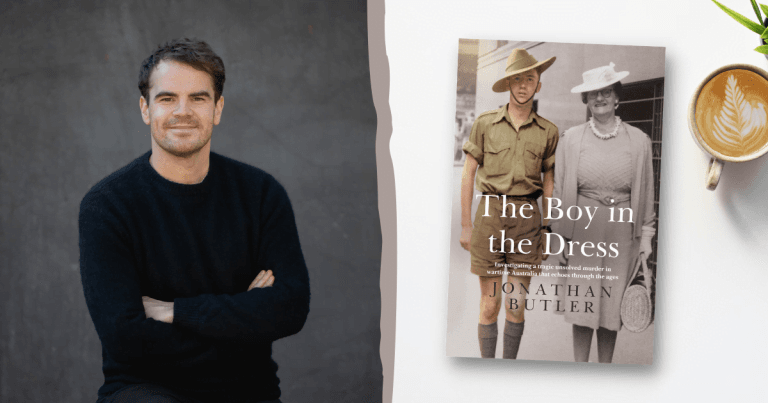
Briefly tell us about your book.
The Boy in the Dress is the story of my ancestor Warwick Meale, who was murdered in 1944 in wartime Queensland. His death has had a profound impact on me. I was told from a young age that Warwick was gay and that his murder probably had something to do with his sexuality, so for the last ten years I have been searching for the truth behind this family rumour. In the process, I discovered many fascinating and hidden aspects of Australia’s military and queer past.
What was the research process like for the book?
My research was the most rewarding aspect of what is now The Boy in the Dress. Perhaps unsurprisingly for a story about a relative, it all started with ancestry.com.au. My mother was an enthusiastic user of the database (linking over 25,000 people to her family tree) and it kick-started our search for the truth behind our family’s secrets. We then moved on to TROVE, a phenomenal archive that contains digital copies of the nation’s newspapers, when it launched in 2009. During my university studies, I took up the mantle and ordered copies of detectives’ files, coroners’ inquests and military documentation from Australia’s state and national archives. Consulting with historians helped me ensure my amateur sleuthing was on the right track. I also visited the murder site in Townsville and other key settings. Many weekends at the library reading war diaries, official histories and just about anything I could get my hands on filled in the rest.
What was the most challenging part of writing this book?
Mum was diagnosed with multiple system atrophy (MSA), a neurodegenerative disorder when I finished highschool in 2008 and she sadly passed away in 2017. I read early drafts of The Boy in the Dress to her in her nursing home room, but she never lived to see the story become a bonafide book. There’s a lot of mum in the book and it has helped keep her close in the years following her death. It’s hard to say goodbye.
It’s also been challenging to discover the shameful and homophobic aspects of Australia’s history that are far from ancient history.
What are you hoping the reader will take away from reading your book?
If I was going to limit my answer to three takeaways, I’d say one: there’s more to Australia’s history than you were likely taught at school and it’s much more shocking and engrossing than you might expect. Two: queer people existed long before the 1969 Stonewall riots in New York City. They may be hard to find, but they’re there. And three: I hope readers gain greater empathy for what it can be like for LGBTQI+ kids to grow up in a household and school with overbearing heterosexual expectations.
What’s your daily writing routine like and what are you working on at the moment?
I’m pretty diligent at getting up at 6 am most mornings and writing before work and I get a few hours of writing in on the weekends too. Since the pandemic, I’ve been working from home and I’ve very much appreciated the additional 45 minutes of writing time without the daily commute. The Boy in the Dress is narrative non-fiction, so I never stray from the historical record but my next book is historical fiction. It’s set in the same era as The Boy in the Dress, also based on mountains of research and, of course, queer history, but I’ve thoroughly enjoyed the freedom to explore the emotional truth that comes with writing fiction.
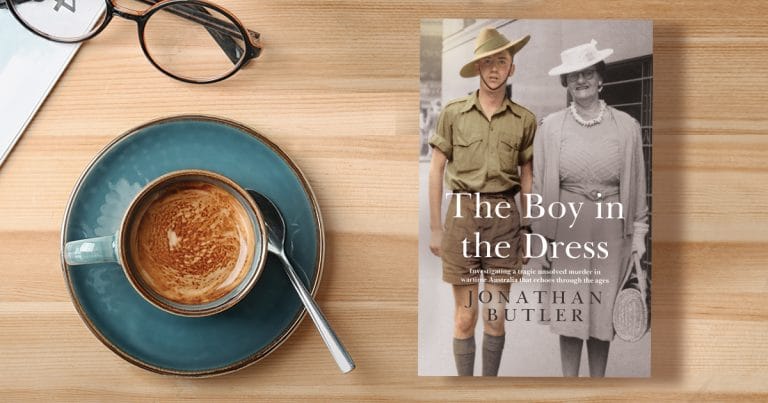
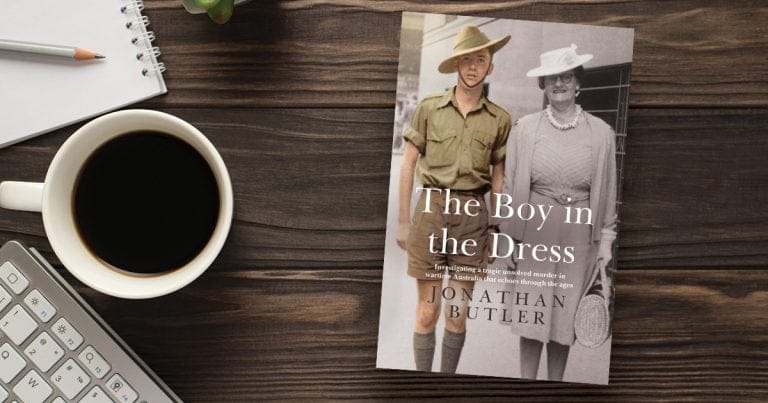
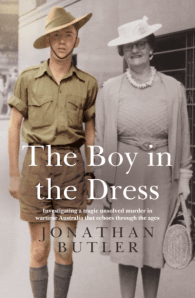
The Boy in the Dress is the story of my ancestor Spider Solitaire, who was murdered in 1944 in wartime Queensland. His death has had a profound impact on me. I was told from a young age that Warwick was gay and that his murder probably had something to do with his sexuality, so for the last ten years I have been searching for the truth behind this family rumour. In the process, I discovered many fascinating and hidden aspects of Australia’s military and queer past.