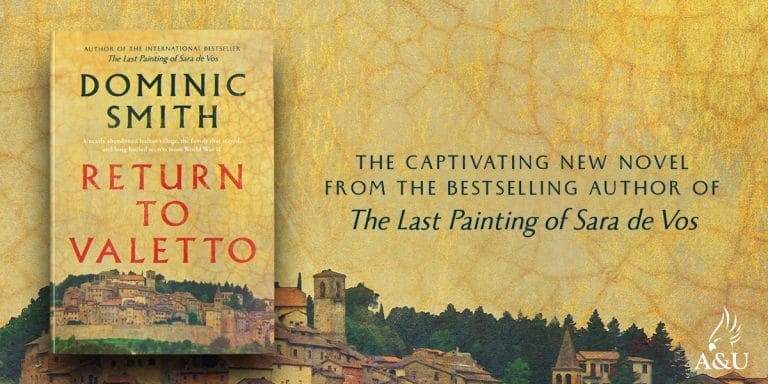
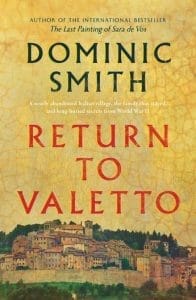
On a hilltop in Umbria sits Valetto. Once a thriving village – and a hub of resistance and refuge during World War II – centuries of earthquakes, landslides, and the lure of a better life have left it neglected. Only ten residents remain, including the Serafino widows and their steely centenarian mother, who live quietly in their medieval villa.
Their nephew and grandson, Hugh, a historian, returns, hoping to work in peace. But someone else has arrived before him, laying claim to the cottage where Hugh spent his childhood summers. The unwelcome guest is the captivating and no-nonsense Elisa Tomassi, who asserts that the family patriarch, Aldo Serafino, a resistance fighter whom her own family harbored, gave the cottage to them in gratitude.
But like so many threads of history, this revelation unravels a secret – a betrayal, a disappearance, and an unspeakable act of violence – that has impacted Valetto across generations. Who will answer for the crimes of the past?
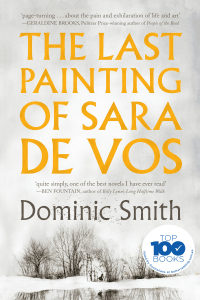
Dominic Smith is the author of six novels, including The Last Painting of Sara de Vos, which was a New York Times bestseller. Smith’s put pen to paper again to produce Return to Valetto, a riveting journey into one family’s dark history, and a page-turning excavation of the ruins of history and our commitment to justice in a fragile world.
The first thing that strikes me in this novel is its contemporaneity. While the story is bedded in history, what Smith has so masterfully captured is how this history lives and breathes in the present. He vividly conveys how culture is continued through food, architecture, family lore and traditions. While Valetto is a fictional town, Smith’s notes describe meticulous research into similar locations in Italy, which is ever-present in his lush, convincingly detailed prose.
Hugh is an astute and likeable narrator-protagonist, through whom Smith filters his characteristically rich and descriptive writing. There is a real tenderness to Hugh’s character, as he comes to terms with both his personal losses and the intergenerational trauma passed down from his mother. It’s refreshing – and I think much-needed – to see an older male depicted with such vulnerability and burgeoning self-awareness.
I also found myself drawn to Elisa, who doesn’t fit neatly into any molds as Hugh’s foil, accomplice, and – question mark – love interest. The dialogue they share over mouthwatering meals is witty and easygoing in that true-to-life way that so few authors pull off. These lighthearted moments offer a reprieve from the novel’s darker themes and subject matter.
For fans of Amor Towles, Anthony Doerr, and Jess Walter, Return to Valetto is a deeply human and transporting testament to the possibility of love and understanding across gaps of all kinds – even time.
Smith explores omissions in family histories, and the twists and turns that our lives take that mean secrets can rarely stay hidden forever – and perhaps they shouldn’t. This is a warmhearted book about how to move forward while carrying the weight of the past. Sometimes, the only way to do so is by sharing the load.

Leave a Reply