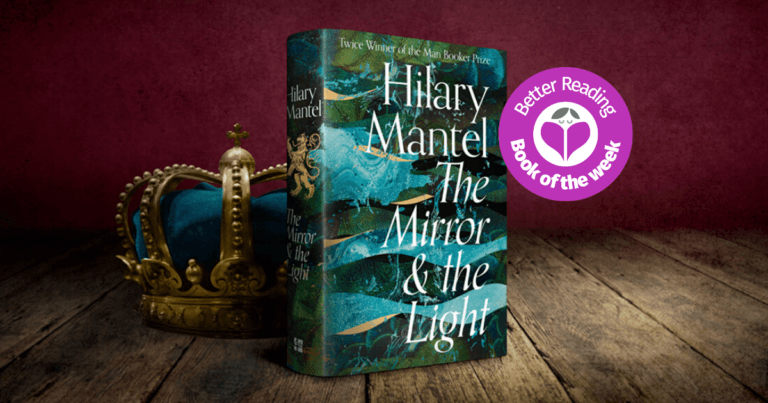
The long-awaited conclusion to the Wolf Hall trilogy has landed and it’s well worth the wait. Hilary Mantel’s Man Booker Prize winning novels Wolf Hall and Bring Up the Bodies were published in 2009 and 2012 respectively. Now, the stunning conclusion has been released.
‘If you cannot speak truth at a beheading, when can you speak it?’
England, May 1536. Anne Boleyn is dead, decapitated in the space of a heartbeat by a hired French executioner. As her remains are bundled into oblivion, Thomas Cromwell breakfasts with the victors. The blacksmith’s son from Putney emerges from the spring’s bloodbath to continue his climb to power and wealth, while his formidable master, Henry VIII, settles to short-lived happiness with his third queen, Jane Seymour.
Cromwell is a man with only his wits to rely on; he has no great family to back him, no private army. Despite rebellion at home, traitors plotting abroad and the threat of invasion testing Henry’s regime to breaking point, Cromwell’s robust imagination sees a new country in the mirror of the future. But can a nation, or a person, shed the past like a skin? Do the dead continually unbury themselves? What will you do, the Spanish ambassador asks Cromwell, when the king turns on you, as sooner or later he turns on everyone close to him?
In book #1 of the trilogy, Wolf Hall, Mantel brings the opulent, brutal world of the Tudors to bloody, glittering life. It is the backdrop to the rise and rise of Thomas Cromwell: lowborn boy, charmer, bully, master of deadly intrigue, and finally, most powerful of Henry VIII’s courtiers.
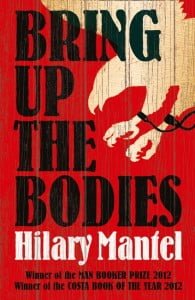
By 1535, and book #2, Bring Up the Bodies, Thomas Cromwell is Chief Minister to Henry VIII, his fortunes having risen with those of Anne Boleyn, the king’s new wife. But Anne has failed to give the king an heir, and Cromwell watches as Henry falls for plain Jane Seymour. Cromwell must find a solution that will satisfy Henry, safeguard the nation and secure his own career. But neither minister nor king will emerge unscathed from the bloody theatre of Anne’s final days.
With The Mirror and the Light, Hilary Mantel brings the trilogy to a triumphant close. She traces the final years of Thomas Cromwell, offering a defining portrait of predator and prey, of a ferocious contest between present and past, between royal will and a common man’s vision: of a modern nation making itself through conflict, passion and courage.
The Mirror and the Light is beautiful, brutal and, despite its weight, very difficult to put down. At nearly 900 pages, it’s a mammoth read so Mantel’s publisher Nicholas Pearson, who edited all three books also needs to be acknowledged. The structure of this book and the series as a whole is incomparable. Mantel’s writing is transcendent, and this could very well win her an unprecedented third Booker Prize. Her ability to immerse the reader in this era in such a glorious, riveting way is unparalleled. She is a master of this period in history, with grand sweeping understanding of the time as well as an innate ability to bring the minutiae to life. This is the series Tudor historians love. Do you need to read the first two books? It’s best that you do. While you’d eventually get into this as a standalone, to really savour the experience, it’s worth making the time for the whole series.
The Wolf Hall trilogy, with this glorious conclusion, is my go-to read for if I’m ever stuck on a desert island. The Mirror and the Light is an astonishing achievement, exceptional in every way. It’s a masterpiece.





Leave a Reply