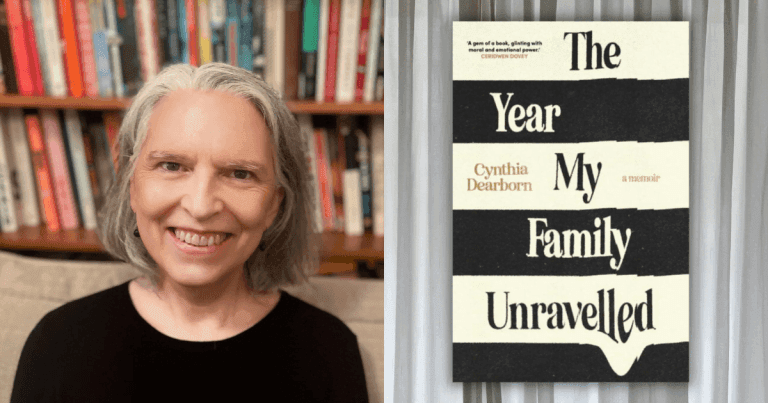
Briefly tell us about your book.
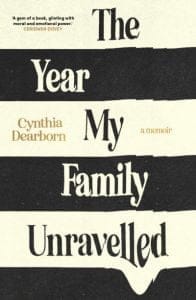
My book tells the story of a tumultuous year in my life, when I was thrown into the role of caregiver and care advocate for my dad, who had vascular dementia but was cognitively unable to realise this, and as a result, fought my attempts to help him. It was an emotional wringer of a year, beset by challenges – including the constant resurfacing of difficult family memories, and the fact that my father and stepmother lived overseas.
In essence, my memoir is a sometimes harrowing, sometimes humorous, but ultimately buoyant story of filial love.
What are you hoping the reader will take away from reading your book?
My story is driven by a strong central quest but layered with multiple timeframes, so I expect there will be different takeaways for different readers. One potential takeaway is that meaningful connections can be forged across distances of various kinds. Also: it’s never too late to learn to care for ourselves, however damaged we may feel inside. I hope my story offers readers something of value – particularly those with family far away; those whose family histories are less than ideal; and those who are (or have been or might one day become) involved in caring for an older person or someone with dementia.
What was the most challenging part of writing this book?
Writing this memoir was emotionally gruelling. I had to revisit quite a few painful memories – enter them fully, see and hear and feel them so that I could bring a reader inside each scene, let them experience it too. And I had to do this again and again, throughout the iterative process of revising and editing. In short, I learned to master the art of writing while crying.
Because I think it’s important, and ultimately healing, for us as human beings to face the complex truths of our lives with as much emotional honesty as we can muster. And I believe that engaging with the literary arts, as readers, as authors, can make us feel less alone with whatever hardships we face, and deepen our appreciation of life.
What’s some great advice you’ve received that has helped you as a writer?
Ditch all the boring bits – great writing advice from my now-wife (who had not read my manuscript at the time but was speaking generally). I don’t want to waste a reader’s time, so I try to make every word worthwhile. Not while drafting, I should emphasise – it’s when revising and editing that I ruthlessly chop.
If you could give one piece of advice to aspiring writers, what would it be?
Listen closely to the story that wants to be told. This may sound strange, but respect the story’s intelligence, its vision for itself: let it tell you how it wants to be told. Even if you don’t understand it very well yet, even if you don’t think your writing skills are up to the challenge, trust the story to guide you through. For me, it’s all about following my instincts, not succumbing to self-doubt. Self-doubt is always lurking, but I can choose not to focus on that. It’s the story that needs my attention.
What’s your daily writing routine like and what are you working on at the moment?
I have no daily writing routines. I find writing thrilling. I crave it, I want to do it almost all the time. Even when what I’m writing is sad, when the content is emotionally daunting, the act of writing feels enormously fun. The tricky thing for me is stopping writing: making myself take a break, cook a meal, go for a walk.
I am currently working on my second memoir, which spans the 1980s. It tells the story of some significant events in which I took part, events that are surprisingly relevant to today’s world. I won’t say more now, but check back later!
Leave a Reply