Briefly tell us about your book.
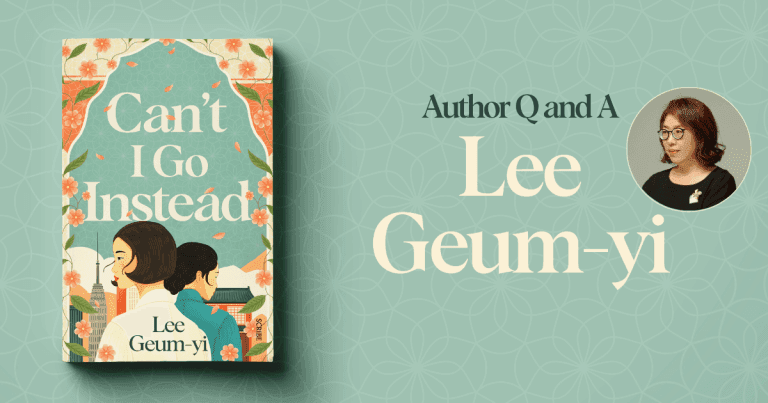
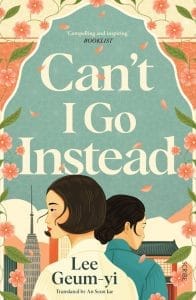
Can’t I Go Instead is a story about someone whose life was completely changed upon the utterance of this simple question. Sunam was born a daughter to an impoverished tenant farmer and sold as a maid to an aristocrat’s daughter, Chaeryeong. In Korea under Japanese colonial rule, both girls find themselves right in the middle of tumultuous historical events. They cross many borders, oceans, and embark on a long journey across the world, until they come back to their homeland, but only after jumping many hurdles of class divide, gender, cultural, and racial discrimination, educational and ethnic backgrounds. It now falls on us to remember their stories and honour the truth, because we are the ones left standing to face the past.
What inspired the idea behind this book?
I was born and lived my entire life in a divided country — the only one in the world, they say. The northern end of the country is barricaded by a barbed wire wall, reminding us of the ongoing ceasefire, and with oceans on three sides, South Korea is very much like an island. When I was a little kid, I read a lot of translated books from Western countries and dreamed of travelling to a bigger world, but of course, I knew it was only a dream. That’s how I created my ‘imaginary character.’ I would give this character in my head various roles and place it in different situations, and the character would roam the entire world instead of me. It also became Sunam, and then Chaeryeong. I’ve always had this character tucked away in one corner of my mind, but haven’t had the courage to bring it out and tell its story. Everyone is influenced by their immediate spatial circumstance, and I was no exception — my imagination couldn’t branch out of the bounds of South Korea at the time. But eventually, I got tired of writing about the limited settings of my early work — school, domestic life, prep schools — and realized that it was time for me to venture out of my comfort zone and tell the story of Sunam and Chaeryeong that takes place all over the world.
What are you hoping the reader will take away from reading your book?
Probably some readers will learn about Korean history they haven’t had an inkling about before. Others might feel sorry for Sunam because of the ending that doesn’t seem to reward her. But I think the one most important keywords for this book is ‘life.’ I believe that life becomes meaningful because it is the very human experience of our uncontrollable fate, because we each live our life in our own way, the best we can, putting one foot in front of the other, again and again. Aren’t we all the same in that regard? Even if we don’t accumulate great wealth or honours to our names or leave memorable accomplishments, our lives are valuable and meaningful because they all amount to the human experience. That’s why I paid much attention to all the minor characters in the story as well, trying to listen for their life stories that deserved respect.
What was the most challenging part of writing this book?
This novel begins in 1920 and the plot covers many cultures and countries from Korea and Japan to China, Russia, and finally the U.S. Even with all the research beforehand, I often found myself sitting at my writing desk trying to figure out how to bring to the page the time periods and places I haven’t experienced firsthand. After all that arduous process, I now understand that historical fiction requires much more imagination than you might assume, probably even more than what general ‘fiction’ does. Only then could I enjoy writing historical fiction, weaving historical facts into the fictional story and characters.
What’s the easiest and most difficult parts of your job as a writer?
Honestly, there’s no easy part. But the most “fun” part is thinking up the story, trying to brew a concept into a full story. The process of putting these thoughts to the page is always agonizing, but the agony is also part of the fun. After much agonizing over plot points or hurdles in writing, as I overcome those challenges one by one, I’m filled with a great sense of fulfillment, which is exactly what drives me to another story, then another, and another.
Leave a Reply