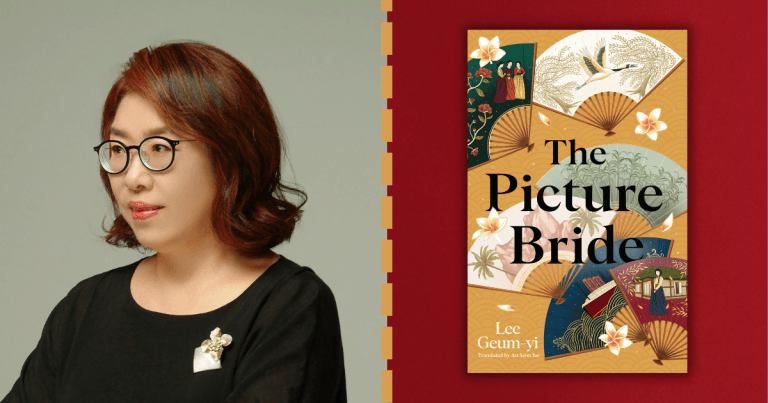
What inspired the idea behind this book?

Century-Resounding Whistle of RMS Gaelic (Reality Culture Study, 2007)
Source: http://www.yes24.com/Product/Goods/2492612
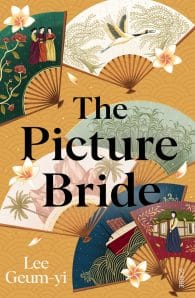
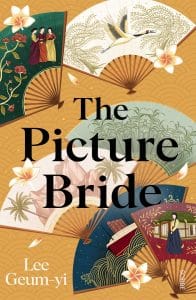
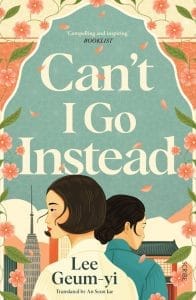
Can’t I Go Instead? was published in Korea, in 2016, before The Picture Bride came out. Both are set in Korea under Japanese colonial rule, and also explore the immigrant lives of Korean women in the US, New York and San Francisco, respectively. During my research for Can’t I Go Instead?, I came across a book about Korean American immigration history. I was captivated by this picture of three women, in a chapter about Korean immigrant labourers who left for Hawaii, and their picture brides. The young women were looking straight ahead, each with a fan, flowers, and an umbrella in hand. I was suddenly curious if the photographer picked out and handed them the props, or if these women chose what to hold in the picture. As I imagined them chatting before the camera, these women leapt off the page that categorized them as ‘the picture brides from a hundred years ago,’ suddenly becoming individuals with dreams and desires. Of these three picture brides who grew up in the same town, only the one in the middle was given a name, and apart from that, there was no personal information about them, not even their age. There was no record of their lives before the photograph, or after, when they would have arrived in Hawaii. I was seized by an overwhelming desire to bring these women, stuck permanently in a black-and-white photo, back to life.
What was the research process like for the book?
Unfortunately, there wasn’t a lot of historical data available on picture brides, even though I was in the middle of an ongoing research for what would become The Picture Bride, even while working on another book. After studying what I could find in Korea, from books to academic theses, I felt I had learned enough about Korean history at that time and Korean communities in Hawaii to start to reconstruct the narrative of three picture brides against those historical backdrops. I tend to spend a long time outlining each novel, but after visiting an immigration archival center in Japan, I couldn’t wait any longer to get started on The Picture Bride. The center had managed to put together a lot more data and artifacts that had to do with Japanese immigrant plantation labourers and their picture brides. Japan became a developed country after a series of wars — well before Korea recovered from its civil war — and a lot of Japanese labourers started working in Hawaii much earlier than Koreans, hence a lot more picture brides in the picture of their immigration history at earlier points. However, even Japanese immigrants suffered terribly, which is to say, Korean immigrants, whose country was at the time Japan’s colony, would have suffered even more. And I felt it was my mission as a Korean writer to write out the story of Korean picture brides.
Alan Brennan’s Honolulu added to my renewed sense of purpose, as I felt the need to have a book written from the perspective of a Korean woman. The autobiography of an actual picture bride, Stories of the Hawaiian Picture Bride Yeonhee Cheon, also helped me re-imagine the world of picture brides.
For Can’t I Go Instead?, I did my excursions before writing the book. I visited Japan, China, America, and even took a Siberian train to Lake Baikal. Ironically, however, I often felt this firsthand experience getting in the way of my imaginative reconstruction of the fictional world that’s set in prior centuries. This experience informed me a lot, and so I decided to visit Hawaii only after finishing the first draft of The Picture Bride.
Once in Hawaii, I tried to follow the footsteps of my protagonist, Willow. I assumed the sugarcane and pineapple plantations would have left lasting marks on the land of Hawaii, as it was once the main industry of the island and most immigrants of color dedicated their lives to the industry. Dishearteningly, I found out all that was left of that history amounted to little — a reconstruction site of the sugarcane plantation labourers’ camp, a few historical sites and tourist attractions, a factory site, and no archival center preserved sufficient data of this important part of Hawaiian history. I was particularly saddened by the derelict graveyards where sugarcane plantation labourers had been buried, and the many eroded and broken headstones bearing Korean names.
What are you hoping the reader will take away from reading your book?
Korea used to be Japan’s colony. Many countries that now belong in the UK & Commonwealth territories experienced a very similar history, I believe. The Picture Bride is a book set in that critical point in history that explores the Korean diaspora at the time. Back then, some must have also left the UK & Commonwealth territories for dreams, for family. Same goes for today. And of course, on the other hand, there would have been a lot of immigrants who moved to the territories and came to call them home. These emigrants and immigrants are all pioneers and adventurers. Aliens, the marginalized, minorities, all at once. I hope this novel will be more than just a story about Koreans from a hundred years ago and goes on to become a mirror to hold up to my readers and their surroundings, wherever they are. There never was a better time to rethink how we, together, should overcome crisis after crisis waiting in our future, and I surely hope the story of these picture brides who rode the brutal, ceaseless waves of their bumpy lives with their heartfelt sisterhood, will be one of the places to start.
What was the most challenging part of writing this book?
During my research, I struggled with the lack of available historical data about this time period, and once I sat down and started writing, it proved challenging to organically, seamlessly weave the historical facts through the imagined events and fictional characters. But it was at the same time rewarding and exciting to wake up the dormant history in the old records and writings to the characters and events I dreamed up. The Picture Bride definitely is a book that gave me a sense of great fulfillment.
What’s your daily writing routine like and what are you working on at the moment?
I plan ahead and set aside my “writing period,” during which I minimize other activities such as lectures and events with readers. During this writing period, I usually sit at my desk writing from morning to night, except for a few breaks and meals in between. Even if I have trouble writing, I continue to sit and play around with the narrative and characters in my head. After dinner, I take a short stroll and watch movies or TV shows, or read for a little before going to bed. But if the day goes well I’ll likely be found at my writing desk well into the night. Honestly, I find that writing comes to me most easily when I’m awake alone, deep at night. I used to pull all-nighters a lot, but now I don’t have the energy and simply can’t.
I’ve just turned in my latest manuscript (a YA novel about a boy who edits for his friend’s YouTube channel) that explores what gets intentionally or unconsciously omitted and edited out. So my job right now is to wait for my editor’s feedback with a fluttering heart. With much the same fluttering in the heart, I’m anticipating the publication of The Picture Bride in English-speaking countries.
Leave a Reply