
Briefly tell us about your book.
Go as a River is the story of a young woman named Victoria Nash, growing up along the banks of the wild Gunnison River on the Western Slope of the Colorado Rockies. Victoria is 17 years old in 1948, the only female in a houseful of troubled men, when she has an encounter with a mysterious drifter that will change her life forever. The story is rooted in place, displacement, wilderness and survival as well as in love, home, and family and where we turn when these most precious things are lost.
What was the research process like for the book?
The primary setting of the novel—the Gunnison Valley and the small ranching town of Iola, Colorado—are actual places, and the story of the drowning of Iola to create Blue Mesa Reservoir is real history. I did a lot of research into how the dam was proposed and built, the process of forcing the residents of Iola off their land, and the details of the Colorado River Compact that encouraged the building of dams across the American West in the 1950s and 60s. I also researched the history of the forced removal of the indigenous Ute people from the Gunnison Valley as another painful layer of displacement. I also had a lot to learn about peaches, so I interviewed many local peach farmers and came to understand just how difficult and rewarding it is to grow a thriving peach orchard in high, arid Colorado. As for the wilderness setting in the novel, those details came not from research but from a lifetime of personally loving, exploring, and observing the wild landscapes of the Gunnison Valley.
How did you think of the title of the book?
Titles are very difficult for me, and I had several different “working titles” for this novel. When I decided on Go as a River, I knew I had it just right. The shear will of a wild river—moving forward against obstacle; running over, around, under and carving new banks to keep moving forward; gathering and releasing as it goes—is a primary metaphor of determination throughout the novel. The phrase comes from indigenous and other ancient wisdom traditions that draw great inspiration from a river’s eternal flow and strength. Victoria’s primary quest is to learn what it means to “go as a river.”
What are you hoping the reader will take away from reading your book?
I hope my novel will encourage readers to consider the role the natural world plays in their lives. Wild places can be so instructive and much-needed salve for our troubled souls. I also hope readers will examine the complex notions of progress, prejudice, kinship, and grief and come away from the novel with more generosity and empathy for one another. More than anything, I hope Victoria’s story touches my reader’s hearts and inspires in them a deeper faith in love and in their own strength and resilience.
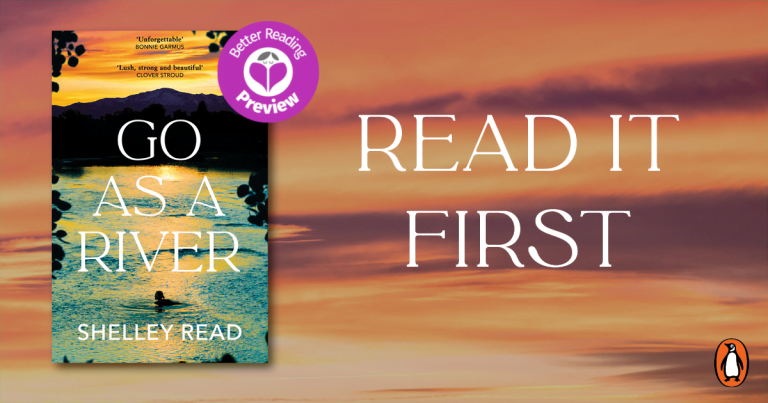
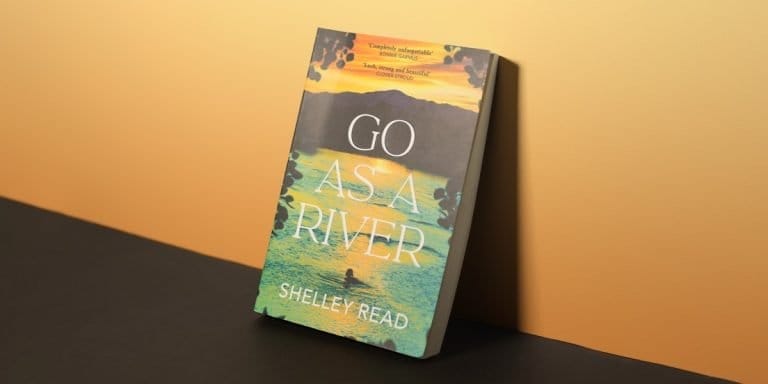
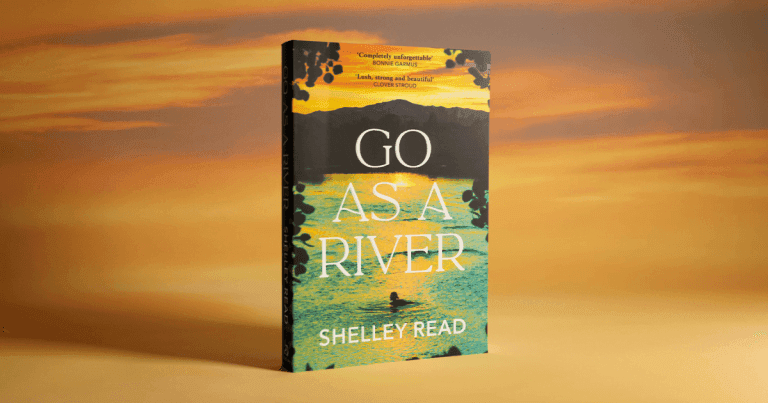
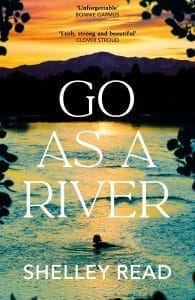
How does it feel to hold your book in your hands?
Holding my book in my hands is an indescribably beautiful feeling. I set out to be a writer as a child, then I studied creative writing as an undergraduate and graduate student. Along the way, I also ended up falling in love with teaching. I dedicated nearly three decades of my life to being the best professor I could be and, later, the best mom I could be to my two children. I didn’t give my writing life the time and attention it deserved for many years, until the character of Victoria Nash started developing in my imagination and demanding that I write her story. I chipped away at it, bit by bit, until I fell so in love with Victoria that I knew this was a book I must finish. It took me over twelve years to write and polish Go as a River. To know my novel is now on bookshelves and in readers’ hands and hearts all over the world is an absolute dream come true.
Hi, Shelley, Greg from Queensland, Australia.Just finished reading,Go as a river,Very very good, loved it.But, there is always a but,So at the end when, Victoria starts to walk towards Lukas ?? what the hell, sorry, what happens next, does Lukas go to live on the peach farm ?? with his mun. And what happen to Seth ??. Please do a second book to tie up the loose ends. thank you, Gregory.