Briefly tell us about your book.
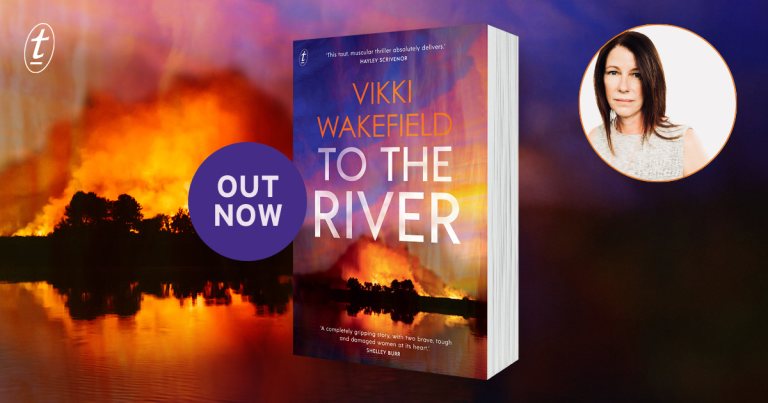
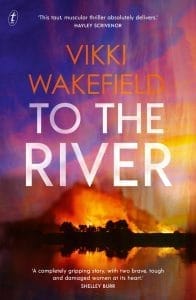
To the River is a psychological thriller about two very different women who form an uneasy alliance to bring a twelve-year-old cold case to a close. Rachel is an ambitious journalist with unquestionable principles; Sabine is a fugitive, an alleged murderer with a past full of violence and neglect. For Rachel it’s a straight-forward exchange: she’ll protect Sabine’s identity as a source, and Sabine will be given the chance to tell her version of the truth about ‘The Caravan Murders’ before turning herself in. For Sabine, it’s an ultimatum. After twelve years of hiding, navigating every bend and backwater, she knows the river…and she knows Rachel is deathly afraid of it.
Both women have their motives. Both say they want the truth. But someone doesn’t want this story to be told.
What was the research process like for the book?
To the River is largely set in fictional locations but the setting is recognisably the Murray River. Much of the book was inspired by short visits to the region, a long fascination with the river, and memory. Sadly, a planned houseboat trip had to be cancelled twice, once due to Covid and again with the 2022-2023 floods. The timing of both the pandemic and the recent flood event meant I had to reset the timeline—when I started writing To the River, no one expected a pandemic and the river was at record low water levels. If I had continued, it would have meant drastic changes to the story.
Research is something I do without really being conscious I’m doing it. Yes, I can fill notebooks or collect historical records and photos, but not much of it will make it into the book. That part of the process is more like fact-checking. The real research comes from being in a place, sitting with the people, hearing others’ stories and asking a lot of odd questions.
If I looked at your internet history, what would it reveal about you?
Umm. It’s a mix of searches for books, synonyms, country real estate, laws and policing, body farms and decomposition variables in forensic pathology. I pretty much fit the profile of a crime writer. Or a psychopathic bibliophile with a penchant for cabins in the woods.
Does the creative process get easier for you with each book?
I’d say the planning and writing processes are more controlled. I’ve learned enough through working with my (brilliant) editor over seven books to avoid making time-consuming mistakes with structure and timelines, and I’m more confident in my voice and style as a writer. But the creative part remains a mystery. There’s no controlling it. Though I might set a manuscript aside, so far I haven’t given up on a book I’ve started—it’s a case of trusting that whatever sparked me to write it is in there, but I have to let time pass, allow the good stuff to float and the rest to drift away. I’m persistent in the long term, but not consistently creative enough to write every day.
What’s some great advice you received that has helped you as a writer?
It was helpful for me to be given permission to imitate. Like musicians and music, artists and painting, I think it takes time for most writers to transition from imitation to creation. At least that was how it worked for me. I needed the validation that came from producing work that was ‘good’, but possibly safe and unoriginal, in order to progress to writing that was better, braver, mine.
If you could give one piece of advice to aspiring writers, what would it be?
Finish. It’s not mind-blowing advice, I know. You can break a lot of rules in writing and still be successful, but you can’t get away with not finishing.

Leave a Reply