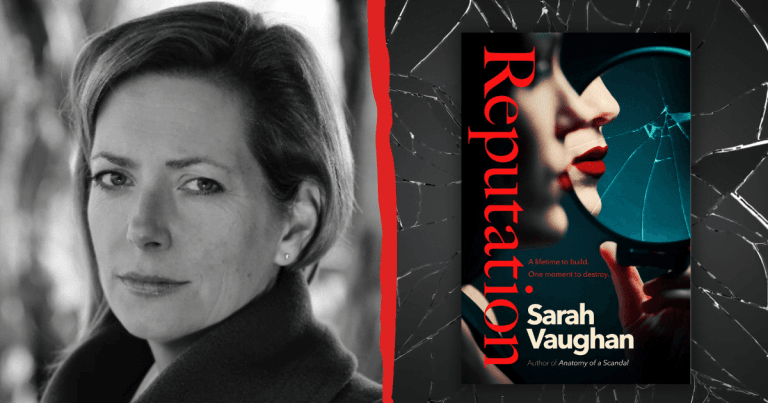
Briefly tell us about your book
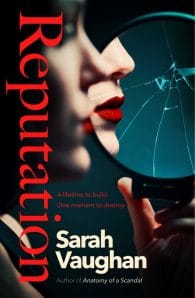
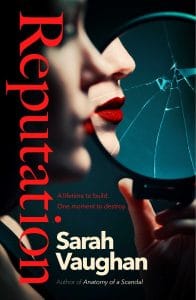
Reputation is about a female Labour MP who stands trial for murder when a tabloid journalist with whom she’s become entangled is found in her home.
It’s about the difficulty women face in navigating their way through public life – with themes of harassment, online abuse, revenge porn and political entitlement. And it’s also about difficulties faced by teenage girls through bullying from frenemies on social media.
What inspired the idea behind the book?
My novels tend to emerge from two or three ideas I magpie – and these are often gleaned from newspapers. The idea for this partly came from my reading an interview with a Labour MP in the Times Saturday magazine. She mentioned that she was experiencing so much abuse she had nine locks on her front door and a panic alarm by her bed. At the same time another Conservative MP spoke out about the death threats she was experiencing and a third –the MP in my area – was being threatened by men in my village, and her own. I wondered what it would be like to live with that level of threat and how you might behave if confronted with it? I’d just written Little Disasters, in which a woman sabotages herself through her disordered thinking, and so I was interested in exploring how an MP put in extreme jeopardy might behave. I’m also a parent and through conversations with parents of older children realised that the anonymity of social media lent itself to extreme bullying. Reputation evolved out of these two, interconnected, strands.
What was the research process like for the book?
I’m a former journalist and so knew the settings I was writing about – the House of Commons and the Old Bailey – because I’d worked in them. But it had been quite a while since I’d covered a murder trial and I needed to refresh my memory of the intricacies of the law. I followed the QC who helped me with Anatomy of a Scandal in a two-week murder trial in which the defendant was acquitted using the specific defence of “householder defence”. I also interviewed several MPs and other sources about the measures taken to improve their safety, as well as reading as much as I could about the experience of being an MP. As with Little Disasters, I used Graham Bartlett, a former detective turned police procedural adviser and author, to make sure the police interviews were accurate, and I was helped hugely by Dr Richard Shepherd, the author and forensic pathologist.
Does the creative process get easier for you with each book?
No! I really wish it did, but I think it gets tougher because I have higher expectations of myself. I always seem to write polyphonic novels, from multiple points of view, with past episodes that emerge as reveals, and I was very conscious that I wanted this to be gripping and twisty: the court case helps with that, I hope. At the start of every book, I seem to have a crisis of confidence and wonder what on earth I am doing, but once I have the characters fleshed out in my notebook, and the bare bones of the plot down – the central premise; the major twist; the ending – it seems to work!
How did you think of the title of the book?
The title came as I thought about the theme – reputation. I’d remembered the quote from Othello which I use as an epigraph – “O! I have lost my reputation. I have lost the immortal/Part of myself, and what remains is bestial.” – and I was skimming through literary quotations looking for something pithier that would work. Then I wondered why I was complicating things: the answer was just this simple noun in front of me. It ties in with the theme of misogyny and is the thing Emma is desperate to preserve.

Leave a Reply